
2014 Dodge Charger 3.6 Serpentine Belt Diagram
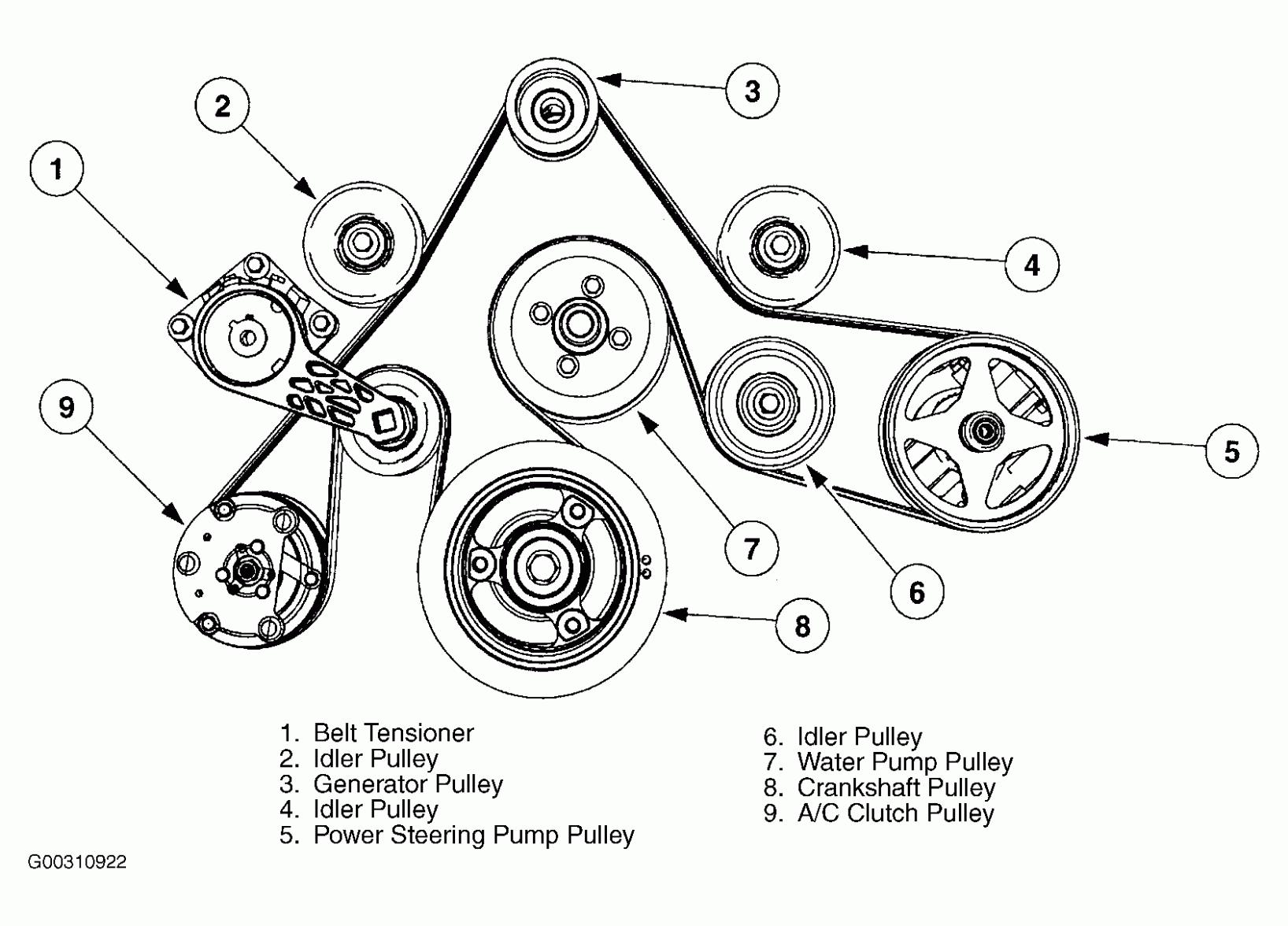
The serpentine belt in your 2014 Dodge Charger with the 3.6L Pentastar engine is a critical component, responsible for driving numerous accessories that keep your vehicle functioning smoothly. Understanding its routing and condition is essential for preventative maintenance, troubleshooting, and performing necessary repairs. This guide provides a detailed look at the serpentine belt diagram, helping you confidently tackle related tasks.
Purpose of Understanding the Serpentine Belt Diagram
A serpentine belt diagram is your roadmap for understanding how the belt is routed around the various pulleys in your engine bay. Why is this important? Consider these scenarios:
- Replacing the Belt: The most obvious reason! Without the diagram, properly routing a new belt can be a frustrating and time-consuming process, potentially leading to incorrect installation and damage to components.
- Troubleshooting Accessory Issues: If your power steering suddenly fails, or your air conditioning stops working, a slipped or broken serpentine belt could be the culprit. Knowing the belt's path allows you to quickly identify if it's intact and properly tensioned.
- Identifying Worn or Damaged Components: A misaligned or seizing pulley can cause premature belt wear. The diagram helps you visualize the entire system and pinpoint potential problem areas.
- Learning Engine Mechanics: For the aspiring mechanic or car enthusiast, understanding the serpentine belt system provides valuable insight into how various engine accessories are powered.
Key Specs and Main Parts of the 2014 Dodge Charger 3.6L Serpentine Belt System
The 2014 Dodge Charger 3.6L engine uses a single, long, multi-ribbed belt, often referred to as a serpentine or accessory drive belt. Here's a breakdown of the main components it drives:
- Crankshaft Pulley: This is the driving pulley, connected directly to the engine's crankshaft. It transfers rotational power to the serpentine belt.
- Alternator Pulley: The alternator generates electrical power for the car's systems and charges the battery. The serpentine belt spins the alternator pulley.
- Power Steering Pump Pulley: The power steering pump provides hydraulic pressure to assist in steering.
- Air Conditioning (A/C) Compressor Pulley: The A/C compressor is responsible for cooling the refrigerant in the air conditioning system.
- Water Pump Pulley: The water pump circulates coolant throughout the engine to regulate temperature.
- Tensioner Pulley: This spring-loaded pulley maintains the correct tension on the serpentine belt, preventing slippage and ensuring proper operation of the accessories. It's crucial for belt life and accessory performance.
- Idler Pulley (if equipped): Some models may have an idler pulley, which serves to guide the belt and provide optimal wrap around other pulleys.
The exact length and rib count of the serpentine belt can vary slightly depending on the specific vehicle configuration. Always consult your vehicle's owner's manual or a reputable parts catalog for the correct belt specification. Using the wrong belt can lead to premature wear, improper accessory operation, and potential damage.
Understanding Serpentine Belt Diagram Symbols
Serpentine belt diagrams use a standardized set of symbols to represent the various components and the belt's routing. Here's a breakdown:
- Solid Line: Represents the serpentine belt itself. The thickness of the line doesn't usually denote anything specific, but it clearly indicates the belt's path.
- Circles: Represent the various pulleys. The size of the circle is generally proportional to the actual pulley size.
- Labels: Each pulley is labeled with an abbreviation identifying its function (e.g., ALT for alternator, P/S for power steering, A/C for air conditioning, CRANK for crankshaft, TENS for tensioner).
- Arrow(s): Indicate the direction of rotation for each pulley. This is crucial for understanding how the belt engages with each component.
- Grooved vs. Smooth Pulleys: Diagrams may visually differentiate between pulleys with grooves (where the ribbed side of the belt makes contact) and smooth pulleys (where the back of the belt makes contact).
- Tensioner Indicator: The tensioner pulley often has a symbol indicating the direction of its spring-loaded movement. This helps understand how to relieve tension for belt removal and installation.
How the Serpentine Belt System Works
The serpentine belt system is a relatively simple, yet ingenious, design. The crankshaft pulley, driven by the engine's combustion process, acts as the primary driver. As the crankshaft rotates, it turns the serpentine belt. The belt, in turn, transmits this rotational force to all the other pulleys connected to the various accessories.
The tensioner pulley plays a vital role in maintaining the correct belt tension. It automatically adjusts to compensate for belt stretch and wear, ensuring that the belt remains tight enough to prevent slippage. Slippage reduces the efficiency of the accessories and can cause premature belt wear. The tensioner typically uses a spring-loaded mechanism and sometimes a hydraulic damper to achieve this constant tension.
The path the belt takes is carefully engineered to provide optimal wrap around each pulley. Wrap refers to the amount of surface contact between the belt and the pulley. Greater wrap increases the friction between the belt and pulley, allowing for more efficient power transfer. Idler pulleys (if present) help to achieve this optimal wrap, especially on pulleys where space is limited.
Real-World Use: Basic Troubleshooting Tips
Here are a few common problems associated with the serpentine belt system and how the diagram can help:
- Squealing Noise: A squealing noise, especially during cold starts or when the engine is under load (e.g., turning the steering wheel at low speeds), often indicates a slipping serpentine belt. Check the belt tensioner to ensure it's functioning properly. Visually inspect the belt for cracks, glazing (a shiny surface), or missing ribs. The diagram will help you ensure the belt is routed correctly.
- Accessory Malfunction: If an accessory like the power steering or A/C stops working, first check the serpentine belt. Is it broken or missing? If the belt is intact, use the diagram to confirm that it's properly routed around the affected accessory's pulley. A partially slipped belt might cause intermittent issues.
- Visual Inspection: Regularly inspect the serpentine belt for signs of wear and tear. Look for cracks, fraying, missing ribs, and contamination from oil or coolant. The diagram allows you to systematically check the entire length of the belt and all the pulleys. Pay particular attention to the areas where the belt bends sharply around smaller pulleys.
If you notice any of these issues, it's crucial to address them promptly to prevent further damage to the engine and its accessories. Replacing a worn or damaged serpentine belt is a relatively inexpensive repair compared to the cost of replacing a failed alternator, power steering pump, or A/C compressor.
Safety Precautions
Working on the serpentine belt system can be hazardous if proper safety precautions are not taken. Here are some critical safety reminders:
- Disconnect the Battery: Before working on any electrical components, including the alternator, disconnect the negative battery terminal to prevent electrical shock.
- Engine Must Be Off and Cool: Never work on the serpentine belt system while the engine is running or hot. The rotating parts can cause serious injury. Allow the engine to cool completely before beginning any work.
- Keep Hands and Clothing Clear: Keep your hands, clothing, and tools clear of the serpentine belt and pulleys while the engine is running (if you absolutely must diagnose a problem with the engine running - proceed with extreme caution!). Loose clothing can easily get caught in the rotating parts, causing serious injury.
- Understand the Tensioner Mechanism: Familiarize yourself with how the tensioner works before attempting to release it. Using the wrong tool or technique can damage the tensioner or cause injury.
- Protect Your Eyes: Wear safety glasses to protect your eyes from debris.
The tensioner pulley stores significant spring energy. Releasing it improperly can cause the wrench to slip and injure your hand or fingers. Be mindful of the direction of force and ensure a secure grip on the wrench.
We have access to a high-resolution, downloadable version of the 2014 Dodge Charger 3.6L serpentine belt diagram. You can use this diagram for personal use and reference.