
2014 Jeep Cherokee Coolant Hose Diagram
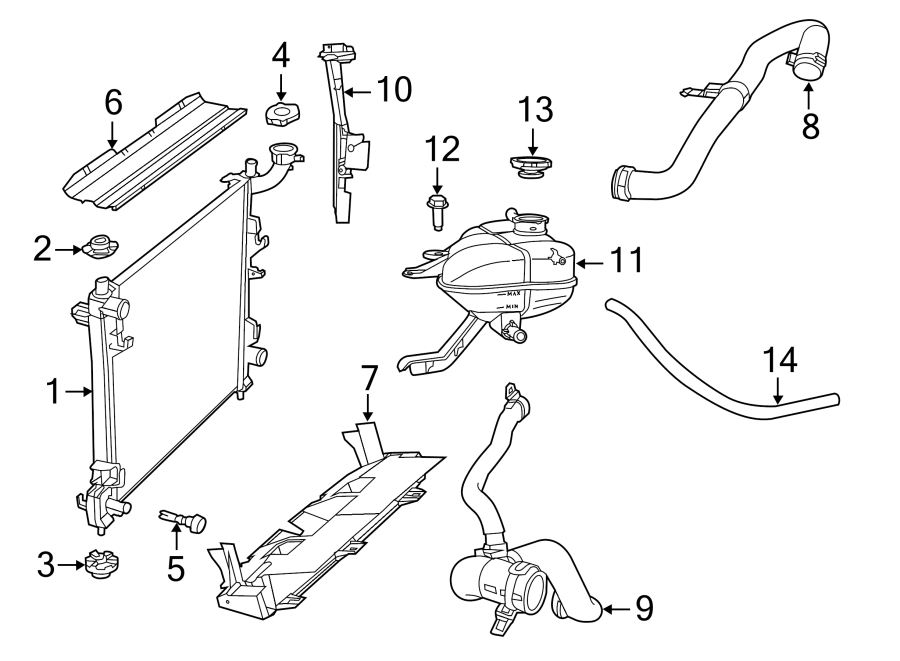
Alright, let's dive into the coolant hose diagram for the 2014 Jeep Cherokee. Whether you're tackling a leaky hose, flushing your coolant system, or just trying to understand how your engine stays cool, having a solid grasp of this diagram is invaluable. This isn't just about replacing parts; it's about understanding the cooling system as a whole, ensuring proper function and preventing potentially catastrophic engine damage.
Purpose of the Coolant Hose Diagram
Why bother with a diagram? Simple. It's your roadmap to the coolant system. Without it, you're essentially wandering in the dark, risking incorrect hose connections, air locks, and system malfunctions. The diagram serves several crucial purposes:
- Repair Guidance: It clearly shows the routing of each hose, making it easier to identify and replace damaged or deteriorated hoses.
- Troubleshooting Aid: By understanding the system's layout, you can better diagnose coolant leaks, overheating issues, and other cooling-related problems.
- Maintenance Support: When flushing the coolant or performing other maintenance tasks, the diagram helps you locate drain plugs, bleed valves, and other key components.
- Educational Tool: Even if you're not currently working on your Jeep, studying the diagram provides a deeper understanding of your vehicle's inner workings.
Key Specs and Main Parts of the 2014 Jeep Cherokee Cooling System
The 2014 Jeep Cherokee, depending on the engine option (2.4L Tigershark I4 or 3.2L Pentastar V6), will have slight variations in the hose routing, but the core components and principles remain the same. Key components include:
- Radiator: The primary heat exchanger, dissipating heat from the coolant into the surrounding air. Expect to see two large hoses connected to the radiator - an inlet hose (usually from the engine) and an outlet hose (back to the engine).
- Engine Block: Coolant jackets within the engine block absorb heat generated by combustion. Hoses connect to the block at various points to circulate coolant.
- Heater Core: Located behind the dashboard, the heater core provides heat for the cabin. Two hoses – the heater inlet hose and heater outlet hose – connect the engine to the heater core.
- Thermostat: A temperature-sensitive valve that regulates coolant flow, maintaining optimal engine operating temperature. It's typically housed in a thermostat housing where hoses connect.
- Water Pump: Circulates coolant throughout the system. Usually driven by a belt connected to the engine. The water pump will have at least one inlet and one outlet hose.
- Coolant Reservoir (Overflow Tank): Allows for coolant expansion and contraction due to temperature changes. A hose connects the radiator to the reservoir.
- Hoses: These are reinforced rubber or silicone tubes that carry the coolant. They come in various shapes and sizes to accommodate different routing needs.
Coolant Type: The 2014 Jeep Cherokee typically uses an OAT (Organic Acid Technology) coolant, often pink or purple in color. Using the correct coolant is critical to prevent corrosion and damage to cooling system components. Consult your owner's manual for the specific coolant specification.
Understanding the Symbols on the Coolant Hose Diagram
The diagram uses a standardized set of symbols to represent different components and connections. Here's a breakdown:
- Solid Lines: Represent the coolant hoses themselves. The thickness of the line may indicate the hose diameter.
- Dashed Lines: Often indicate vacuum lines or other related systems that are not directly part of the coolant flow but may be relevant to the overall cooling system operation.
- Arrows: Show the direction of coolant flow. Very important for understanding how the system circulates.
- Color Coding: While not always present, some diagrams use color coding to differentiate between hoses (e.g., inlet hose in blue, outlet hose in red).
- Component Symbols: Radiators, water pumps, thermostats, and other components are represented by stylized symbols. The legend on the diagram will explain these.
- Clamps: Usually depicted as small circles or squares along the hose lines, indicating the location of hose clamps.
How the Cooling System Works in the 2014 Jeep Cherokee
The cooling system operates on a closed-loop principle. The water pump forces coolant through the engine block, where it absorbs heat. The heated coolant then flows to the radiator, where it dissipates heat to the atmosphere. From the radiator, the cooled coolant returns to the engine block, completing the cycle. The thermostat regulates the coolant temperature, ensuring the engine operates within its optimal range. When the engine is cold, the thermostat restricts coolant flow to the radiator, allowing the engine to warm up quickly. As the engine reaches operating temperature, the thermostat opens, allowing coolant to flow to the radiator and prevent overheating. The heater core taps into this system to provide cabin heat.
Real-World Use and Basic Troubleshooting
Let's say you notice a puddle of coolant under your Jeep. Here's how the diagram can help:
- Locate the Leak: Visually inspect the engine bay, paying close attention to hose connections, the radiator, water pump, and thermostat housing.
- Consult the Diagram: Once you've identified the general area of the leak, refer to the coolant hose diagram to pinpoint the specific hose or component that's leaking.
- Inspect the Hose: Check the hose for cracks, bulges, or signs of deterioration. Pay particular attention to the hose clamps, as they can loosen or corrode over time.
- Replace the Hose: If the hose is damaged, replace it with a new one that matches the original specifications. Ensure that you use the correct hose clamps and tighten them to the proper torque.
Common Issues:
- Leaking Hoses: Cracks, splits, and loose clamps are common culprits.
- Overheating: Can be caused by a low coolant level, a faulty thermostat, a clogged radiator, or a malfunctioning water pump.
- Coolant Reservoir Issues: Cracks in the reservoir or leaks from the cap.
Safety Considerations
Working on the cooling system can be hazardous. Here are some important safety precautions:
- Never work on a hot engine: Allow the engine to cool completely before working on the cooling system. Hot coolant can cause severe burns.
- Relieve Pressure: Before opening the coolant reservoir cap or disconnecting any hoses, relieve the pressure in the system by carefully opening the cap slowly. Wear eye protection.
- Dispose of Coolant Properly: Coolant is toxic. Never pour it down the drain or onto the ground. Dispose of it properly at a recycling center or auto parts store.
- Wear Eye Protection and Gloves: Protect your eyes and skin from coolant spills.
- Be Careful with Hose Clamps: They can be sharp and pinch your fingers. Use pliers or hose clamp pliers to remove and install them.
The water pump and thermostat areas are typically locations that can involve working in confined spaces near the engine belts. Keep hands clear to avoid injury.
With the 2014 Jeep Cherokee coolant hose diagram, you are well-equipped to understand and maintain your vehicle's cooling system. Remember safety first, and happy wrenching! We have a downloadable file for the 2014 Jeep Cherokee Coolant Hose Diagram that can be requested.