
2015 Silverado Front Suspension Diagram
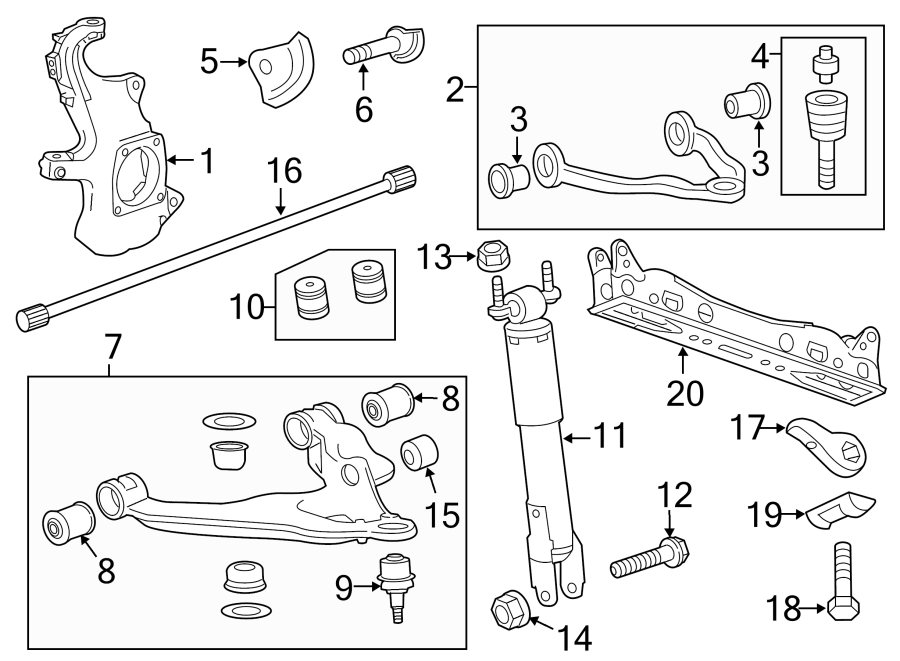
Let's dive into the front suspension of your 2015 Silverado. Understanding this system is crucial for everything from basic maintenance to tackling more complex repairs or even suspension upgrades. This guide will break down the front suspension diagram, explaining its purpose, key components, and how it all works together. We'll even touch on some troubleshooting tips and safety considerations.
Purpose of the 2015 Silverado Front Suspension Diagram
A front suspension diagram, specifically for the 2015 Silverado, serves several key purposes:
- Repair and Maintenance: It acts as a roadmap, helping you identify parts that need replacement or repair. Knowing where each component is located and how it connects is essential for accurate diagnosis and efficient work.
- Troubleshooting: By referring to the diagram, you can trace problems within the system, such as identifying a failing ball joint based on symptoms like clunking noises.
- Understanding System Operation: The diagram helps visualize how the different parts interact to provide a smooth and controlled ride.
- Modifications and Upgrades: If you're considering lifting your Silverado, installing new shocks, or performing other suspension modifications, the diagram is indispensable for planning and executing the changes correctly.
- Parts Ordering: When ordering replacement parts, the diagram provides the exact names and locations of each component, minimizing the risk of ordering the wrong part.
Key Specs and Main Parts
The 2015 Silverado 1500 typically utilizes an independent front suspension system, specifically a double-wishbone configuration. This design offers a good balance between ride quality, handling, and durability. The specific specifications, such as spring rates and shock absorber damping, can vary depending on the trim level and options of your truck, but the basic components remain the same.
Main Components:
- Upper Control Arm: Also known as the A-arm, the upper control arm connects the upper portion of the wheel hub/spindle to the frame. It allows for vertical wheel movement while maintaining wheel alignment.
- Lower Control Arm: Similar to the upper control arm, the lower control arm connects the lower portion of the wheel hub/spindle to the frame. It bears a significant portion of the vehicle's weight and is often larger and more robust than the upper control arm.
- Coil Spring: Located between the lower control arm and the frame (or a spring pocket in some cases), the coil spring absorbs vertical impacts and supports the vehicle's weight.
- Shock Absorber (Damper): The shock absorber, or damper, controls the movement of the coil spring, preventing excessive bouncing and providing a smoother ride. It's usually mounted inside the coil spring or nearby.
- Steering Knuckle (Spindle): The steering knuckle is the component that connects the wheel hub and bearings to the control arms. It pivots, allowing the wheels to turn for steering.
- Ball Joints: Ball joints are spherical bearings that connect the control arms to the steering knuckle. They allow for articulation and movement in multiple directions. Upper and lower ball joints are present.
- Tie Rods (Inner and Outer): Tie rods connect the steering rack to the steering knuckles. They transmit steering input from the steering wheel to the wheels.
- Sway Bar (Stabilizer Bar): The sway bar connects the left and right sides of the suspension, reducing body roll during cornering. It increases stability.
- Wheel Hub and Bearings: The wheel hub houses the wheel bearings, which allow the wheel to rotate freely.
- Brake Components: Although not strictly part of the suspension, the brake rotors, calipers, and pads are mounted to the steering knuckle and are essential for braking.
Understanding Symbols in the Diagram
A suspension diagram uses various symbols to represent different components and connections. Here's a breakdown of common symbols:
- Solid Lines: Typically represent rigid components like control arms, tie rods, and the frame.
- Dashed Lines: May indicate hidden components or lines representing the range of motion of a part.
- Circles: Often represent joints or pivots, like ball joints or bushings.
- Arrows: Indicate the direction of force or movement.
- Different Colors: Some diagrams use colors to differentiate between different systems or types of components (e.g., suspension vs. steering). Unfortunately there is no standard for use of color, but any specific legend on the diagram will inform the reader of specific use.
- Part Numbers: Diagrams usually include part numbers associated with each component. This is invaluable for ordering replacements.
- Fastener Torque Values: Critical fasteners may have torque values listed near them. Always use a torque wrench to tighten fasteners to the specified torque.
How the 2015 Silverado Front Suspension Works
The double-wishbone suspension works by allowing each front wheel to move independently. When the wheel encounters a bump, the coil spring compresses, absorbing the impact energy. The shock absorber dampens the spring's oscillations, preventing the vehicle from bouncing excessively. The control arms guide the wheel's vertical movement, keeping the tire relatively perpendicular to the road surface. The ball joints allow the control arms to move freely while maintaining a secure connection to the steering knuckle. The sway bar helps to distribute forces between the left and right wheels, reducing body roll during cornering.
When you steer the vehicle, the steering wheel input is transmitted through the steering shaft to the steering rack. The steering rack then moves the tie rods, which push or pull on the steering knuckles, causing the wheels to turn. The entire system is designed to provide a smooth, stable, and responsive driving experience.
Real-World Use: Basic Troubleshooting
Here are some common symptoms and potential causes related to the front suspension:
- Clunking Noises: Could indicate worn ball joints, tie rod ends, sway bar links, or loose control arm bushings. Visually inspect these components for play or damage.
- Squeaking Noises: Often caused by dry or worn control arm bushings or ball joints. Lubrication may temporarily alleviate the noise, but replacement is usually necessary.
- Excessive Bouncing: Worn shock absorbers are the most likely culprit. Replace the shocks in pairs.
- Poor Handling: Could be due to worn shocks, damaged springs, or misaligned wheels. Have the alignment checked.
- Uneven Tire Wear: Often a sign of misalignment but could also be caused by worn suspension components.
Important Note: Before performing any suspension work, always consult the service manual for your specific vehicle. It will provide detailed instructions, torque specifications, and safety precautions.
Safety Considerations
Working on the front suspension can be dangerous if proper precautions are not taken. Here are some key safety considerations:
- Spring Compression: Coil springs store a significant amount of energy. Never attempt to disassemble a strut assembly without using a proper spring compressor. Incorrectly compressing a spring can result in serious injury or death.
- Vehicle Support: Always use jack stands to support the vehicle after lifting it with a jack. Never work under a vehicle supported only by a jack.
- Torque Specifications: Always tighten fasteners to the specified torque values. Under-tightening can lead to component failure, while over-tightening can damage threads.
- Eye Protection: Wear safety glasses to protect your eyes from debris.
- Hand Protection: Wear gloves to protect your hands from sharp edges and chemicals.
The coil spring poses the highest risk within the suspension system due to its stored energy. Proceed with extreme caution when working with the spring. If you are uncomfortable compressing the spring, have a professional mechanic handle this step.
By understanding the 2015 Silverado front suspension diagram, you can confidently diagnose problems, perform basic repairs, and even undertake more advanced modifications. Remember to prioritize safety and consult the service manual for your specific vehicle before starting any work. Happy wrenching!
We have a high-resolution downloadable version of the 2015 Silverado front suspension diagram available. Contact us to receive a download link.