
2016 Subaru Forester Fuse Box Diagram
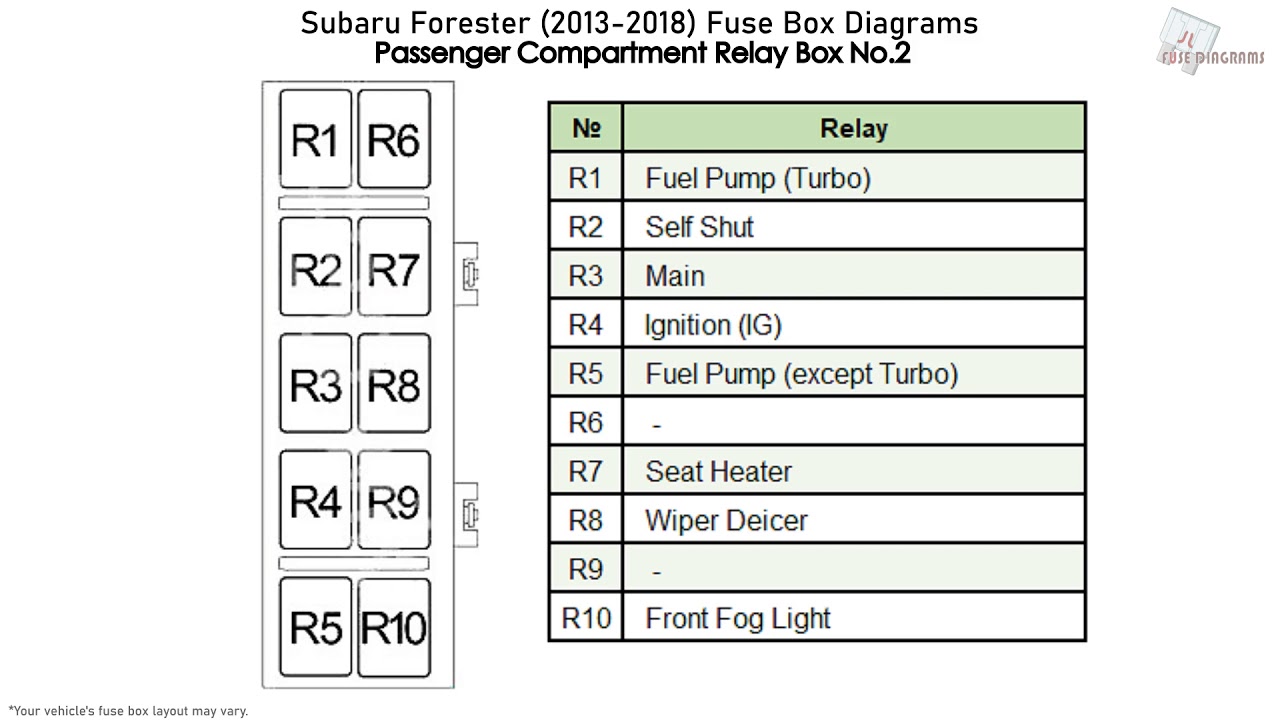
Let's dive into the 2016 Subaru Forester fuse box diagram. This isn't just a pretty picture; it's your roadmap to understanding and fixing electrical issues in your Forester. Whether you're dealing with a blown fuse, planning to install new accessories, or simply want to get a better grasp of your car's electrical system, understanding this diagram is crucial.
Why Bother with the Fuse Box Diagram?
Why should you care about this diagram? Several compelling reasons exist:
- Troubleshooting Electrical Issues: A blown fuse is a common problem. The diagram quickly identifies which fuse controls which circuit, saving you time and frustration.
- Safe Accessory Installation: Planning to add aftermarket lights, a sound system, or a dashcam? Knowing which fuses control specific circuits allows you to tap into the correct power source safely and avoid overloading existing circuits.
- Preventative Maintenance: Familiarizing yourself with the fuse box layout can help you identify potential problems early on. For example, noticing a frequently blown fuse can indicate a deeper issue in that circuit.
- General Understanding of Your Vehicle: The diagram offers a glimpse into the complexity and design of your Forester's electrical system.
Key Specs and Main Parts of the Fuse Box
The 2016 Subaru Forester actually has multiple fuse boxes, but we'll focus on the two most important ones:
- Interior Fuse Box: Located under the dashboard on the driver's side. This fuse box primarily handles circuits for interior components like lights, the radio, the climate control system, and various electronic accessories.
- Engine Compartment Fuse Box: Situated in the engine bay, usually near the battery. This fuse box manages circuits for critical engine components such as the fuel pump, ignition system, headlights, and other high-current devices.
Each fuse box contains a variety of fuses and relays. Fuses are safety devices designed to protect circuits from overcurrent conditions. They contain a thin wire that melts and breaks the circuit if the current exceeds a certain level. Relays are electromechanical switches that allow a low-current circuit to control a high-current circuit. They're used to protect sensitive components like the ECU (Engine Control Unit) from being exposed to high current loads.
Key Specs to Consider:
- Fuse Ampere Rating (Amps): The number printed on the fuse (e.g., 5A, 10A, 20A) indicates the maximum current that the fuse can handle before blowing. Using a fuse with a higher amperage rating than specified can be extremely dangerous and can damage your vehicle's electrical system, potentially causing a fire.
- Fuse Type: The 2016 Forester typically uses mini blade fuses. Ensure you replace blown fuses with the correct type to ensure proper fit and function.
- Circuit Designation: This refers to what each fuse controls (e.g., "Headlight Low Beam," "Radio," "Power Windows"). The fuse box diagram is essential for identifying these circuit designations.
Decoding the Symbols: Lines, Colors, and Icons
The fuse box diagram isn't just a random assortment of lines and boxes. It uses a specific set of symbols to represent different components and connections:
- Lines: Lines represent electrical wires or conductors. A solid line typically indicates a direct connection, while a dashed line might represent a connection through a switch or relay.
- Colors: Wire colors are often indicated on the diagram (e.g., BLU for Blue, RED for Red, GRN for Green). These colors help you trace wires in the actual vehicle.
- Rectangles: These represent fuses, relays, or other electrical components. The diagram should have labels indicating what each rectangle represents.
- Icons: Specific icons are used to represent various components. Examples include:
- Headlight Icon: Represents the headlight circuit.
- Radio Icon: Represents the radio circuit.
- Window Icon: Represents the power window circuit.
Pay close attention to the legend or key on the diagram. This will explain the meaning of each symbol and color used.
How It Works: Tracing a Circuit
Understanding how a circuit works is key to using the fuse box diagram effectively. Here's a simplified explanation:
- Power Source: The circuit starts at the battery, which provides the electrical power.
- Fuse: The power flows through the fuse, which acts as a safety device.
- Switch (Optional): In many circuits, the power then goes to a switch (e.g., headlight switch, ignition switch). The switch controls whether the circuit is active or inactive.
- Load: The power then reaches the load, which is the component that uses the electricity (e.g., headlight bulb, radio).
- Ground: Finally, the electricity returns to the battery through a ground connection, completing the circuit.
The fuse box diagram shows you the path of electricity from the battery, through the fuse, to the component, and back to ground (often implicitly). By tracing the circuit on the diagram, you can identify potential problem areas, such as a short circuit or a faulty component.
Real-World Use: Basic Troubleshooting Tips
Let's say your headlights aren't working. Here's how you can use the fuse box diagram to troubleshoot the problem:
- Consult the Diagram: Locate the fuse box diagram for the 2016 Subaru Forester.
- Identify the Headlight Fuse: Find the fuse labeled "Headlight Low Beam" or a similar designation. The diagram will show the fuse's location and amperage rating.
- Check the Fuse: Visually inspect the fuse. If the wire inside is broken, the fuse is blown.
Pro Tip: Use a test light or multimeter to confirm the fuse is blown, even if it looks okay visually. A test light will illuminate if there's power on both sides of the fuse. A multimeter can measure the voltage drop across the fuse – a significant voltage drop indicates a blown fuse.
- Replace the Fuse: Replace the blown fuse with a new fuse of the same amperage rating.
Caution: Never replace a fuse with one of a higher amperage. This can overload the circuit and cause a fire.
- Test the Headlights: Turn on the headlights. If they still don't work, the problem is likely not the fuse. You'll need to investigate other possibilities, such as a faulty headlight bulb, a bad switch, or a wiring problem.
If the new fuse blows immediately, you have a short circuit somewhere in the headlight circuit. This requires further investigation to identify the source of the short. Don't keep replacing fuses without finding the underlying problem.
Safety First: Risky Components and Precautions
Working with your car's electrical system can be dangerous if you're not careful. Here are some important safety precautions:
- Disconnect the Battery: Before working on any electrical component, disconnect the negative (-) terminal of the battery. This will prevent accidental shocks and prevent damage to sensitive electronic components.
- Avoid Working on Live Circuits: Only work on circuits when the ignition is off and the battery is disconnected.
- Use Insulated Tools: Use tools with insulated handles to prevent shocks.
- Be Careful with High-Current Circuits: Circuits for the starter motor, alternator, and other high-current components can deliver a significant shock. Exercise extreme caution when working with these circuits.
- Never Bypass a Fuse: Bypassing a fuse with a piece of wire or a metal object is extremely dangerous and can cause a fire. Fuses are there for a reason – to protect the circuit from overcurrent.
- Consult a Professional: If you're not comfortable working on your car's electrical system, consult a qualified mechanic. Electrical problems can be complex and dangerous.
Components like the airbag system and the ABS (Anti-lock Braking System) often have dedicated fuses. These are very sensitive and should only be handled by experienced professionals. Mishandling these systems can have serious consequences.
By understanding your 2016 Subaru Forester's fuse box diagram, you’re much better equipped to tackle electrical problems and modifications safely and efficiently. It's a valuable tool for any car owner who wants to understand their vehicle better and save money on repairs.
We have a downloadable PDF file of the 2016 Subaru Forester Fuse Box Diagram available. It provides a clear, detailed view of the fuse box layouts and circuit designations. Use it as your guide for diagnosing and fixing electrical issues.