
2017 Jeep Wrangler Serpentine Belt Diagram
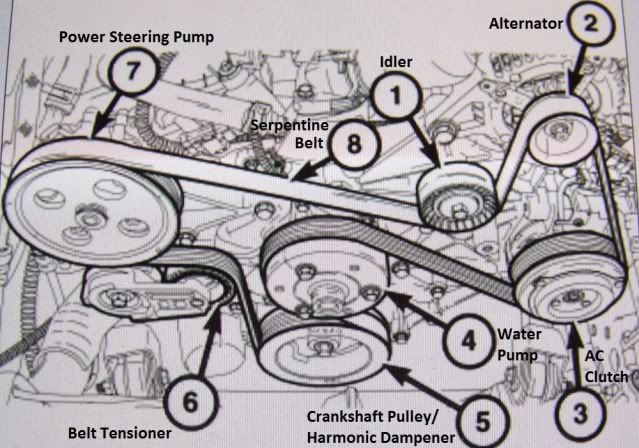
Alright, let's talk serpentine belts on the 2017 Jeep Wrangler JK. Specifically, we're going to delve into the 2017 Jeep Wrangler serpentine belt diagram. This isn't just some pretty picture; it's your roadmap to understanding, maintaining, and potentially repairing a critical component of your Jeep's engine. Whether you're tackling preventative maintenance, diagnosing a squealing noise, or planning an accessory installation, knowing how the serpentine belt system works is essential.
Purpose of the Serpentine Belt Diagram
The serpentine belt diagram serves several vital purposes:
- Repair and Replacement: When replacing a worn or damaged serpentine belt, the diagram ensures you route the new belt correctly. Incorrect routing can lead to component damage and, more seriously, leave you stranded.
- Troubleshooting: A visual representation of the belt's path can aid in diagnosing issues like squealing, slipping, or accessory malfunction. You can visually inspect each component along the belt's route.
- Accessory Installation: Planning to install an aftermarket accessory like a supercharger or a high-output alternator? The diagram helps determine if the existing belt can accommodate the change or if a different length belt is needed.
- Preventative Maintenance: Regularly checking the belt and its components, guided by the diagram, can prevent unexpected breakdowns.
- Understanding the System: For any DIY enthusiast, the diagram provides a clear understanding of how the engine accessories are driven and their relationship to one another.
Key Specs and Main Parts of the 2017 Jeep Wrangler Serpentine Belt System
The 2017 Jeep Wrangler JK came with a few different engine options, and each has a slightly different serpentine belt arrangement. We'll focus on the most common, the 3.6L Pentastar V6. Here are the key components:
- Crankshaft Pulley: The heart of the system. This pulley is directly connected to the crankshaft and provides the rotational force to drive the entire belt system.
- Serpentine Belt: The rubber belt itself, responsible for transmitting power from the crankshaft to the various accessories. It's usually made of EPDM (ethylene propylene diene monomer) rubber, chosen for its durability and resistance to heat and wear.
- Alternator: Provides electrical power to the Jeep's systems and charges the battery.
- Power Steering Pump: Provides hydraulic pressure to assist steering.
- Air Conditioning Compressor: Compresses refrigerant to cool the cabin.
- Water Pump: Circulates coolant through the engine to regulate temperature.
- Idler Pulley(s): Smooth, unpowered pulleys used to guide the belt and maintain proper tension.
- Tensioner Pulley: A spring-loaded pulley that automatically maintains the correct tension on the serpentine belt. This is crucial for preventing slippage and premature wear. The tensioner uses a torsion spring to apply force.
Belt Length: The correct belt length is critical. Using the wrong size will either prevent installation or cause excessive tension/slippage. Refer to your owner's manual or a parts catalog for the specific belt length for your engine. Gates and Dayco are two popular brands. Make sure you note any specific belt characteristics such as the number of ribs (the "V" shaped grooves) and the effective length. A worn belt can stretch slightly over time, but the correct length is essential for proper system operation.
Symbols and Conventions on the Diagram
Understanding the symbols on the diagram is crucial for interpreting it correctly.
- Solid Lines: Represent the path of the serpentine belt. The thickness of the line doesn't usually have any specific meaning, but it's clear and concise.
- Arrows: Indicate the direction of belt travel. Follow these arrows to visualize how the belt wraps around each pulley.
- Pulleys: Represented by circles or stylized drawings of the actual pulley shape. Some diagrams may label each pulley with its function (e.g., ALT for alternator, P/S for power steering).
- Tensioner: Often shown with a spring symbol to indicate its tensioning function. Some diagrams might show the direction in which to apply force to release the tensioner for belt removal.
While color-coding isn't typically used on standard serpentine belt diagrams, some enhanced versions might use colors to differentiate between different sections of the belt path or highlight specific components. However, you shouldn't expect color-coding as a standard feature.
How the Serpentine Belt System Works
The serpentine belt system's operation is relatively straightforward. The crankshaft pulley, driven by the engine's combustion process, spins. The serpentine belt, tightly wrapped around this pulley, transfers this rotational force to all the other pulleys connected to the accessories (alternator, power steering pump, A/C compressor, and water pump). The tensioner pulley ensures the belt remains tight enough to prevent slippage, maximizing the efficiency of power transfer. If the belt is loose, accessories will not operate at their proper output or performance.
The beauty of the serpentine belt system is its simplicity and efficiency. One belt drives multiple components, reducing complexity and weight compared to older systems that used multiple belts.
Real-World Use and Basic Troubleshooting
Here are some common issues you might encounter and how the diagram can help:
- Squealing Noise: Often indicates a slipping belt. Use the diagram to inspect the belt for cracks, glazing, or wear. Also, check the tensioner pulley to ensure it's applying adequate tension. Sometimes a small amount of belt dressing applied to the grooved side of the belt can temporarily quiet a squealing belt, but it's only a temporary fix. The long term solution is replacing the belt.
- Accessory Malfunction: If, for example, your air conditioning suddenly stops working, the diagram helps you visually confirm that the A/C compressor pulley is turning with the belt. If the pulley is stationary, the belt might be broken or slipped off the pulley.
- Belt Wear: Regularly inspect the belt for cracks, fraying, or missing ribs. Use the diagram as a reference to ensure the belt is properly seated in all the pulleys. Look for signs of misalignment, which can cause uneven wear.
- Tensioner Issues: A failing tensioner can cause belt slippage and noise. Check the tensioner for smooth operation. It should move freely but with resistance due to the spring. If it's seized or wobbly, it needs replacement.
Safety Considerations
Working on the serpentine belt system can be risky if you're not careful:
- Engine Heat: Allow the engine to cool completely before working on the belt system. Exhaust manifolds and other engine components can be extremely hot and cause severe burns.
- Moving Parts: Never start the engine with your hands or tools near the belt system. The rotating pulleys and belt can cause serious injury. Always disconnect the negative battery terminal before starting work to prevent accidental starting.
- Tensioner Spring: The tensioner pulley is under spring tension. When releasing the tension, be prepared for the pulley to snap back. Use the correct tool (usually a wrench or socket) to slowly and carefully release the tension.
- Eye Protection: Wear safety glasses to protect your eyes from debris.
Working around the crankshaft pulley requires extra care. It is directly linked to the engine and will rotate immediately upon starting. Keep hands and tools clear.
We have the 2017 Jeep Wrangler serpentine belt diagram available for download. Please use this diagram as a supplement to your vehicle's repair manual and other trusted resources.