
2018 Ford F150 Exhaust System Diagram
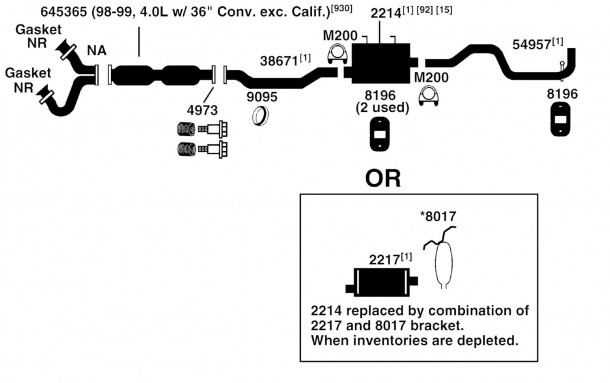
Understanding the exhaust system on your 2018 Ford F-150 is crucial for performing maintenance, diagnosing issues, and even planning performance modifications. An exhaust system diagram is your roadmap to this often-overlooked component. This article breaks down the 2018 F-150 exhaust system diagram, explains its key features, and equips you with the knowledge to tackle common problems and modifications.
Why You Need the Exhaust System Diagram
The exhaust system diagram isn't just a pretty picture; it's a valuable tool for several reasons:
- Diagnostics and Repair: Identifying faulty components becomes significantly easier when you understand their location and function within the system. No more guessing games!
- Performance Upgrades: Planning an exhaust upgrade (e.g., cat-back system, headers) requires a thorough understanding of the existing layout and component specifications.
- Routine Maintenance: Inspecting for leaks, rust, and damage is simplified when you know where to look and what to look for.
- Learning the System: Gaining a deeper understanding of how your F-150 functions increases your confidence as a DIYer.
Key Specs and Main Parts of the 2018 F-150 Exhaust
The specific exhaust system configuration on your 2018 F-150 will vary based on the engine (2.7L EcoBoost, 3.5L EcoBoost, 5.0L Coyote, or 3.3L V6) and cab configuration (Regular Cab, SuperCab, SuperCrew). However, the fundamental components remain the same:
- Exhaust Manifolds/Headers: These are the first components to collect exhaust gases directly from the engine cylinders. Headers (often aftermarket) offer improved flow compared to the stock manifolds.
- Catalytic Converters: These crucial emissions control devices use catalysts to convert harmful pollutants (hydrocarbons, carbon monoxide, nitrogen oxides) into less harmful substances. The 2018 F-150 typically features multiple catalytic converters.
- Oxygen Sensors (O2 Sensors): Located before (upstream) and after (downstream) the catalytic converters, O2 sensors monitor the oxygen content in the exhaust gases. This data is used by the engine control unit (ECU) to optimize fuel mixture.
- Resonators: These components help reduce specific exhaust frequencies, mitigating drone and unwanted noise. Some systems omit resonators for a more aggressive sound.
- Muffler: The muffler is the primary noise-reducing component in the exhaust system. It uses internal chambers and baffles to dampen sound waves.
- Exhaust Pipes: These connect the various components of the exhaust system. Common materials include aluminized steel and stainless steel.
- Tailpipe: The final section of the exhaust system, directing exhaust gases away from the vehicle.
- Hangers and Mounts: Rubber isolators and brackets that secure the exhaust system to the vehicle's undercarriage, reducing vibration and noise transmission.
Material Notes: Factory exhaust systems are usually made of aluminized steel, offering a balance of cost and corrosion resistance. Stainless steel is a popular upgrade choice for its superior durability and resistance to rust. Aftermarket headers are often made of stainless steel or ceramic-coated steel.
Decoding the Diagram: Symbols and Conventions
Understanding the symbols used in the exhaust system diagram is essential for accurate interpretation:
- Lines: Solid lines typically represent exhaust pipes. The thickness of the line might indicate the pipe diameter. Dotted lines might indicate vacuum lines for exhaust flaps or actuators (if equipped).
- Arrows: Indicate the direction of exhaust gas flow.
- Boxes or Rectangles: Generally represent components like catalytic converters, resonators, and mufflers. The shape and any accompanying text (e.g., "CAT," "RES") will identify the specific component.
- Circles or Ovals: Often denote sensors, such as O2 sensors. A label (e.g., "O2S11," "O2S12") will specify the sensor's location.
- Hangers/Mounts: Typically represented by small triangles or brackets, often with a dashed line connecting them to the exhaust pipe.
- Fasteners: May be represented by circles or small symbols indicating bolts, clamps, or flanges.
Color Coding: Some diagrams use color coding to differentiate between different types of lines or components. Consult the diagram's legend for clarification.
How It Works: A Step-by-Step Flow
The 2018 F-150 exhaust system is designed to efficiently remove exhaust gases from the engine while minimizing harmful emissions and noise. Here’s how it works:
- Exhaust Collection: Hot exhaust gases are expelled from the engine cylinders into the exhaust manifolds (or headers).
- Catalytic Conversion: The exhaust gases flow through the catalytic converters, where harmful pollutants are converted into less harmful substances (e.g., carbon dioxide, water, nitrogen).
- Oxygen Monitoring: O2 sensors upstream and downstream of the catalytic converters monitor the oxygen content in the exhaust. The upstream sensors provide feedback to the ECU for fuel mixture adjustments, while the downstream sensors monitor the efficiency of the catalytic converters.
- Resonance and Noise Reduction: The exhaust gases pass through resonators (if equipped) to reduce specific frequencies and drone.
- Muffling: The muffler further reduces noise levels before the exhaust gases exit the vehicle through the tailpipe.
Understanding Backpressure: The design of the exhaust system affects backpressure, which is the resistance to exhaust gas flow. Too much backpressure can reduce engine performance, while too little can negatively impact low-end torque. The stock exhaust system is designed to strike a balance between performance and emissions.
Real-World Use: Basic Troubleshooting Tips
Here are some common problems and how an exhaust system diagram can help:
- Exhaust Leak: Use the diagram to pinpoint the location of a suspected leak. Look for rust, cracks, or loose connections at flanges and joints. A visual inspection, combined with listening for hissing or puffing sounds, can help you identify the source.
- Catalytic Converter Failure: If your check engine light is on and the code indicates a catalytic converter issue, the diagram helps you locate the converter and understand its position relative to the O2 sensors.
- Muffler Damage: The diagram shows the muffler's location, making it easier to inspect for rust, dents, or other damage.
- O2 Sensor Issues: The diagram helps you identify the specific O2 sensor that is causing the problem (e.g., upstream left, downstream right) for easier replacement.
Warning Signs: Common symptoms of exhaust system problems include a loud or unusual exhaust noise, decreased fuel economy, a burning smell, and a check engine light. Regular visual inspections can help catch problems early.
Safety Considerations
Working on the exhaust system involves several safety risks:
- Hot Components: The exhaust system gets extremely hot during and after engine operation. Always allow the system to cool completely before working on it.
- Exhaust Fumes: Exhaust gases contain harmful substances. Work in a well-ventilated area or use an exhaust extraction system.
- Lifting the Vehicle: Use proper jack stands and safety precautions when lifting your F-150. Never work under a vehicle supported only by a jack.
- Rust and Corrosion: Be prepared to deal with rusted bolts and components. Penetrating oil and heat may be necessary to loosen stubborn fasteners.
- Eye Protection: Wear safety glasses to protect your eyes from debris.
Proper Tools: Use the correct tools for the job, including wrenches, sockets, and exhaust pipe cutters. Avoid using excessive force, as this can damage components or strip threads.
With a good understanding of the exhaust system diagram, you'll be well-equipped to diagnose problems, perform repairs, and plan modifications for your 2018 Ford F-150. Remember to prioritize safety and consult the service manual for specific torque specifications and procedures.
We have the 2018 Ford F150 Exhaust System Diagram file available for download. This detailed diagram will be a valuable asset for your future repairs and modifications.