
2023 Ford F350 Upfitter Switch Wiring Diagram
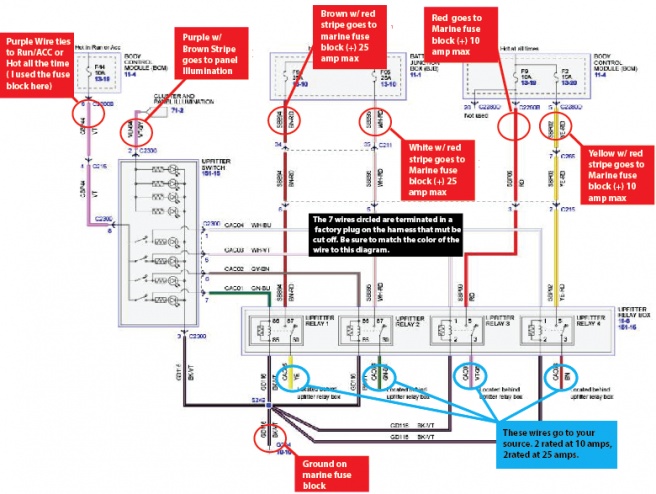
Alright, let's dive into the wiring diagram for the 2023 Ford F-350's upfitter switches. If you're planning to add aftermarket lights, winches, or any other auxiliary electrical equipment to your Super Duty, understanding this diagram is absolutely essential. We're talking about safely and correctly tapping into your truck's electrical system, avoiding costly damage and potential hazards. Think of this as your roadmap to clean, professional-grade modifications. This guide assumes you're comfortable using basic hand tools, a multimeter, and have some familiarity with automotive wiring concepts.
Purpose of the Upfitter Switch Wiring Diagram
Why bother learning about this? The upfitter switches provide a convenient and integrated way to control aftermarket accessories. Without a diagram, you're essentially flying blind, guessing which wire does what. The diagram allows you to:
- Safely identify the correct wires for your accessory's power and ground.
- Understand the circuit protection (fuses and relays) associated with each switch.
- Troubleshoot issues if your accessory isn't working correctly.
- Customize the switch behavior (e.g., always on, ignition-switched).
- Document your modifications for future reference or troubleshooting.
Attempting to wire accessories without a diagram can lead to short circuits, blown fuses, damaged components, and even electrical fires. Believe me, it's not worth the risk. Plus, a clean, well-documented installation makes future repairs and modifications much easier.
Key Specs and Main Parts
Before we dissect the diagram, let's define some key specifications and components:
- Upfitter Switches: Typically, the F-350 comes with 4 to 6 pre-wired upfitter switches located in the overhead console. These switches provide a clean interface for controlling your aftermarket accessories.
- Relays: Each upfitter switch controls a corresponding relay. A relay is an electrically operated switch that allows a low-current circuit (the switch itself) to control a high-current circuit (your accessory). This protects the switch from being overloaded.
- Fuses: Each upfitter switch circuit is protected by a fuse. The fuse is a safety device designed to interrupt the circuit if the current exceeds a safe level. The amperage rating of the fuse is critical. Always replace a blown fuse with one of the same rating.
- Wiring Harness: A dedicated wiring harness runs from the upfitter switches to a convenient location, typically under the hood or in the passenger compartment, providing easy access for connecting your accessories.
- Ground Point: A reliable ground connection is essential for proper operation. The upfitter switch harness will have a dedicated ground wire that should be connected to a clean, unpainted metal surface on the vehicle's chassis.
- Battery Positive (+): The source of power for the upfitter switches. The harness connects to the vehicle's battery through a fuse.
Voltage: The upfitter switches operate on the vehicle's standard 12V DC system. This is important when selecting accessories and ensuring they are compatible.
Amperage: Each upfitter switch has a maximum amperage rating. This rating is typically printed on the switch itself or in the owner's manual. Do not exceed this rating, as it can damage the switch and potentially cause a fire.
Understanding Wiring Diagram Symbols
Wiring diagrams use a standardized set of symbols to represent electrical components and connections. Here's a breakdown of the most common symbols you'll encounter in the F-350 upfitter switch diagram:
- Solid Lines: Represent wires. The thickness of the line may indicate the wire gauge (size).
- Dashed Lines: Represent shielded or protected wires, or connections that are not directly connected to the components in focus.
- Circles: Typically represent wire splices or connection points.
- Squares: Represent terminal blocks or connectors.
- Rectangles: Can represent various components, often labeled with their function (e.g., "Relay," "Fuse").
- Zigzag Line: Represents a resistor.
- Ground Symbol (Usually three horizontal lines, decreasing in length): Indicates a connection to the vehicle's chassis ground.
- Battery Symbol (+ and -): Indicates the positive and negative terminals of the battery.
- Switch Symbol: Shows the switch's contacts and how they change position when the switch is activated.
- Relay Coil Symbol: Shows the relay coil, which when energized, closes the relay contacts.
- Fuse Symbol: A line with a small "S" shape in the middle.
Wire Colors: Wire colors are crucial for identification. Common colors include red (power), black (ground), and various other colors for different functions. The wiring diagram will typically have a color code legend to identify the function of each wire. For example, a wire labeled "RD/BK" would indicate a red wire with a black stripe.
How the Upfitter Switch Circuit Works
Let's trace the path of electricity through a typical upfitter switch circuit:
- Power Source: Power originates from the vehicle's battery, typically through a main fuse or circuit breaker.
- Upfitter Switch: When you flip the upfitter switch, it completes a low-current circuit, energizing the relay coil.
- Relay Activation: The energized relay coil creates a magnetic field, pulling the relay contacts together.
- Accessory Power: When the relay contacts close, they complete a high-current circuit, allowing power to flow from the battery, through a fuse, and to your accessory.
- Ground Connection: The accessory and the relay circuit need a solid ground connection to complete the circuit and allow electricity to flow back to the battery.
By understanding this flow, you can quickly identify potential points of failure in the circuit. For example, if your accessory isn't working, you can check the fuse, the relay, the switch, and the ground connection to troubleshoot the problem.
Real-World Use and Basic Troubleshooting
Okay, time to get practical. Let's say you've installed new LED lights and connected them to upfitter switch #2, but they're not turning on. Here's a basic troubleshooting process:
- Check the Fuse: Consult the wiring diagram to identify the fuse associated with upfitter switch #2. Use a multimeter to test the fuse for continuity. If the fuse is blown, replace it with one of the same amperage rating.
- Check the Relay: Locate the relay associated with upfitter switch #2. You can test the relay by applying 12V to the relay coil and listening for a click. If the relay doesn't click, it may be faulty and need to be replaced.
- Check the Switch: Use a multimeter to check for voltage at the output terminal of the switch when it's in the "on" position. If there's no voltage, the switch may be faulty.
- Check the Ground Connection: Ensure that the ground connection for the accessory and the upfitter switch harness is clean and secure. Use a wire brush to remove any corrosion.
- Verify Wiring: Double-check all of your wiring connections to ensure they are correct and secure. Use crimp connectors or solder and heat shrink tubing for reliable connections.
Voltage Drop: A voltage drop is the loss of voltage across a wire or connection. Excessive voltage drop can prevent your accessory from operating correctly. You can measure voltage drop by using a multimeter to measure the voltage at the battery and then at the accessory. The difference between the two voltages is the voltage drop. Aim for a voltage drop of less than 0.5 volts.
Safety Precautions
Working with automotive electrical systems can be dangerous. Here are some essential safety precautions:
- Disconnect the Battery: Always disconnect the negative terminal of the battery before working on any electrical components. This will prevent accidental short circuits and electrical shocks.
- Wear Safety Glasses: Protect your eyes from flying debris and sparks.
- Use Insulated Tools: Use tools with insulated handles to prevent electrical shocks.
- Never Work on a Live Circuit: Double-check that the circuit is de-energized before working on it.
- Be Aware of Airbag Wires: Airbag wires are typically bright yellow or orange and should be handled with extreme care. Accidental activation of an airbag can cause serious injury.
- High Current Components: Be extremely careful around components carrying high current, such as the starter motor and alternator. These components can generate significant heat and sparks.
Always consult the vehicle's service manual and the accessory manufacturer's instructions for specific safety precautions. If you're not comfortable working with electrical systems, it's best to consult a qualified technician.
With the upfitter switch wiring diagram in hand and a solid understanding of the concepts we've covered, you're well-equipped to add accessories to your 2023 Ford F-350 safely and effectively. Remember to take your time, double-check your work, and always prioritize safety.
We have the wiring diagram file available for download. You can access it by clicking [link to the file].