
3 Phase Electric Motor Starter Wiring Diagram
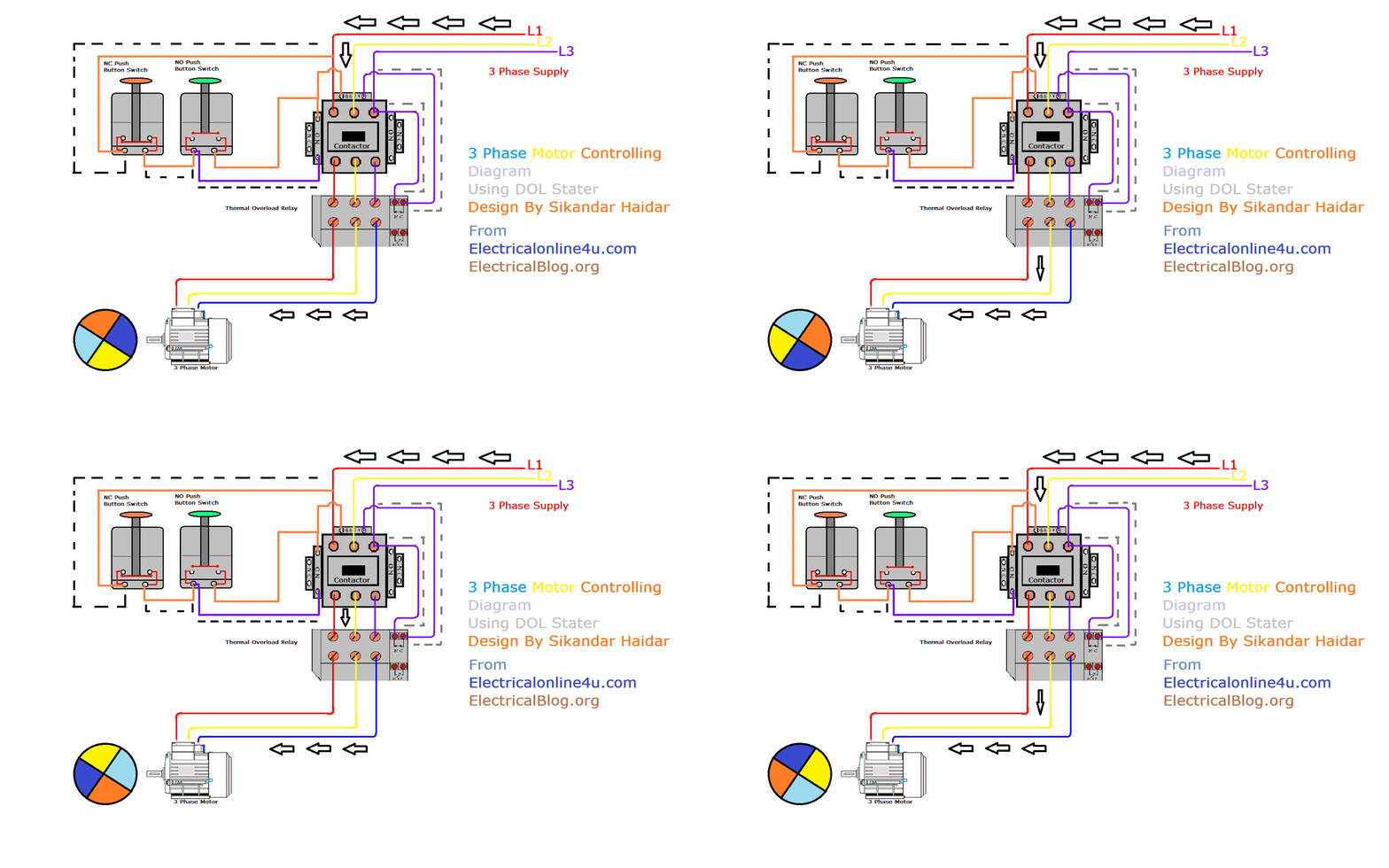
Alright, let’s dive into the world of 3-phase electric motor starters. This might seem like a leap from carburetors and brake lines, but understanding these circuits can be incredibly useful, especially if you're involved in modifying larger equipment, setting up shop tools, or even just expanding your general electrical knowledge. We're going to break down a typical 3-phase motor starter wiring diagram, so you can understand what each component does and how it all works together. We'll go step-by-step to keep things clear, and don’t worry, we'll define the jargon along the way.
Purpose of a 3-Phase Motor Starter Diagram
Why bother learning about this? Well, a 3-phase motor starter diagram is essential for a few key reasons:
- Troubleshooting: When a 3-phase motor isn't starting or is behaving erratically, the diagram is your roadmap to finding the fault. It shows you the entire circuit, allowing you to systematically check each component.
- Maintenance: Regular maintenance, like checking contactor contacts or replacing overload relays, requires understanding the diagram to ensure everything is wired correctly.
- Modifications & Upgrades: If you're adding features, like remote start/stop, or upgrading the motor, the diagram helps you integrate the new components safely and correctly.
- Safety: Knowing how the circuit is designed is crucial for working on it safely. The diagram shows you where the high-voltage components are and how to de-energize the system.
Key Specs and Main Parts
Before we jump into the diagram, let's familiarize ourselves with the key players:
- Incoming Power (L1, L2, L3): These are your three "hot" lines bringing in the 3-phase AC power. 3-phase power is used for high-power applications because it provides smoother, more efficient power delivery than single-phase.
- Fuses or Circuit Breaker (CB): These are overcurrent protection devices. They protect the entire circuit from damage in case of a short circuit or overload. They are designed to trip (open the circuit) when the current exceeds a safe limit.
- Contactor (M): This is an electrically controlled switch. When energized, it closes, allowing power to flow to the motor. It's essentially a heavy-duty relay. The coil of the contactor (typically labeled A1 and A2) controls whether the main contacts are open or closed.
- Overload Relay (OL): This protects the motor from overheating due to overload conditions (e.g., the motor trying to turn something too heavy). It monitors the current flowing to the motor and trips if it exceeds a set value for a certain amount of time. Think of it as a slow-blow fuse specifically for motor protection.
- Motor (M): The 3-phase electric motor itself, often shown as a circle with "M" inside, connected to the T1, T2, and T3 terminals coming from the overload relay.
- Start/Stop Pushbuttons: These are control switches that energize or de-energize the contactor coil. The start button is typically a momentary contact (it only makes contact while pressed), while the stop button is a normally closed contact (it's closed unless pressed).
- Auxiliary Contacts: These are extra contacts on the contactor (M). They can be normally open (NO) or normally closed (NC). They are used for various control functions, such as creating a "seal-in" circuit (explained below).
Symbols – Lines, Colors, and Icons
Understanding the symbols is crucial for reading the diagram:
- Solid Lines: Represent wires carrying power or control signals. Thicker lines often indicate main power conductors.
- Dashed Lines: Indicate a mechanical connection or linkage between components. For example, a dashed line might connect the overload relay to the contactor, showing that a tripped overload relay will cause the contactor to de-energize.
- Color Coding: Common color codes for 3-phase power are:
- L1: Black
- L2: Red
- L3: Blue
- Neutral: White (if present in the system)
- Ground: Green or Green/Yellow
- Icons:
- Motor: Circle with "M" inside.
- Contactor: A rectangle with lines extending on either side (representing the contacts). The coil is shown as a circle or rectangle with "M" inside or next to it.
- Overload Relay: A stylized thermal symbol, often shown connected to the motor terminals. It will also have a NC contact drawn separately in the control circuit.
- Fuses/Circuit Breakers: Various symbols depending on the type, but generally a short, zigzag line enclosed in a rectangle or circle.
- Pushbuttons: Drawn as switches with various symbols depending on whether they are normally open (NO) or normally closed (NC).
How It Works
Here's the simplified flow of how a typical 3-phase motor starter circuit operates:
- Starting the Motor: When you press the Start button, it completes a circuit to energize the contactor coil (A1 and A2).
- Contactor Activation: When the contactor coil is energized, it pulls in the contactor, closing the main contacts.
- Power to the Motor: Closing the main contactor contacts allows 3-phase power to flow from L1, L2, and L3, through the contactor, through the overload relay, and finally to the motor (T1, T2, T3), starting the motor.
- Seal-In Circuit: Once the contactor is energized, an auxiliary contact (NO) on the contactor closes. This creates a "seal-in" circuit, which bypasses the Start button. This means that even after you release the Start button, the contactor remains energized because the auxiliary contact is providing an alternate path for the current to the coil. This is often referred to as a "latching" circuit.
- Stopping the Motor: When you press the Stop button, it opens the control circuit, de-energizing the contactor coil.
- Contactor Deactivation: When the contactor coil is de-energized, the contactor drops out, opening the main contacts and cutting off power to the motor. The auxiliary contact also opens, breaking the seal-in circuit.
- Overload Protection: If the motor draws excessive current, the overload relay will trip. This opens the NC contact of the overload relay in the control circuit, de-energizing the contactor coil and stopping the motor. The overload relay typically has a reset button that needs to be pressed after the fault is cleared.
Real-World Use – Basic Troubleshooting Tips
Let's say your 3-phase motor isn't starting. Here's how you can use the diagram to troubleshoot:
- Check the Power Supply: Use a multimeter to verify that you have proper voltage on all three phases (L1, L2, L3) at the input to the starter.
- Check the Fuses/Breaker: Make sure the fuses are not blown or the circuit breaker is not tripped. If they are, investigate the cause before resetting them.
- Check the Contactor: Use a multimeter to check for voltage at the contactor coil (A1 and A2) when the Start button is pressed. If there is no voltage, the problem is in the control circuit. If there is voltage, the contactor may be faulty. Manually push the contactor in, If the motor then starts, you have a faulty coil, or low control voltage.
- Check the Overload Relay: Make sure the overload relay has not tripped. If it has, reset it and see if the motor starts. If it trips again immediately, there is likely a problem with the motor or the load it is driving.
- Check the Start/Stop Buttons: Use a multimeter to check the continuity of the Start and Stop buttons. The Start button should show continuity when pressed, and the Stop button should show continuity when not pressed.
- Look for Loose Wires: Visually inspect all wiring connections for looseness or corrosion. A loose wire can cause intermittent problems.
Safety – Highlight Risky Components
Working with 3-phase electricity is dangerous. Here's what to watch out for:
- High Voltage: 3-phase systems typically operate at 208V, 240V, 480V, or higher. This voltage can be lethal. Always de-energize the circuit before working on it. Use a voltage tester to verify that the circuit is de-energized.
- Capacitors: Some motor starters may include capacitors for power factor correction. These capacitors can store a charge even after the power is disconnected. Discharge capacitors before working on the circuit.
- Moving Parts: Be aware of moving parts in the motor and driven equipment. Ensure that the equipment is properly guarded before starting the motor.
- Lockout/Tagout: Use proper lockout/tagout procedures to prevent accidental re-energization of the circuit while you are working on it.
This should give you a solid understanding of 3-phase motor starter wiring diagrams. Remember safety first and consult with a qualified electrician if you're unsure about anything.
We have a sample diagram file available for download. It includes color-coded wiring and detailed component labels. Feel free to download it and use it as a reference while you're learning. Good luck!