
3 Pole To 4 Pole Starter Solenoid Wiring Diagram
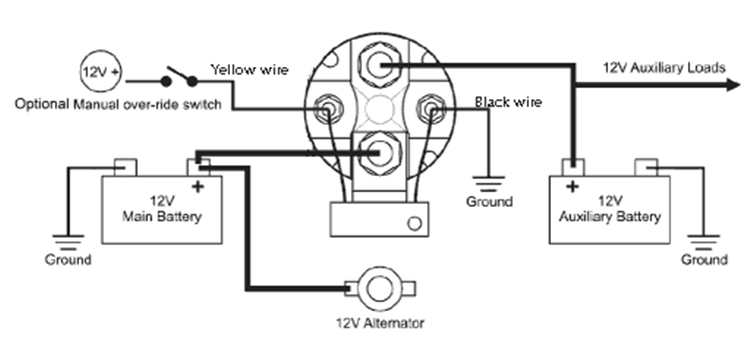
Alright, let's dive into the nitty-gritty of a 3-pole to 4-pole starter solenoid wiring diagram. This isn't just about connecting wires; it's about understanding the electrical heart of your vehicle's starting system. Whether you're troubleshooting a no-start condition, upgrading your electrical system, or simply expanding your automotive knowledge, grasping this diagram is crucial. We have this diagram available for download – check the link at the end of this article.
Purpose and Why This Matters
The starter solenoid acts as a heavy-duty electrical switch. It takes the relatively low current from the ignition switch and uses it to energize a powerful circuit that delivers a large current to the starter motor. Think of it as a relay on steroids. Now, why a 3-pole to 4-pole conversion? Older vehicles often used 3-pole solenoids. Upgrading to a 4-pole allows for more versatile wiring, often including features like an 'I' terminal that can provide a full 12V signal to the ignition system during cranking, bypassing any ballast resistor to ensure a strong spark during startup. This is especially useful for older vehicles or modified engines.
Understanding the wiring diagram is vital for:
- Troubleshooting: Pinpointing the source of a starting problem efficiently.
- Upgrades: Properly integrating a 4-pole solenoid into a 3-pole system.
- Custom Builds: Wiring a starter system from scratch in a project car.
- Learning: Gaining a deeper understanding of automotive electrical systems.
Key Specs and Main Parts
Before we dissect the diagram, let's identify the critical components:
- Battery: The power source for the entire system. Rated in volts (typically 12V in automotive applications) and amperage (indicating its current delivery capacity).
- Ignition Switch: Sends a signal to the solenoid when you turn the key.
- Starter Solenoid: The electromagnetic switch that connects the battery to the starter motor.
- Starter Motor: Converts electrical energy into mechanical energy to crank the engine.
- Battery Cables: Heavy-gauge wires designed to carry the high current between the battery, solenoid, and starter motor.
- Wiring Harness: A collection of wires bundled together and protected by a sheath.
- Fuses/Circuit Breakers: Safety devices that protect the electrical system from overcurrents.
A typical 4-pole solenoid has these terminals:
- S Terminal: (Start) Receives the signal from the ignition switch. This is often a small gauge wire.
- Battery Terminal: Connected directly to the positive (+) terminal of the battery using a heavy-gauge cable.
- Starter Terminal: Connected to the starter motor using a heavy-gauge cable.
- I Terminal: (Ignition) Provides a full 12V signal to the ignition system during cranking, bypassing any ballast resistor. Not always needed, depends on the vehicle.
Important specs to note are the voltage (12V DC in most automotive cases) and the amperage rating of the solenoid itself. Using a solenoid with an insufficient amperage rating can lead to premature failure and even fire.
Symbols – Deciphering the Diagram
Wiring diagrams use standardized symbols to represent components. Here's a breakdown:
- Solid Lines: Represent wires. Thicker lines usually indicate wires that carry higher current.
- Dashed Lines: Often represent ground connections or shielded wires.
- Circles: Can represent lights, switches, or connections depending on what's inside the circle.
- Rectangles: Commonly used for components like fuses, relays, and electronic control modules (ECMs).
- Zigzag Line: Represents a resistor.
- Ground Symbol: Usually looks like a series of horizontal lines decreasing in size, indicating a connection to the vehicle's chassis (ground).
Color Coding: Wire colors are critical. They help you trace circuits and identify wires. Common colors include:
- Red: Typically indicates a power wire from the battery.
- Black: Usually indicates a ground wire.
- Yellow: Often used for ignition-related circuits.
- Green: Can be used for various signals, including sensors.
- Blue: Often used for lighting circuits.
The diagram will also show connections with dots. A dot indicates that wires are joined together. Without a dot, the wires simply cross each other without making an electrical connection. Always double-check connections to ensure they match the diagram.
How It Works – The Electrical Dance
Here's the step-by-step operation:
- You turn the ignition key to the "start" position.
- This sends a low-current signal (12V) to the "S" terminal of the starter solenoid.
- The solenoid's internal electromagnet is energized, creating a magnetic field.
- This magnetic field pulls a plunger (a metal rod) inside the solenoid.
- The plunger closes a set of heavy-duty contacts inside the solenoid, connecting the battery terminal to the starter terminal.
- This sends a high-current, high-amperage signal to the starter motor.
- The starter motor engages and cranks the engine.
- If the solenoid has an "I" terminal, the plunger also closes a circuit that sends 12V directly to the ignition system, bypassing the ballast resistor (if present). This ensures a strong spark during starting.
- When you release the key, the signal to the "S" terminal is cut off.
- The magnetic field collapses, the plunger retracts, and the connection between the battery and starter motor is broken.
- The starter motor disengages.
The "I" terminal is important for older vehicles with ballast resistors. A ballast resistor reduces the voltage to the ignition coil during normal running to prolong the life of the points (in older ignition systems) or the coil itself. However, this lower voltage can make starting difficult, especially in cold weather. The "I" terminal bypasses the ballast resistor during cranking, providing a full 12V to the ignition system for a stronger spark. On modern vehicles, this terminal may not be needed or used.
Real-World Use – Troubleshooting Tips
Here are some common issues and how to troubleshoot them using the wiring diagram:
- No Cranking at All:
- Check the battery voltage. Is it fully charged?
- Inspect the battery cables for corrosion or loose connections.
- Verify that you're getting 12V at the "S" terminal when the ignition is in the "start" position. If not, trace the wiring back to the ignition switch.
- Check the ground connection to the solenoid and starter motor. A poor ground can prevent the solenoid from engaging.
- The solenoid itself could be faulty. You can test it by jumping the battery terminal to the "S" terminal (carefully!). If the starter engages, the solenoid is likely the problem.
- Clicking Sound but No Cranking:
- This usually indicates a weak battery or a bad connection to the starter motor.
- Check the battery voltage under load (while attempting to start).
- Inspect the starter motor connections for corrosion.
- The starter motor itself may be faulty.
- Engine Cranks Slowly:
- A weak battery, poor connections, or a failing starter motor can cause this.
- Check the battery voltage and connections.
- Have the starter motor tested.
Safety – Handle with Care
Working with automotive electrical systems can be dangerous. Here's what you need to know:
- Disconnect the Battery: Before working on any electrical component, disconnect the negative (-) battery cable to prevent accidental shorts.
- High Current: The starter circuit carries a large amount of current. A short circuit can cause sparks, heat, and even fire.
- Proper Tools: Use insulated tools to prevent electrical shock.
- Eye Protection: Wear safety glasses to protect your eyes from sparks or debris.
- Flammable Materials: Be careful when working near fuel lines or other flammable materials.
- Consult a Professional: If you're not comfortable working on electrical systems, consult a qualified mechanic. Electricity is not something to experiment with!
The battery cables and the terminals on the starter solenoid and starter motor can become extremely hot during operation due to the high current flow. Avoid touching them immediately after attempting to start the engine.
Grounding is Critical
A solid ground connection is essential for the proper operation of the starter system. Ensure the ground cable is securely attached to a clean, unpainted metal surface on the chassis. Corrosion or a loose connection can significantly reduce the current flow and prevent the starter from working properly.
Double Check Everything!
Before reconnecting the battery, carefully double-check all wiring connections to ensure they are correct and secure. A mistake in wiring can damage components or even create a safety hazard.
Remember, this information is for educational purposes. Always consult the specific wiring diagram for your vehicle and follow all safety precautions.
Ready to see the actual diagram? You can download it here: [Link to Downloadable Diagram]