
3-speed Electric Fan Motor Wiring Diagram Pdf
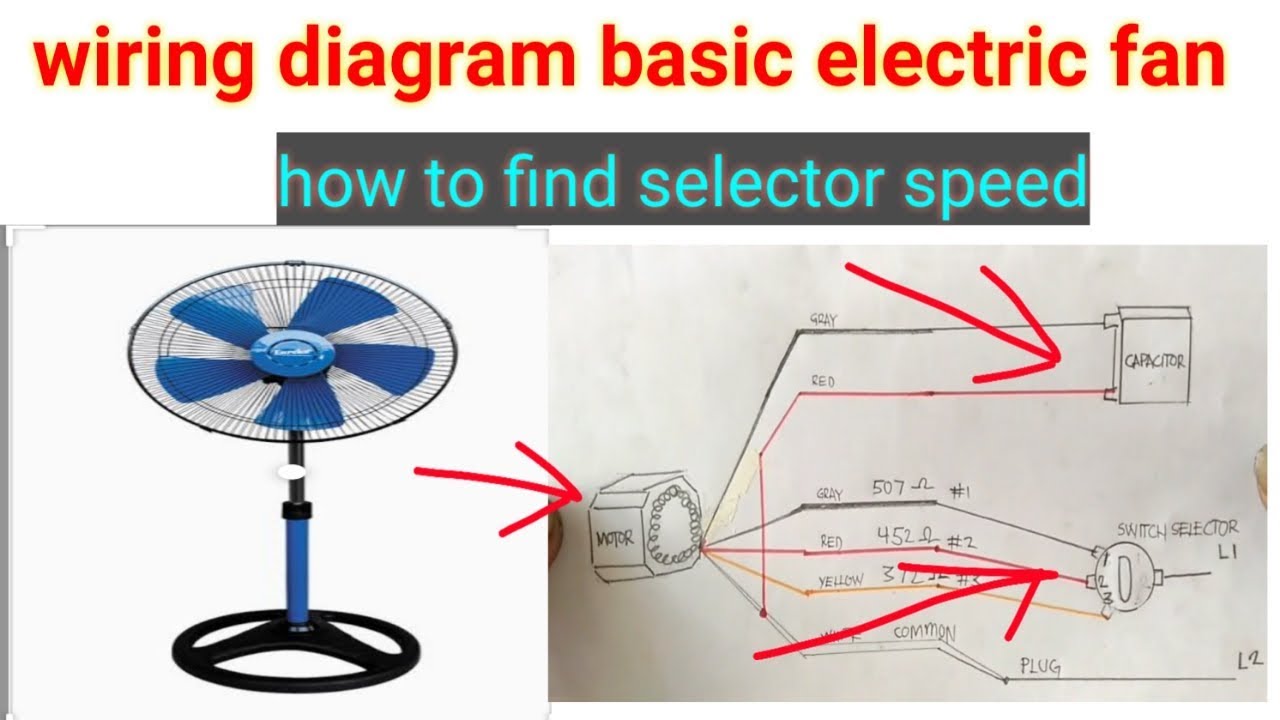
Let's dive into the world of 3-speed electric fan motor wiring diagrams. If you're a seasoned DIYer or an intermediate car enthusiast, understanding these diagrams is crucial for various tasks, from repairing a malfunctioning cooling system to customizing your vehicle's climate control. This article will walk you through the essentials, making you fluent in fan motor wiring diagrams in no time.
Purpose: Why This Diagram Matters
Why bother learning about 3-speed electric fan motor wiring diagrams? The answer is simple: control and understanding. These diagrams empower you to:
- Diagnose and Repair: Identify and fix issues with your fan motor's operation, like only running on one speed or not running at all.
- Customize and Modify: Upgrade your fan system for improved cooling performance or integrate aftermarket components.
- Understand System Operation: Grasp the electrical logic behind how your fan motor functions across different speed settings.
- Save Money: Avoid costly mechanic bills by tackling repairs yourself.
Whether you're working on a classic car, a modern vehicle, or even a standalone cooling system, a solid understanding of these diagrams is invaluable.
Key Specs and Main Parts
Before we jump into the diagram itself, let's establish the key specifications and parts involved:
- Voltage: Typically 12V DC in automotive applications. Some industrial fans may use higher voltages (e.g., 24V DC). Understanding the voltage is critical for safety.
- Motor Type: Almost always a DC brush motor in this application. These motors are robust and relatively inexpensive.
- Speed Control: Achieved through a series of resistors, taps on the motor winding, or increasingly, electronic controllers that modulate the voltage or pulse-width modulation (PWM). We will be focusing on resistor type speed control in this article.
- Wiring Harness: The collection of wires connecting the motor to the power source, switch, and any intermediate components.
- Relay(s): Often used to handle the higher current draw of the fan motor. A relay is an electrically operated switch that allows a low-current circuit to control a high-current circuit.
- Switch: Selects the desired fan speed. Can be a simple mechanical switch or a more complex electronic control unit (ECU) controlled.
- Resistors: Used in series with the motor windings to drop the voltage and reduce the fan speed. Each speed usually has a dedicated resistor.
- Fuse: Critical for circuit protection. Prevents damage from overcurrents. Always replace a blown fuse with one of the same amperage rating.
Symbols: Deciphering the Diagram
Understanding the symbols is the key to unlocking the information within the wiring diagram. Here's a breakdown of common symbols:
- Solid Lines: Represent wires connecting electrical components.
- Dashed Lines: May represent shielded wires or wiring harnesses bundled together.
- Color Codes: Indicate the color of the wire insulation. Common color codes include:
- Red: Usually indicates positive (+) voltage or power.
- Black: Usually indicates ground (-).
- Other Colors: Indicate signal wires or power feeds for specific functions. The diagram should provide a key for all used colors.
- Resistor (Ω): A zig-zag line. The diagram should indicate the resistance value in Ohms (Ω).
- Switch: Depicted as a break in the circuit that can be closed or opened. The position of the switch in the diagram typically represents its "off" or default state.
- Motor (M): Usually represented by a circle with an "M" inside.
- Ground: Represented by a series of descending lines, indicating a connection to the vehicle's chassis (earth ground).
- Fuse: A squiggly line inside a rectangle.
- Relay: Shown as a coil representing the electromagnet, and a switch representing the contacts that are opened and closed by the electromagnet.
Pay close attention to the legend or key provided with the diagram. It will explain any less common symbols or abbreviations used.
How It Works: The Flow of Electricity
Let's trace the electrical path for a typical 3-speed electric fan motor controlled by resistors. The circuit starts at the battery (positive terminal), runs through a fuse for protection, then goes to the ignition switch. From the ignition switch, power goes to the fan speed selector switch. This switch then allows you to select one of three speeds (low, medium, high) or the off position.
Each speed setting corresponds to a different resistor value. When you select "Low," the electricity flows through a resistor with the highest resistance value. This high resistance drops the voltage significantly, resulting in the slowest fan speed. When you select "Medium," the electricity flows through a resistor with a lower resistance value than the "Low" setting. This results in less voltage drop and a medium fan speed. When you select "High," the electricity bypasses the resistors entirely, allowing the full voltage to reach the motor. This results in the fastest fan speed.
From the resistor (or bypass in the high-speed setting), the electricity flows to the fan motor. The motor converts the electrical energy into mechanical energy, spinning the fan blades. Finally, the circuit completes with a connection from the motor to ground (the negative terminal of the battery).
In some cases, a relay is used to handle the high current required by the fan motor. The switch only controls a small current to energize the relay coil, which in turn closes the contacts and allows the full current to flow to the fan motor. This protects the switch from damage and allows for longer switch life.
Real-World Use: Basic Troubleshooting Tips
Here are a few troubleshooting tips to help you diagnose common problems:
- Fan Doesn't Work on Any Speed: Check the fuse first. Then, check the voltage at the fan motor connector with the ignition on and the fan switch in various positions. If there's no voltage, trace the wiring back to the switch, relay (if applicable), and fuse box.
- Fan Only Works on High Speed: This is a classic symptom of a failed resistor. The resistors for the low and medium speeds are often located in the same resistor pack, and they can burn out over time. You can test the resistors with a multimeter to check their resistance values.
- Fan Works Intermittently: Check for loose connections at the motor, switch, and fuse box. Also, inspect the wiring harness for any signs of damage or corrosion.
- Fan Runs But Weakly: Could indicate a worn-out motor, a voltage drop due to corroded connections, or a faulty resistor affecting all speeds.
Remember to always use a multimeter to check voltages and resistances. A multimeter is your best friend when troubleshooting electrical circuits.
Safety: Handle with Care
Working with electrical systems can be dangerous. Always observe the following safety precautions:
- Disconnect the Battery: Before working on any electrical component, disconnect the negative terminal of the battery. This prevents accidental shorts and shocks.
- Work in a Well-Lit Area: Good visibility is essential for avoiding mistakes.
- Use Insulated Tools: Use tools with insulated handles to protect yourself from electric shock.
- Never Work on a Live Circuit: Always disconnect the power source before working on any electrical component. If you absolutely must test a live circuit, use extreme caution and wear appropriate safety gear.
- Be Careful of Hot Resistors: Resistors can get very hot when the fan is running. Allow them to cool down before touching them.
Important Note: The fan motor itself, particularly if seized or shorted, can draw a significant amount of current, potentially leading to overheating and fire. Always ensure the circuit is properly fused and that the wiring is in good condition.
We have a detailed 3-speed electric fan motor wiring diagram available for download. This diagram provides a visual representation of the circuit, including the location of components and the wiring connections. It is an invaluable tool for diagnosing and repairing fan motor problems.