
3 Wire Fuel Shut Off Solenoid Wiring Diagram
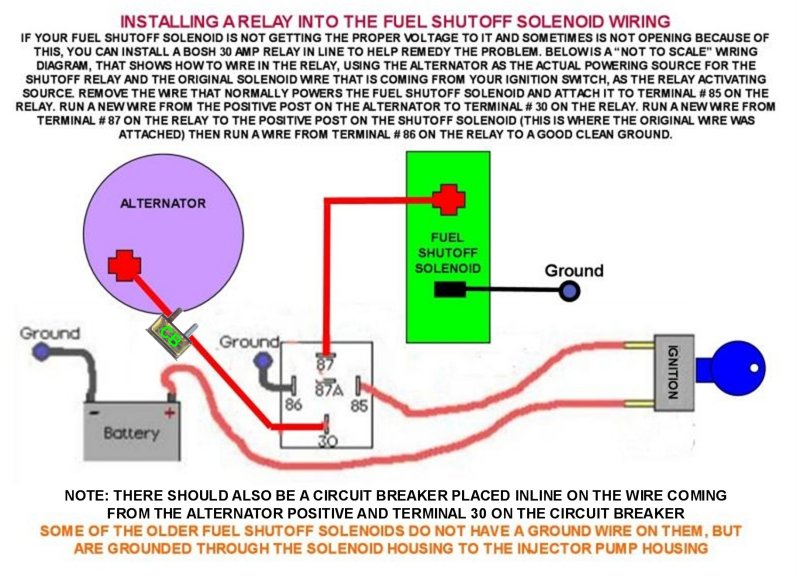
Let's dive into the 3-wire fuel shut-off solenoid wiring diagram. Whether you're wrestling with a stubborn diesel engine, planning a custom modification, or just aiming to deepen your automotive understanding, mastering this diagram is a valuable skill. We’ll cover the essentials, from component identification to basic troubleshooting, ensuring you're well-equipped to handle this critical part of your fuel system. And just so you know, we have a copy of the diagram available for download to assist you in your troubleshooting.
Purpose of Understanding the 3-Wire Fuel Shut-Off Solenoid Wiring Diagram
Why bother with this diagram? The fuel shut-off solenoid is your engine's gatekeeper, controlling the flow of fuel to the injection pump. A malfunctioning solenoid can prevent starting, cause stalling, or even allow runaway engine conditions. Understanding the wiring diagram is essential for:
- Diagnosis and Repair: Pinpointing the root cause of fuel delivery problems, whether it's a faulty solenoid, a wiring issue, or a problem with the control circuit.
- Modification and Upgrades: Integrating aftermarket fuel systems or implementing custom engine control strategies.
- General Engine Knowledge: Gaining a deeper understanding of how your engine's fuel system operates.
Key Specs and Main Parts
Before we dissect the diagram, let’s define the key components and their specs:
- Fuel Shut-Off Solenoid: The electromechanical device that controls fuel flow. Typically, it features a plunger or valve that opens or closes based on an electrical signal. The 3-wire configuration generally involves a power wire, a ground wire, and a holding/pull-in wire.
- Battery/Power Source: Usually a 12V DC source, providing the necessary power to energize the solenoid.
- Ignition Switch: The switch that controls power to the solenoid circuit when the key is in the "ON" or "RUN" position.
- Engine Control Unit (ECU) (Optional): In some applications, the ECU directly controls the solenoid. This allows for more precise fuel control.
- Fuses: Critical safety devices that protect the circuit from overcurrent. The fuse amperage rating is important, do not use higher amperage fuses, or it will defeat the safety feature of the circuit.
- Relays (Optional): High-current applications may use a relay to switch power to the solenoid, reducing the load on the ignition switch or ECU.
- Wiring Harness: The collection of wires that connect all the components.
Symbols and Conventions in the Diagram
A wiring diagram is a visual language. Here's how to translate it:
- Solid Lines: Represent wires. Thicker lines often indicate wires carrying higher current.
- Dashed Lines: Can indicate shielding, grounding paths, or connections that are not always present (e.g., optional features).
- Color Codes: Wires are color-coded (e.g., Red for power, Black for ground, etc.). These codes are essential for tracing wires in the actual vehicle. Common colors include:
- Red: Typically +12V power supply from the battery.
- Black: Chassis ground.
- Blue/Yellow/Green: Signal wires (e.g., from the ECU or ignition switch).
- Icons/Symbols: Standard symbols represent each component:
- Battery: A series of short and long lines.
- Solenoid: A coil symbol with a plunger indication.
- Resistor: Zig-zag line.
- Ground: Three horizontal lines decreasing in size.
- Fuse: A squiggly line inside a box.
- Numerical Designations: Pins and terminals are often numbered, allowing you to precisely identify connection points on the actual components.
How a 3-Wire Fuel Shut-Off Solenoid Works
The 3-wire system utilizes two coils within the solenoid: a pull-in coil and a holding coil. Here's the sequence:
- Starting/Activation: When the ignition is switched to "ON" or "RUN," power is applied to both the pull-in and holding coils. The pull-in coil is designed for high current and creates a strong magnetic field, rapidly pulling the solenoid plunger into the "open" (fuel flow) position.
- Holding: After the plunger is pulled in, the pull-in coil is de-energized (often through an internal switch or external control). The holding coil, which has a lower current draw, maintains the plunger in the open position.
- Shut-Off: When the ignition is switched "OFF," power to the holding coil is cut. The spring force pushes the plunger back, shutting off the fuel supply.
The advantage of this design is reduced power consumption. The high-current pull-in coil is only needed momentarily, while the lower-current holding coil maintains operation efficiently. This is very important for overall system electrical loads.
Real-World Use: Basic Troubleshooting Tips
Here's how to apply your understanding to real-world problems:
- Engine Won't Start:
- Check the fuse for the fuel shut-off solenoid circuit.
- Verify that power is reaching the solenoid's power wire when the ignition is "ON." Use a multimeter to confirm voltage.
- Check the ground connection for corrosion or looseness.
- Listen for a "click" from the solenoid when the ignition is switched "ON." This indicates that the solenoid is at least attempting to activate. Absence of a click often points to a failed solenoid or lack of power.
- Test the solenoid's resistance with a multimeter. Compare the reading to the manufacturer's specifications. Out-of-spec readings indicate a faulty solenoid.
- Engine Stalls Unexpectedly:
- Check for intermittent wiring issues (loose connections, chafed wires). Gently wiggle the wires while the engine is running to see if it stalls.
- Monitor the voltage at the solenoid while the engine is running. A sudden drop in voltage could indicate a problem with the power supply or ignition switch.
- Consider the possibility of a faulty ECU (if applicable).
- Using a Multimeter: A multimeter is indispensable for electrical troubleshooting. Learn how to use it to measure voltage, resistance, and continuity.
Safety Precautions
Working with automotive electrical systems can be dangerous. Keep these points in mind:
- Disconnect the Battery: Always disconnect the negative battery terminal before working on the electrical system. This prevents accidental shorts and potential electrical shocks.
- Fuel Hazards: Be mindful of fuel spillage. Fuel is flammable and can be harmful if inhaled or ingested. Work in a well-ventilated area.
- Electrical Shorts: Avoid creating electrical shorts. Shorts can damage wiring, components, and even start fires. Be especially careful when using metal tools around live circuits.
- High-Current Circuits: The starter circuit and alternator circuits carry very high currents. Avoid direct contact with these components while the engine is running.
- Proper PPE: Wear appropriate personal protective equipment (PPE), such as safety glasses and gloves.
Disclaimer: This information is for educational purposes only. Always consult a qualified mechanic for complex repairs.
You are now equipped with a fundamental understanding of 3-wire fuel shut-off solenoid wiring diagrams. Remember to always refer to the specific wiring diagram for your vehicle model for accurate information. As mentioned, we have a standard file for you to download and refer to. Please contact us if you need assistance in finding the right schematic for your vehicle model. Good luck!