
3.7 L V6 Jeep Liberty 3.7 Engine Diagram
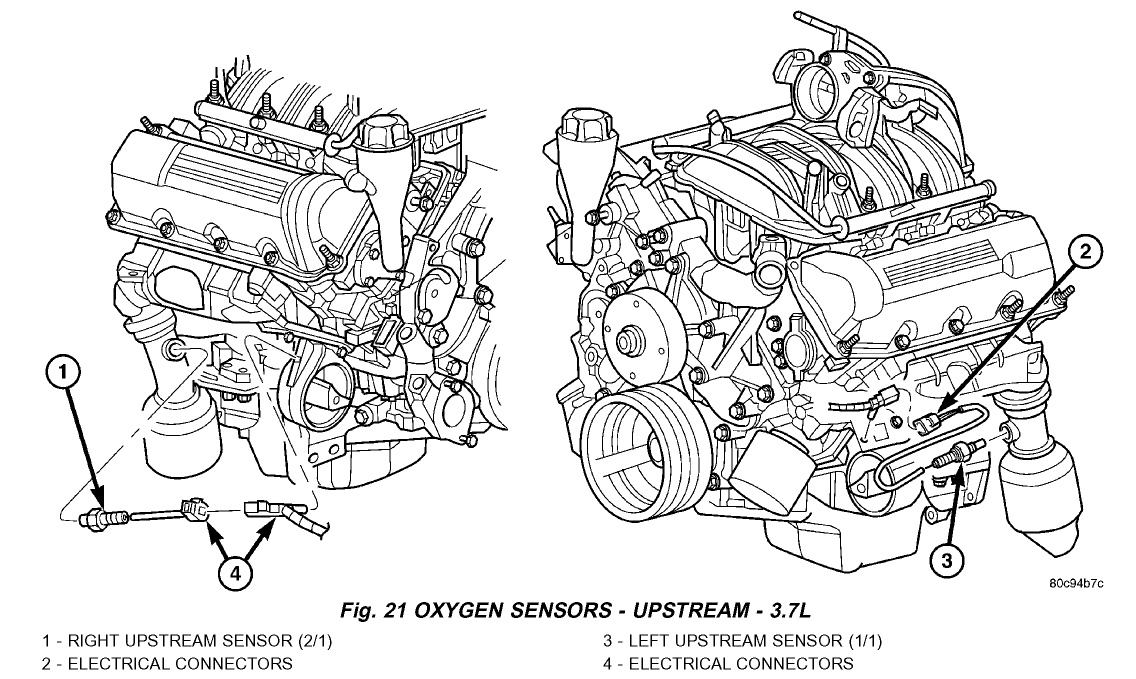
If you're elbow-deep in a Jeep Liberty project or just want to understand your ride a little better, grasping the 3.7L V6 engine's intricacies is crucial. This article delves into the engine diagram, explaining its purpose, key components, functionality, and real-world applications. Think of this as a detailed roadmap to your engine, enabling you to tackle repairs, modifications, and general maintenance with confidence. We also have the full-resolution diagram available for download; details on that at the end.
Why Bother with an Engine Diagram?
The engine diagram isn't just a pretty picture; it's your primary tool for several vital tasks:
- Troubleshooting: Pinpointing the source of a problem – a misfire, a leak, or a strange noise – becomes significantly easier with a visual reference.
- Repairing: Following the diagram ensures you disconnect and reconnect components in the correct order, preventing damage and saving time.
- Modifying: Planning upgrades, such as installing a new intake or exhaust system, requires a solid understanding of the engine's layout.
- Learning: Even if you're not planning any immediate work, studying the diagram helps you understand how the engine operates, making you a more informed car owner.
Key Specs and Main Parts of the 3.7L V6
The 3.7L V6 engine, often called the PowerTech V6, is a 90-degree V6 engine produced by Chrysler (now Stellantis). Here's a rundown of its key specifications and major components:
- Displacement: 3.7 liters (226 cubic inches)
- Configuration: 90-degree V6
- Cylinder Head Material: Aluminum
- Block Material: Cast Iron
- Valvetrain: Single Overhead Cam (SOHC), 12 valves (2 valves per cylinder)
- Firing Order: 1-2-3-4-5-6
- Fuel Delivery: Sequential Multiport Fuel Injection (SMPI)
Now let's break down the main parts, as they appear on the diagram:
- Cylinder Block: The foundation of the engine, housing the cylinders and crankshaft.
- Cylinder Heads: Located atop the cylinder block, containing the valves, camshafts, and combustion chambers.
- Pistons: Reciprocating components inside the cylinders that convert combustion pressure into mechanical motion.
- Connecting Rods: Connect the pistons to the crankshaft.
- Crankshaft: Converts the reciprocating motion of the pistons into rotational motion.
- Camshaft(s): Controls the opening and closing of the intake and exhaust valves.
- Intake Manifold: Distributes air to the cylinders.
- Exhaust Manifold(s): Collects exhaust gases from the cylinders.
- Fuel Injectors: Spray fuel into the intake ports or directly into the cylinders (depending on the exact year and configuration).
- Throttle Body: Controls the amount of air entering the engine.
- Water Pump: Circulates coolant through the engine to regulate temperature.
- Oil Pump: Circulates oil to lubricate engine components.
- Timing Chain/Belt: Connects the crankshaft to the camshaft(s), synchronizing their rotation.
- Sensors: Various sensors (e.g., crankshaft position sensor, camshaft position sensor, oxygen sensors, mass airflow sensor) provide data to the engine control unit (ECU).
Decoding the Symbols
Engine diagrams use standardized symbols to represent different components and connections. Understanding these symbols is essential for interpreting the diagram correctly. Here's a brief overview:
- Solid Lines: Typically represent rigid pipes or passages, such as fuel lines or coolant hoses. The thickness of the line might indicate the diameter of the pipe.
- Dashed Lines: Often indicate vacuum lines or electrical wiring.
- Dotted Lines: May represent control lines or signal paths within the engine management system.
- Arrows: Show the direction of flow for fluids (e.g., coolant, oil, fuel) or the direction of movement for mechanical components.
- Colors: Some diagrams use color-coding to differentiate between different systems. For example, blue might represent coolant lines, red might represent oil lines, and yellow might represent fuel lines. However, color coding can vary from one diagram to another, so always consult the diagram's legend.
- Icons: Specific icons represent components like sensors, valves, pumps, and electrical connectors. A key or legend should always accompany the diagram to explain the meaning of each icon. For example, a small box with a 'T' inside might indicate a temperature sensor.
How the 3.7L V6 Works (Simplified)
The 3.7L V6 operates on the four-stroke principle:
- Intake: The piston moves down, creating a vacuum that draws air and fuel into the cylinder.
- Compression: The piston moves up, compressing the air-fuel mixture.
- Combustion: The spark plug ignites the compressed mixture, forcing the piston down. This is the power stroke.
- Exhaust: The piston moves up, pushing the exhaust gases out of the cylinder through the exhaust valve.
The crankshaft converts the up-and-down motion of the pistons into rotational motion, which is then transmitted to the transmission and ultimately to the wheels. The Engine Control Unit (ECU) manages the entire process by controlling fuel injection, ignition timing, and other critical parameters based on data received from various sensors.
Real-World Use: Basic Troubleshooting
Let's say you're experiencing rough idling. Here's how the engine diagram can help:
- Consult the Diagram: Locate the intake manifold, throttle body, and vacuum lines.
- Inspect for Leaks: Check vacuum lines for cracks or disconnections. A vacuum leak can cause a lean air-fuel mixture, leading to rough idling. The diagram shows you exactly where these lines are located.
- Check Sensors: Identify the Mass Airflow (MAF) sensor and Throttle Position Sensor (TPS) on the diagram. Use a multimeter to check their voltage outputs. Faulty sensor readings can mislead the ECU and cause idling problems.
- Fuel Injectors: Use the diagram to locate the fuel rail and injectors. Check for loose connections or signs of fuel leakage. A faulty injector may not deliver the proper amount of fuel, causing rough idling.
Remember: Always consult your vehicle's service manual for specific troubleshooting procedures and diagnostic codes.
Safety First!
Working on an engine involves inherent risks. Here are some crucial safety precautions:
- Disconnect the Battery: Before working on any electrical components, disconnect the negative battery terminal to prevent short circuits and electric shock.
- Fuel System: Be extremely cautious when working with the fuel system. Fuel is highly flammable. Avoid sparks or open flames. Depressurize the fuel system before disconnecting any fuel lines.
- Cooling System: Never remove the radiator cap when the engine is hot. The cooling system is pressurized, and hot coolant can cause severe burns. Allow the engine to cool completely before working on the cooling system.
- Exhaust System: The exhaust system gets extremely hot. Allow it to cool completely before working on it.
- Moving Parts: Keep your hands and clothing away from moving parts, such as the serpentine belt and pulleys, when the engine is running.
Specifically, be extra careful around the fuel injectors and the high-pressure fuel lines leading to them. A leak in these areas can create a fire hazard. Always relieve fuel pressure before disconnecting these components.
When working with the ignition system, understand that the spark plugs receive very high voltage. Avoid touching spark plug wires while the engine is running to prevent electric shock.
Ready for the Full Diagram?
We've covered the basics, but having the complete, high-resolution 3.7L V6 engine diagram at your fingertips is invaluable. The diagram is ready for you to download, containing all the details mentioned above including clear labelling, color coded lines for fluids, and the electrical components.
The diagram shows all key components in the engine, a complete list and specification for your Jeep Liberty 3.7 engine. It’s a valuable visual resource for anyone working on or learning about this engine. Use this resource to get more familiar with the diagram and your engine.
The full diagram is an excellent reference for understanding the layout and function of the 3.7L V6 engine. Use it wisely and safely!