
3.8 Liter V6 Engine 3800 Firing Order Diagram
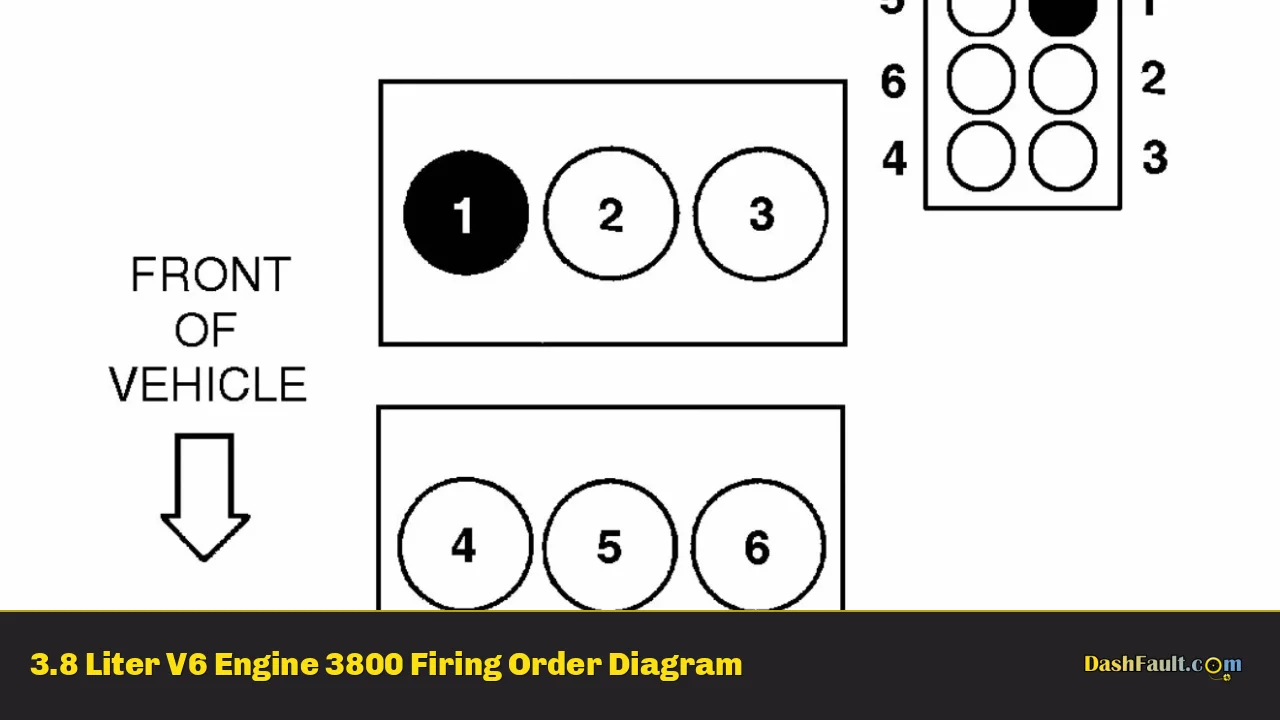
Alright, let's dive into the firing order diagram for the venerable 3.8 Liter V6, often referred to as the 3800. This engine, found in countless GM vehicles from the late 80s through the early 2000s, is known for its reliability and relative simplicity. Understanding its firing order is crucial for everything from basic maintenance to more complex diagnostic work. Consider this your in-depth guide.
Why Bother with a Firing Order Diagram?
Why should you, as an experienced DIYer, care about a firing order diagram? There are several reasons. The most common is misfiring. If your engine is running rough, throwing codes related to misfires, or just doesn't have the power it used to, verifying the firing order is one of the first diagnostic steps you should take. Specifically, the firing order diagram helps you:
- Diagnose misfires: Incorrectly wired spark plugs can cause significant misfires, leading to poor performance and potential engine damage.
- Perform tune-ups: Ensuring the spark plugs are firing in the correct sequence is essential for optimal engine performance and fuel efficiency.
- Install new distributors or spark plug wires: Getting the firing order wrong during these installations can lead to a no-start condition or severe engine damage.
- Understand engine timing: The firing order is intrinsically linked to the engine's timing, providing insights into the relationship between the crankshaft position and cylinder firing.
- General Engine Familiarization: Just understanding the sequence in which cylinders ignite is valuable. It provides an understanding of the engine's rhythm and how the power is distributed.
Key Specs and Main Parts of the 3.8L 3800 V6
Before we delve into the diagram, let's quickly recap the key specifications and main parts relevant to firing order:
- Engine Type: 3.8 Liter (231 cubic inch) V6
- Firing Order: 1-6-5-4-3-2
- Cylinder Numbering: On a V6, the cylinders are arranged in two banks. Generally, on the 3800, bank 1 is at the front of the engine (radiator side). Cylinder numbers are typically labeled on the intake manifold. Cylinder 1 is usually on the front bank, passenger side.
- Key Components:
- Crankshaft: The rotating heart of the engine, its position dictates when each cylinder fires.
- Camshaft: Operates the valves, its timing is synchronized with the crankshaft to control the intake and exhaust processes.
- Distributor (in older models): Distributes the high-voltage spark to the correct cylinder at the correct time. Later models use a coil pack ignition system.
- Coil Packs (in newer models): Individual coils for each cylinder, triggered by the engine control unit (ECU).
- Spark Plugs: Ignite the air-fuel mixture in each cylinder.
- Spark Plug Wires: Conduct high-voltage electricity from the distributor or coil packs to the spark plugs.
- Engine Control Unit (ECU): The brain of the engine, it controls the timing and duration of the spark.
Decoding the Firing Order Diagram
A firing order diagram, at its core, visually represents the sequence in which the cylinders of the 3.8L engine ignite. Let's break down what you might find in a typical diagram:
- Engine Representation: Usually, the diagram shows a simplified representation of the engine block, often including the cylinder banks.
- Cylinder Numbers: Each cylinder is labeled with its corresponding number (1 through 6).
- Firing Order Sequence: The heart of the diagram, displaying the order in which the cylinders fire (1-6-5-4-3-2). This can be indicated by numbers, arrows, or a combination of both.
- Distributor/Coil Pack Layout: If applicable, the diagram shows the distributor cap (on older models) or the coil pack arrangement, with each terminal labeled to correspond to a specific cylinder.
- Lines and Arrows: Lines connect the distributor/coil pack terminals to the respective spark plugs, with arrows indicating the direction of the electrical current. Colors might be used to further distinguish the connections, although this is less common.
- Symbols & Icons: Typically, the diagram is straightforward, and will rarely use abstract icons. Numbers designate the cylinders and the order. Arrows show the sequence.
Pay close attention to how the spark plug wires are routed. Incorrect routing can lead to cross-firing, where the spark jumps to the wrong cylinder, causing misfires.
How the Firing Order Works
The firing order is determined by the crankshaft and camshaft design. As the crankshaft rotates, it drives the camshaft, which in turn opens and closes the intake and exhaust valves. The camshaft also synchronizes with the ignition system to fire the spark plugs in the correct sequence.
In the 3800, the 1-6-5-4-3-2 firing order ensures a balanced power delivery and minimizes engine vibration. This order is carefully chosen to distribute the forces generated by each combustion event evenly across the engine block. Think of it as a precisely choreographed dance where each cylinder contributes to the overall performance.
Here's a simplified explanation:
- Cylinder 1 fires: The piston reaches the top of its compression stroke, and the spark plug ignites the air-fuel mixture.
- Cylinder 6 fires: The crankshaft rotates, and cylinder 6 is now at its firing point.
- Cylinder 5 fires: Followed by cylinder 5.
- Cylinder 4 fires: And so on.
- Cylinder 3 fires:
- Cylinder 2 fires: Finally, the cylinder 2 fires.
This cycle repeats continuously, providing the power that drives your vehicle.
Real-World Troubleshooting with the Firing Order
Let's say you're experiencing a persistent misfire on cylinder 3. Here's how the firing order diagram can help:
- Verify the basics: Check the spark plug, spark plug wire, and coil pack (if applicable) for cylinder 3. Ensure they are in good condition.
- Consult the diagram: Refer to the firing order diagram to trace the spark plug wire from cylinder 3 back to the distributor cap or coil pack.
- Inspect the connection: Make sure the wire is securely connected at both ends.
- Swap components: As a diagnostic step, swap the coil pack/wire from cylinder 3 with the coil pack/wire from a cylinder that is not misfiring (e.g., cylinder 1). If the misfire moves to cylinder 1, then you know the problem lies with the coil pack or wire you swapped.
- Check for cross-firing: Ensure the spark plug wires are properly routed and not touching each other. This can cause the spark to jump to the wrong cylinder.
Common issues related to firing order misdiagnosis:
- Damaged spark plug wires: Cracks, burns, or loose connections can interrupt the flow of electricity.
- Faulty coil packs: Coil packs can fail over time, resulting in a weak or nonexistent spark.
- Distributor cap issues: Cracks, corrosion, or worn terminals can cause misfires (on older models).
- Incorrect distributor timing: If the distributor is not properly aligned, the spark will not occur at the correct time.
Safety First!
Working with the ignition system involves high voltage, so take the following precautions:
- Disconnect the battery: Always disconnect the negative battery cable before working on the ignition system to prevent accidental shocks.
- Use insulated tools: Use tools with insulated handles to protect yourself from electrical shock.
- Avoid touching exposed wires: Never touch exposed spark plug wires or coil pack terminals while the engine is running.
- Work in a well-ventilated area: When working with fuel, ensure proper ventilation to avoid inhaling harmful fumes.
Specifically, coil packs can discharge a jolt even when the car is off, so treat them with respect.
Accessing the Diagram
You now have a solid understanding of the 3.8L V6 firing order and its importance. To further aid your repair or learning process, we have a detailed firing order diagram available for download. This diagram includes clear illustrations of the cylinder numbering, firing order sequence, and distributor/coil pack layout. With this resource at your fingertips, you'll be well-equipped to tackle any ignition-related issues on your 3.8L engine.