
4wd Ford F350 4x4 Front Hub Assembly Diagram
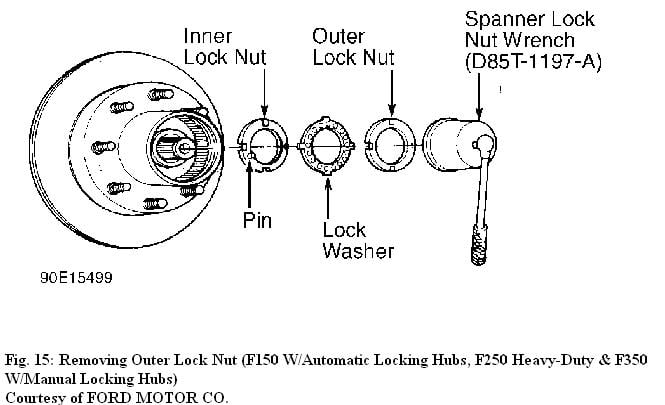
Alright, let's dive into the anatomy of the front hub assembly on your 4WD Ford F-350. This is a critical system for engaging and disengaging four-wheel drive, and understanding its components and how they interact is essential for maintenance, repairs, or even upgrades. This article walks you through a typical front hub assembly diagram, helping you decipher its secrets and troubleshoot common issues. We'll cover everything from the individual parts to how the whole system works, with a focus on clarity and practical application.
Why Bother Understanding the Front Hub Assembly Diagram?
Why should you care about a diagram of your front hub assembly? Simple: knowledge is power. Specifically, it's the power to:
- Diagnose problems accurately: When you know the function of each part, you can pinpoint the source of noises, vibrations, or 4WD engagement failures.
- Perform repairs confidently: Replacing wheel bearings, servicing the locking hubs, or even doing a brake job becomes much easier when you understand the system.
- Upgrade intelligently: Planning a hub conversion, a lift kit, or any other modification that affects the front axle? A solid understanding of the hub assembly is crucial.
- Save money: Avoiding unnecessary trips to the mechanic is always a good thing. With the right information and tools, you can tackle many front hub issues yourself.
Key Specs and Main Parts of a 4WD Ford F-350 Front Hub Assembly
Let's break down the major players in the front hub assembly, keeping in mind that specifics can vary slightly depending on the year and model of your F-350.
- Wheel Hub: This is the central component to which the wheel is mounted. It rotates on bearings, allowing the wheel to spin freely.
- Wheel Bearings: These are the low-friction devices that allow the hub (and thus the wheel) to rotate smoothly. They're typically tapered roller bearings, designed to handle both radial (weight) and thrust (side-to-side) loads. Premature bearing failure can lead to wheel wobble and noise.
- Wheel Studs: These are the threaded bolts pressed into the hub that the wheel is bolted onto.
- Locking Hubs (Manual or Automatic): This is the mechanism that engages or disengages the front axle from the wheel.
- Manual Hubs: Require you to physically turn a dial or lever to lock or unlock the hub. They offer more positive engagement and are generally considered more reliable.
- Automatic Hubs: Engage automatically when the transfer case is shifted into 4WD. They can be convenient but are often prone to failure, especially in older models. Vacuum actuated hubs were a common design, utilizing vacuum lines to engage and disengage.
- Spindle: This is a stationary part that the hub rotates around. It's bolted to the steering knuckle (also known as the steering upright). The spindle provides structural support and contains the wheel bearing races.
- Spindle Nut (or Axle Nut): A large nut that preloads the wheel bearings. Proper torque is crucial for bearing life. Overtightening can cause premature bearing failure, while undertightening can lead to wheel wobble.
- Axle Shaft: This transmits power from the front differential to the hub. The outer end of the axle shaft splines into the locking hub.
- Seals: Various seals are used to keep grease in and contaminants out of the hub assembly. Common seals include the inner and outer wheel bearing seals and the spindle seal.
- Brake Rotor/Disc: While technically part of the braking system, the brake rotor is typically mounted to the wheel hub and rotates with it.
Decoding the Diagram: Symbols and Conventions
A good hub assembly diagram will use standardized symbols and conventions to represent the different components. Here's a quick guide:
- Solid Lines: Typically represent physical connections between parts. The thickness of the line might indicate the size or strength of the connection.
- Dashed Lines: Often indicate hidden lines or parts that are located behind other components. They can also represent vacuum lines or fluid lines, depending on the diagram.
- Arrows: Show the direction of movement, force, or fluid flow. For example, an arrow might indicate the direction of grease being applied to a bearing.
- Numbers and Letters: Correspond to a parts list or legend that identifies each component by name and part number. Pay close attention to these – they're essential for ordering the correct replacement parts.
- Color Coding (if present): Some diagrams use color coding to differentiate between different types of materials or systems. For example, blue might represent hydraulic fluid, while red might represent high-pressure areas.
- Cutaway Views: These show the internal structure of a component by "cutting away" a section of the part to reveal its inner workings.
Understanding these symbols will help you navigate the diagram and quickly identify the parts you're looking for.
How It Works: From Differential to Wheel Rotation
Here's a simplified overview of how the front hub assembly functions in a 4WD F-350:
- Power from the Engine: The engine generates power, which is transmitted to the transmission.
- Transfer Case Engagement: When you engage 4WD, the transfer case directs power to both the front and rear axles.
- Power to the Front Differential: The front driveshaft transmits power from the transfer case to the front differential.
- Axle Shaft Rotation: The front differential divides the power and sends it to the left and right axle shafts.
- Locking Hub Engagement: With the locking hubs engaged (either manually or automatically), the axle shaft is connected to the wheel hub.
- Wheel Hub Rotation: As the axle shaft rotates, it turns the wheel hub, causing the wheel to spin.
- Disengagement: When the locking hubs are disengaged, the axle shaft is disconnected from the wheel hub, allowing the wheel to spin freely without being driven by the engine.
The wheel bearings allow the hub to rotate smoothly around the stationary spindle, minimizing friction and ensuring efficient power transfer.
Real-World Use: Troubleshooting Tips
Here are some common symptoms and potential causes related to the front hub assembly:
- Wheel Wobble or Vibration: Could indicate worn wheel bearings, a bent wheel hub, or loose wheel studs.
- Grinding Noise from Front Wheel: Often caused by worn or damaged wheel bearings. The noise may increase with speed.
- Difficulty Engaging/Disengaging 4WD: Could be a problem with the locking hubs themselves (manual or automatic), a vacuum leak in the automatic hub system, or a malfunctioning transfer case.
- Grease Leakage: Indicates a damaged seal, such as the inner or outer wheel bearing seal or the spindle seal.
- Clicking Noise During Turns: Could indicate a worn CV joint (constant velocity joint) in the axle shaft.
Pro Tip: Before replacing any parts, always inspect the surrounding components for damage or wear. For example, if you're replacing a wheel bearing, check the spindle for scoring or damage that could cause the new bearing to fail prematurely.
Safety First: Risky Components and Procedures
Working on the front hub assembly involves several potential hazards. Here are some safety precautions to keep in mind:
- Proper Lifting and Support: Always use jack stands to support the vehicle after lifting it with a jack. Never work under a vehicle supported only by a jack.
- Wheel Bearing Preload: Getting the wheel bearing preload correct is critical for bearing life. Use a torque wrench to tighten the spindle nut to the manufacturer's specified torque. Overtightening can damage the bearings, while undertightening can lead to wheel wobble.
- Brake System: Be careful when working near the brake system. Avoid contaminating the brake rotors or pads with grease or oil.
- Vacuum Lines (Automatic Hubs): If your F-350 has automatic hubs, be aware of the vacuum lines. Disconnect the negative battery terminal before working on the system to prevent accidental activation of the hubs.
- Eye Protection: Wear safety glasses to protect your eyes from flying debris.
Remember, if you're not comfortable performing a particular repair, it's always best to consult a qualified mechanic.
We have a detailed F350 4x4 Front Hub Assembly Diagram available for you. It includes exploded views, part numbers, and torque specifications.