
5.4 Triton Ford 5.4 Firing Order Diagram
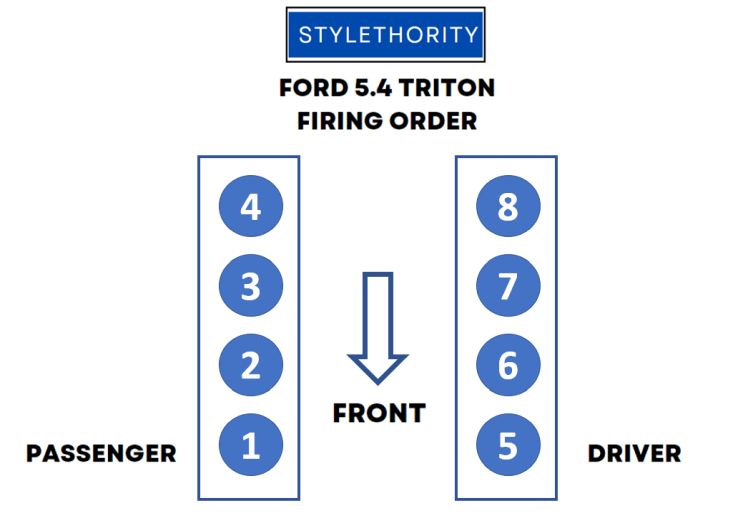
Alright, let's dive into the 5.4 Triton's firing order and its diagram. This information is crucial whether you're tackling a misfire, swapping out spark plugs, or just trying to deepen your understanding of your engine. Knowing the firing order and how it's represented is fundamental for accurate diagnosis and repair.
Purpose of the 5.4 Triton Firing Order Diagram
The firing order diagram is your roadmap for understanding the sequence in which the engine's cylinders ignite. Its primary purposes are:
- Accurate Diagnostics: When diagnosing a misfire, the firing order helps you pinpoint the specific cylinder causing the issue.
- Proper Spark Plug Installation: Ensures you connect spark plug wires to the correct cylinders on the distributor (if applicable) or coil packs.
- Ignition Timing Verification: Confirming the ignition timing aligns with the firing order prevents engine damage and optimizes performance.
- Engine Modifications: When upgrading or modifying engine components, understanding the firing order is critical for ensuring proper function and preventing unforeseen problems.
- Educational Purposes: Simply expanding your automotive knowledge and understanding how internal combustion engines operate.
Without this information, you're essentially working in the dark, increasing the risk of misdiagnosis, incorrect repairs, and potential damage to your engine. It's a vital tool for any intermediate DIYer working on a 5.4 Triton.
Key Specs and Main Parts of the 5.4 Triton Engine
Before we delve into the diagram, let's quickly recap the essential specs and parts of the 5.4 Triton engine. Understanding these basics is key to effectively using the firing order diagram.
- Engine Type: 5.4L (330 cu in) SOHC (Single Overhead Camshaft) V8.
- Firing Order: 1-3-7-2-6-5-4-8
- Cylinder Arrangement: V8 – Cylinders are arranged in two banks of four.
- Bank 1: Passenger Side (typically, but always verify based on your specific vehicle application). Cylinders are numbered 1, 2, 3, and 4 from front to back.
- Bank 2: Driver Side (typically). Cylinders are numbered 5, 6, 7, and 8 from front to back.
- Key Components Related to Firing Order:
- Coil Packs (or Distributor): Deliver the spark to ignite the air-fuel mixture in each cylinder. Later models typically use Coil-On-Plug (COP) ignition.
- Spark Plugs: Initiate the combustion process.
- Crankshaft Position Sensor (CKP): Provides information about the crankshaft's position to the engine control unit (ECU).
- Camshaft Position Sensor (CMP): Provides information about the camshaft's position to the ECU. This is used to determine the position of the pistons and valves, and therefore the correct ignition timing.
- ECU (Engine Control Unit): The "brain" of the engine, which controls ignition timing and fuel delivery based on sensor inputs.
Keep in mind that there may be slight variations depending on the specific year and vehicle the engine is installed in (e.g., F-150, Expedition, etc.), so always double-check the specific diagrams and specifications for *your* particular vehicle.
Symbols and Interpretation of the Firing Order Diagram
Firing order diagrams are generally straightforward, but let's decode the symbols you'll encounter:
- Cylinder Numbers: Usually represented numerically (1-8). These indicate the physical cylinder location.
- Firing Order Sequence: Shown as a numerical sequence (e.g., 1-3-7-2-6-5-4-8). This dictates the order in which the cylinders fire.
- Lines and Connections: Lines connect the coil pack (or distributor) terminals to the corresponding spark plugs. These lines may be curved or straight, depending on the diagram.
- Arrows (if present): Might indicate the direction of the distributor's rotation (if applicable).
- Color Coding (Less Common): Some diagrams use color coding to differentiate between cylinder banks or specific wiring. However, this is less common for firing order diagrams specifically.
- Icons: Icons might represent the coil pack(s), spark plugs, and sometimes even the crankshaft pulley for reference.
- Bank 1 and Bank 2 Indicator: The diagram will normally distinguish between which side of the engine is Bank 1 and Bank 2, by either words (Bank 1, Bank 2), or abbreviations (e.g. "B1" and "B2").
The most important aspect is identifying the cylinder numbers and the corresponding firing order sequence. This tells you precisely which cylinder fires when.
How the 5.4 Triton Firing Order Works
The 5.4 Triton's firing order is orchestrated by the engine's crankshaft and camshaft positions, and managed by the ECU. Here's the process:
- The crankshaft rotates, driving the pistons up and down within the cylinders.
- The camshaft, driven by the timing chain or belt, controls the opening and closing of the intake and exhaust valves.
- The Crankshaft Position (CKP) Sensor and Camshaft Position (CMP) Sensor provide the ECU with real-time data about the crankshaft and camshaft positions.
- Based on this information, the ECU triggers the appropriate coil pack (or distributor) to send a high-voltage spark to the correct spark plug.
- The spark ignites the air-fuel mixture in the cylinder, causing combustion and pushing the piston down.
- This process repeats for each cylinder in the specified firing order (1-3-7-2-6-5-4-8), ensuring a smooth and efficient engine operation.
Think of it as a carefully choreographed dance between the mechanical components and the electronic control system. If even one element is out of sync, it can lead to misfires, poor performance, and potentially engine damage.
Real-World Use: Basic Troubleshooting Tips
Here's how you can use the firing order diagram for basic troubleshooting:
- Misfire Diagnosis: If you're experiencing a misfire (rough idle, loss of power, engine code), identify the affected cylinder using an OBD-II scanner. Then, consult the firing order diagram to check the spark plug, coil pack, and wiring related to that cylinder. Swapping coil packs between cylinders (of the same bank, if coil-on-plug) can help you isolate the problem. If the misfire moves to the other cylinder, the coil pack is likely the culprit.
- Spark Plug Replacement: When replacing spark plugs, use the diagram to ensure you connect the spark plug wires to the correct cylinders. Incorrect wiring can cause severe engine damage.
- Timing Issues: If you suspect timing problems, a timing light (if applicable to your system) can be used to verify that the ignition timing aligns with the firing order. This is a more advanced procedure, requiring specialized tools and knowledge.
- Visual Inspection: Before anything else, always perform a visual inspection of the wiring, coil packs, and spark plugs. Look for signs of damage, corrosion, or loose connections.
Remember: Start with the simplest solutions first. Check for loose connections and obvious damage before moving on to more complex diagnostics.
Safety Considerations
Working with the ignition system involves high voltage, so safety is paramount:
- Disconnect the Battery: Always disconnect the negative battery terminal before working on the ignition system. This prevents accidental shocks and protects the ECU.
- Avoid Touching Live Wires: Never touch spark plug wires or coil packs while the engine is running. The voltage is high enough to cause serious injury.
- Use Insulated Tools: Use tools with insulated handles to minimize the risk of electric shock.
- Work in a Well-Ventilated Area: When working with fuel or other flammable liquids, ensure proper ventilation to prevent fire hazards.
- Proper Protective Gear: Wear safety glasses and gloves to protect your eyes and hands.
Always prioritize safety. If you're unsure about any procedure, consult a qualified mechanic.
We have a detailed 5.4 Triton firing order diagram available for download. This diagram provides a visual representation of the firing order and cylinder locations, making it an invaluable resource for your repairs and maintenance. With this resource and the knowledge you've gained here, you'll be well-equipped to tackle many 5.4 Triton-related issues.