
5.4 Triton Serpentine Belt Diagram Without Ac
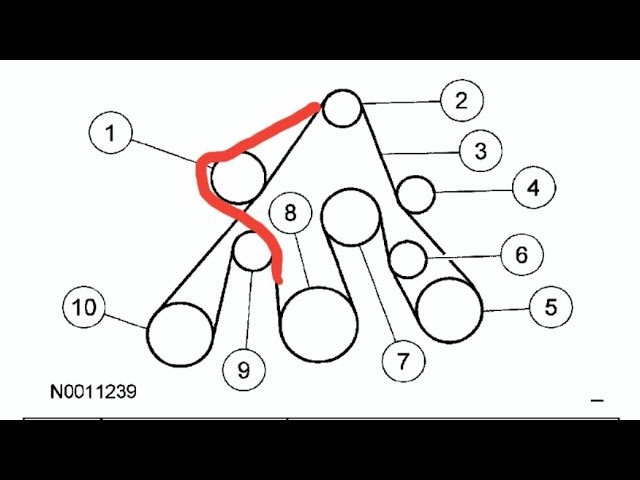
Alright, let's talk about the serpentine belt on a 5.4L Triton engine without air conditioning. Understanding the routing of this belt is crucial for several reasons, from simple maintenance like belt replacement to diagnosing more complex engine issues. This article will provide a comprehensive breakdown of the belt diagram, components, and troubleshooting tips, assuming you're already comfortable working on your vehicle.
Purpose of Understanding the Serpentine Belt Diagram
Why bother learning this? The serpentine belt is a vital component; it drives essential engine accessories. Without a properly routed and tensioned belt, your engine could overheat, your power steering could fail, and your charging system might stop working. Knowing the diagram allows you to:
- Correctly replace the belt: This is the most common reason. If the belt breaks or shows signs of wear (cracks, fraying), you'll need to replace it. The diagram ensures you route the new belt correctly.
- Diagnose accessory problems: If your power steering pump isn't working or your alternator isn't charging, a slipped or damaged belt could be the culprit. The diagram helps you check the belt's condition and routing.
- Learn your engine's accessory layout: Familiarizing yourself with the components helps you understand the engine's overall operation and troubleshoot other issues.
- Ensure proper tension: Correct belt tension is vital for optimal accessory performance and belt life. The diagram shows the location of the tensioner, which maintains this tension.
Key Specs and Main Parts of the 5.4L Triton Serpentine Belt System (Without A/C)
The 5.4L Triton engine, in its non-A/C configuration, typically uses a serpentine belt system with fewer components than its A/C-equipped counterpart. This simplicity makes it easier to understand. The main parts are:
- Crankshaft Pulley (Harmonic Balancer): This is the primary driver of the belt, connected directly to the engine's crankshaft. It dampens torsional vibrations from the engine.
- Alternator Pulley: The alternator is responsible for charging the battery and powering the vehicle's electrical system. The belt spins the alternator, generating electricity.
- Power Steering Pump Pulley: This pulley drives the power steering pump, which provides hydraulic assistance to make steering easier.
- Idler Pulley(s): These pulleys are smooth and do not drive any accessories. They primarily serve to guide the belt around the other pulleys and maintain proper belt wrap (the amount of contact the belt has with each pulley). Proper belt wrap is crucial for efficient power transfer.
- Belt Tensioner: This spring-loaded pulley maintains the correct tension on the serpentine belt. It automatically adjusts for belt stretch and wear. The tensioner arm pivots, and an internal spring provides the necessary force.
- Serpentine Belt: The belt itself is typically a multi-ribbed belt made of rubber or synthetic materials. The ribs fit into grooves on the pulleys for a secure grip.
Key Specs: While belt length can vary slightly depending on the specific vehicle configuration (truck vs. van, etc.), a common length for the non-A/C 5.4L Triton serpentine belt is around 90-92 inches. Always verify the correct part number for your specific vehicle using a parts catalog or your vehicle's VIN number. Torque specifications for the tensioner and idler pulley bolts are also crucial and should be followed precisely to avoid damage.
Understanding Serpentine Belt Diagram Symbols
The diagram itself uses various symbols to represent the components and belt routing. Here's a breakdown of common symbols:
- Solid Lines: These represent the path of the serpentine belt. Follow these lines carefully when routing the belt.
- Pulleys: These are typically represented as circles. Some diagrams may include the accessory abbreviation (ALT for alternator, PS for power steering, etc.) within the circle.
- Tensioner: Often depicted as a pulley with an arrow indicating the direction of tensioner arm movement. It may also include a symbol representing the spring mechanism.
- Idler Pulleys: Simple circles, often labeled as "IDLER."
- Arrows: Arrows indicate the direction of rotation for each pulley.
Unfortunately, color coding isn't typically used in serpentine belt diagrams. However, some online resources might use color to highlight specific sections of the belt path for clarity. In general, focus on the lines and labels to understand the routing.
How the Serpentine Belt System Works
The system is relatively straightforward. The engine's crankshaft rotates, turning the crankshaft pulley. The serpentine belt, wrapped around all the pulleys, transfers this rotational force to the alternator, power steering pump, and any idler pulleys. The belt tensioner ensures that the belt remains tight enough to prevent slippage, even as the engine speed changes. The idler pulleys guide the belt along the optimal path, maximizing belt wrap and preventing interference with other engine components.
Real-World Use: Basic Troubleshooting
Here are some common serpentine belt issues and troubleshooting tips:
- Squealing Noise: This is often caused by a loose or glazed belt. Check the belt tension and condition. A worn or stretched belt needs replacement. A glazed belt might indicate pulley misalignment or a faulty accessory.
- Broken Belt: This is a serious issue. Check the pulleys for any damage or misalignment. A seized accessory (like the alternator or power steering pump) can overload the belt and cause it to break. Replace the belt and address the underlying problem.
- Cracked or Frayed Belt: This indicates normal wear and tear, but it's a sign that the belt needs to be replaced soon. Cracks are a sign the rubber is drying out and losing elasticity.
- Belt Slippage: This can cause a loss of power steering assist or a weak charging system. Check the belt tension and condition. Also, inspect the pulleys for signs of contamination (oil, coolant).
To check belt tension, you can use a belt tension gauge or, with experience, judge it by feel. The belt should have some give but not be excessively loose. A general rule of thumb is about 1/4 inch of deflection between pulleys at the longest span.
Safety Precautions
Working around the serpentine belt system can be dangerous. Here's what to keep in mind:
- Disconnect the battery: Always disconnect the negative battery cable before working on any electrical components, including the alternator.
- Engine off: Never work on the belt system with the engine running. This is extremely dangerous and can result in serious injury.
- Hot components: Be careful when working around the engine after it has been running. The exhaust manifold and other components can be very hot.
- Proper tools: Use the correct tools for the job. A serpentine belt tool makes removing and installing the belt much easier.
- Eye protection: Wear safety glasses to protect your eyes from debris.
The belt tensioner stores significant spring energy and can snap back forcefully if not handled correctly. Always use the proper tools to relieve tension before removing the belt. Improperly releasing the tensioner can cause injury.
By carefully studying the diagram and understanding the components, you'll be well-equipped to maintain and troubleshoot your 5.4L Triton's serpentine belt system. Remember to always prioritize safety and consult a professional mechanic if you're unsure about any aspect of the repair.
We have the diagram file available for download. [Insert Download Link Here - FAKE FOR EXAMPLE] Download the Serpentine Belt Diagram (No A/C). This visual aid will be invaluable when working on your vehicle.