
5.7 Dodge Hemi Serpentine Belt Diagram
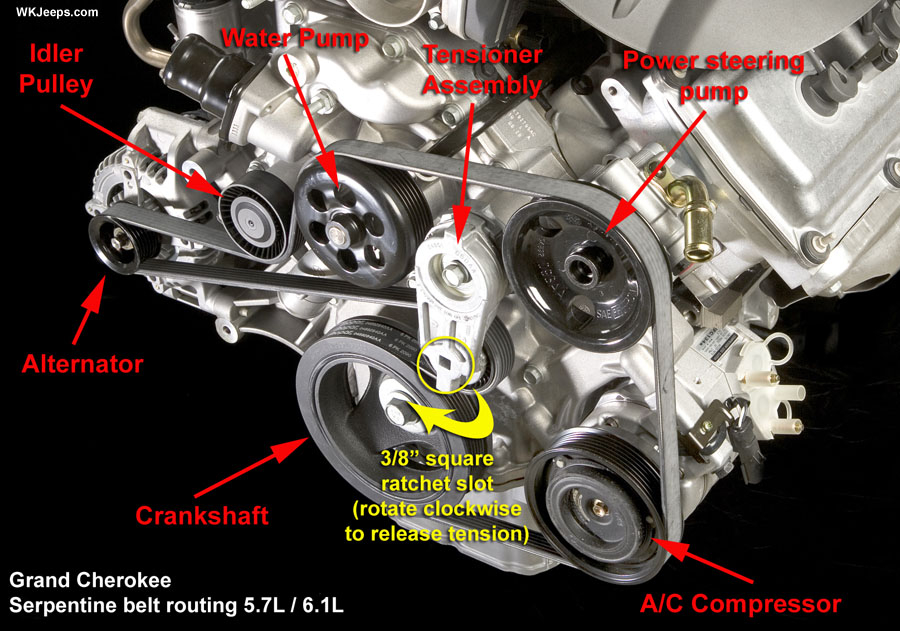
Alright, let's talk serpentine belts on the 5.7L Dodge Hemi. Understanding the belt routing is crucial for everything from routine maintenance to diagnosing some head-scratching problems. We're going to break down the diagram, its purpose, and how to use it effectively. Consider this your in-depth guide to conquering the serpentine belt on your Hemi.
Purpose of the Serpentine Belt Diagram
Why bother with a diagram? Simple: it's your roadmap for success. The serpentine belt powers several vital components of your engine, including the alternator, power steering pump, air conditioning compressor, and sometimes even the water pump. If the belt breaks or is incorrectly installed, you'll quickly find yourself stranded and potentially causing further damage. Having a clear diagram allows you to:
- Correctly Reinstall the Belt: After replacing a worn or broken belt, you must route it correctly. Incorrect routing can lead to component failure due to insufficient power delivery or, worse, damage to the belt itself.
- Diagnose Issues: Squealing belts, overheating, or charging problems can often be traced back to a misaligned or improperly tensioned belt. The diagram helps you quickly verify the correct routing and identify potential issues with pulleys or tensioners.
- Perform Maintenance: When replacing components like the alternator or power steering pump, you'll need to remove the belt. Knowing the precise routing makes reinstallation much easier and prevents errors.
- Gain a Deeper Understanding: Even if you're not actively working on your car, understanding the belt's function and routing gives you a better overall knowledge of your engine's operation.
Key Specs and Main Parts
Before diving into the diagram itself, let's identify the key components and their roles:
- Serpentine Belt: The heart of the system, a single continuous belt made of reinforced rubber that transmits power from the crankshaft pulley to other accessories. The "serpentine" name comes from its winding path around various pulleys.
- Crankshaft Pulley (or Harmonic Balancer): Driven directly by the engine's crankshaft, this pulley is the power source for the entire system.
- Alternator Pulley: Powers the alternator, which charges the battery and provides electrical power to the vehicle.
- Power Steering Pump Pulley: Drives the power steering pump, providing hydraulic assistance to the steering system.
- Air Conditioning Compressor Pulley: Engages when the air conditioning is turned on, driving the A/C compressor.
- Water Pump Pulley: (On some models) Drives the water pump, circulating coolant through the engine to prevent overheating.
- Idler Pulley: Smooth, non-driven pulleys that guide the belt and maintain proper tension and routing.
- Tensioner Pulley: A spring-loaded pulley that automatically maintains the correct tension on the serpentine belt. This is crucial for optimal performance and belt life. A worn tensioner can cause belt slippage and noise.
Typical 5.7L Hemi serpentine belts will have a specific length and rib count. While the exact dimensions vary slightly depending on the year and model of your vehicle, it's essential to use the correct belt specified for your application. Using the wrong belt can lead to improper tension, slippage, and premature wear.
Symbols and Diagram Interpretation
The serpentine belt diagram uses a standardized set of symbols and conventions. Understanding these symbols is key to interpreting the diagram correctly:
- Solid Lines: Represent the path of the serpentine belt. Pay close attention to the direction of the line, as it indicates how the belt wraps around each pulley.
- Arrows: Indicate the direction of rotation for each pulley. This is important for understanding how the belt drives each component.
- Pulley Symbols: Simple circles generally represent pulleys. Some diagrams may include additional details, such as the number of ribs on the pulley.
- Tensioner Symbol: Often depicted as a pulley with an attached spring or lever, indicating the tensioner mechanism. The diagram may also show the direction of tensioner movement.
- Component Labels: Abbreviations or labels identify each component connected to the belt (e.g., ALT for alternator, P/S for power steering).
- Diagram Orientation: The diagram usually represents the engine as viewed from the front of the vehicle.
Some diagrams might also use color-coding to highlight specific sections of the belt path or identify the ribbed and smooth sides of the belt. Ensure you consult the key accompanying the diagram to understand the color-coding conventions.
How It Works: The Serpentine Belt System
The serpentine belt system is a relatively simple but crucial component of your Hemi. The crankshaft pulley, driven by the engine, spins the serpentine belt. This belt, in turn, drives all the accessory pulleys. The tensioner pulley maintains the correct tension on the belt, ensuring that it doesn't slip or stretch excessively. Without proper tension, the accessories won't function correctly, leading to a variety of problems.
The routing of the belt is critical. It's designed to maximize the contact area between the belt and the pulleys, providing adequate grip and preventing slippage. The diagram shows you exactly how the belt needs to weave around each pulley to achieve this optimal contact.
Real-World Use: Basic Troubleshooting Tips
The serpentine belt diagram becomes your best friend when troubleshooting belt-related issues:
- Squealing Belt: This is often caused by a loose belt or a worn pulley. Check the tensioner to ensure it's functioning correctly. Inspect the belt for signs of wear, cracks, or glazing. If the belt is slipping, the diagram can help you verify that it's properly routed and contacting the pulleys as designed. Sometimes, belt dressing can temporarily alleviate squealing, but it's generally a band-aid solution; address the underlying cause.
- Belt Slippage: Similar to a squealing belt, slippage can be caused by low tension or a worn belt. However, it can also be caused by a damaged pulley or a seized component. Use the diagram to inspect each pulley and ensure it spins freely. A seized component will put excessive strain on the belt, causing it to slip and potentially break.
- Component Failure: If you're experiencing issues with your alternator, power steering, or air conditioning, check the serpentine belt first. A broken or slipped belt will prevent these components from functioning. Use the diagram to verify the belt's integrity and routing.
- Incorrect Routing After Replacement: If you've recently replaced the belt and are experiencing problems, double-check the routing using the diagram. It's easy to make a mistake, especially in tight engine compartments.
When inspecting the belt, look for signs of wear, such as cracks, fraying, or missing ribs. These are indicators that the belt needs to be replaced. Additionally, check the pulleys for damage or misalignment. A bent or damaged pulley can cause the belt to wear prematurely.
Safety Considerations
Working on the serpentine belt system can be dangerous if you're not careful. Here are some key safety precautions:
- Disconnect the Battery: Before working on any electrical components, disconnect the negative battery terminal to prevent accidental shocks.
- Engine Must Be Off and Cool: Never work on the serpentine belt system while the engine is running or hot. The moving parts can cause serious injury. Allow the engine to cool completely before starting any work.
- Keep Hands and Clothing Clear: Keep your hands, clothing, and tools clear of the moving belt and pulleys. Loose clothing can get caught in the system, and tools can slip and cause injury.
- Tensioner Safety: The tensioner pulley is under spring pressure. Use the correct tool to relieve the tension before removing the belt. Releasing the tension without the proper tool can cause the tensioner to snap back violently, resulting in injury.
- Eye Protection: Wear safety glasses to protect your eyes from debris.
Important: The cooling fan is often located near the serpentine belt. Be extremely cautious when working in this area, as the fan can start unexpectedly, even with the engine off, if the electrical system is still connected.
With this information, you should be well-equipped to understand and utilize the 5.7L Dodge Hemi serpentine belt diagram for maintenance, troubleshooting, and repair. Remember to always prioritize safety and consult your vehicle's service manual for specific instructions and torque specifications.
And, we have the file available. If you need a downloadable, high-resolution version of the 5.7L Hemi serpentine belt diagram, just let us know, and we can provide it.