
5.7 Liter 5.7 Hemi Serpentine Belt Diagram
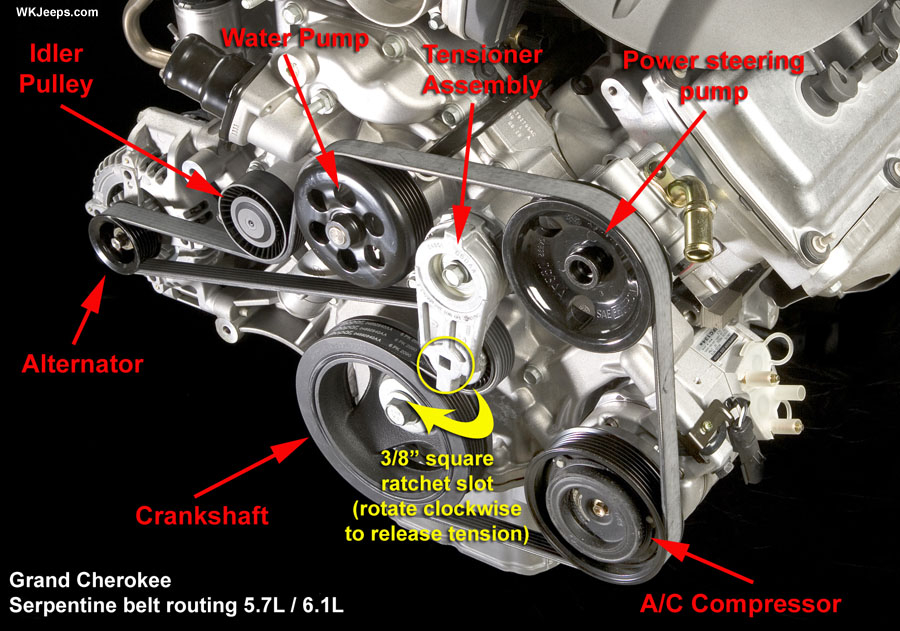
Alright, let's dive into the serpentine belt system on your 5.7L Hemi. Understanding this system is crucial for routine maintenance, troubleshooting, and even modifications. Think of this article as your detailed guide to the serpentine belt diagram – a roadmap to keeping your Hemi humming.
Purpose of the Serpentine Belt Diagram
Why bother understanding the serpentine belt and its diagram? Simple: it's the lifeline of many critical engine components. The serpentine belt, a single continuous belt, drives several accessories. The diagram is indispensable for:
- Replacement: A cracked or worn belt needs immediate replacement. The diagram shows you the correct routing, preventing costly mistakes.
- Troubleshooting: Squealing belts, failing accessories – the diagram helps pinpoint the source of the problem.
- Maintenance: Knowing the belt's path allows you to inspect pulleys, tensioners, and other components for wear and tear.
- Modifications: Installing aftermarket accessories might require modifying the belt length or pulley configuration. The diagram provides a baseline.
Essentially, without a clear understanding (preferably visual via the diagram), you're working blind, increasing the risk of incorrect installation, damage to components, or complete system failure.
Key Specs and Main Parts of the 5.7L Hemi Serpentine Belt System
The 5.7L Hemi serpentine belt system, while seemingly simple, involves several key components:
- Serpentine Belt: A multi-ribbed belt made of durable rubber compounds, designed to grip pulleys and transfer rotational force. The belt length is critical; using the wrong size will lead to issues.
- Crankshaft Pulley (Harmonic Balancer): Located at the bottom of the engine, driven directly by the crankshaft. It's the primary power source for the entire system. It also acts as a harmonic balancer, dampening torsional vibrations.
- Alternator Pulley: Powers the alternator, which charges the battery and provides electrical power to the vehicle. A failing alternator pulley can cause belt slippage and noise.
- Power Steering Pump Pulley: Drives the power steering pump, providing hydraulic assistance for steering.
- Water Pump Pulley: Circulates coolant throughout the engine, preventing overheating. A malfunctioning water pump can lead to severe engine damage.
- Air Conditioning (A/C) Compressor Pulley: Drives the A/C compressor, providing refrigerant for the air conditioning system.
- Idler Pulley(s): Smooth, bearing-equipped pulleys that guide the belt around other components and maintain proper belt alignment. These are simple but critical for correct belt tension.
- Belt Tensioner: A spring-loaded or hydraulic mechanism that maintains consistent tension on the belt. This is *extremely* important. If the tensioner fails, the belt will slip, causing all sorts of problems.
The specific arrangement of these components varies slightly depending on the year and model of your 5.7L Hemi. That's why having the correct diagram for *your* engine is vital.
Understanding Serpentine Belt Diagram Symbols
Serpentine belt diagrams aren't always intuitive at first glance. Here's a breakdown of common symbols:
- Solid Lines: Represent the belt itself, tracing its path around the pulleys.
- Arrows: Indicate the direction of belt travel. Following the arrows ensures you're routing the belt correctly.
- Circles: Represent pulleys. Different shading or markings might indicate specific pulley types (e.g., grooved, smooth).
- Component Labels: Abbreviations like "ALT" (alternator), "P/S" (power steering), "W/P" (water pump), and "A/C" (air conditioning) clearly identify each component.
- Tensioner Symbol: A stylized representation of the tensioner assembly, often including an arrow indicating the direction of tension application.
- Routing Notes: Some diagrams include written notes highlighting critical routing steps or potential problem areas.
Color coding is less common, but some diagrams might use different colors to distinguish between the front and back sides of the belt, particularly when routing around multiple pulleys in close proximity. Always refer to the diagram's legend or key to understand the meaning of specific symbols.
How the Serpentine Belt System Works
The 5.7L Hemi serpentine belt system is a straightforward power transmission system. The crankshaft pulley, directly connected to the engine's crankshaft, spins whenever the engine is running. This rotational force is then transferred to the serpentine belt. As the belt travels around the various pulleys (alternator, power steering pump, water pump, A/C compressor, etc.), it forces them to rotate, powering these accessories.
The belt tensioner plays a crucial role in maintaining adequate friction between the belt and the pulleys. Without proper tension, the belt will slip, leading to reduced performance of the accessories (e.g., weak power steering, poor A/C cooling, reduced alternator output) and premature belt wear.
The path the belt takes – as dictated by the diagram – is designed to maximize grip and prevent slippage. The ribs on the belt engage with the grooves on the pulleys, creating a positive drive system. The angle of wrap (the amount of contact between the belt and each pulley) is also carefully considered to ensure sufficient power transfer.
Real-World Use: Basic Troubleshooting Tips
Here are a few common issues you might encounter and how the serpentine belt diagram can help:
- Squealing Belt: Often caused by a loose belt, worn belt, or misaligned pulleys. Use the diagram to inspect the belt's condition, check the tensioner's operation, and verify pulley alignment. A belt dressing might temporarily alleviate the squeal, but it's usually a sign of an underlying problem.
- Accessory Failure: If an accessory (e.g., alternator, power steering pump) stops working, check the belt routing to ensure it's properly engaged with the pulley. Also, inspect the pulley itself for damage or wear.
- Belt Slippage: Evidenced by reduced accessory performance, such as weak power steering or poor A/C cooling. The diagram can help you identify potential causes, such as a worn belt, faulty tensioner, or oil contamination on the belt or pulleys.
- Belt Jumping Off: This is a serious issue often caused by a severely misaligned pulley, a damaged belt, or a failing tensioner. Immediately inspect the system for damage and correct any misalignment before replacing the belt.
When troubleshooting, always start by visually inspecting the belt and pulleys. Look for cracks, fraying, glazing, or signs of wear. Also, check for oil or other contaminants on the belt or pulleys. A clean, properly tensioned belt is essential for reliable operation.
Safety Considerations
Working on the serpentine belt system involves inherent risks. Here are a few safety precautions to keep in mind:
- Disconnect the Battery: Before working on any electrical components (like the alternator), disconnect the negative battery terminal to prevent accidental shorts.
- Engine Off and Cool: Never work on the serpentine belt system while the engine is running or hot. Serious injury or burns can result.
- Loose Clothing and Jewelry: Avoid wearing loose clothing or jewelry that could get caught in the moving parts.
- Pulley Alignment: Use a straight edge or laser alignment tool to ensure pulleys are properly aligned. Misalignment can cause premature belt wear and accessory failure.
- Belt Tensioner Safety: Be extremely cautious when releasing the belt tensioner. It's under significant spring pressure and can snap back forcefully. Use the correct tool and follow the manufacturer's instructions.
- Fan Blades: Be aware of the cooling fan, especially if it's engine-driven. Accidental contact with the fan blades can cause severe injury.
Specifically, the belt tensioner is a part that demands respect. The spring can release with substantial force if not handled correctly. Wear safety glasses and gloves when working with the tensioner.
By following these safety guidelines, you can minimize the risk of injury while working on your 5.7L Hemi's serpentine belt system.
We have a detailed serpentine belt diagram specifically for the 5.7L Hemi available for download. This diagram will provide you with the visual aid needed for proper belt routing and troubleshooting. It is a must have for any DIYer.