
5.9 2001 Dodge Ram 1500 Vacuum Line Diagram
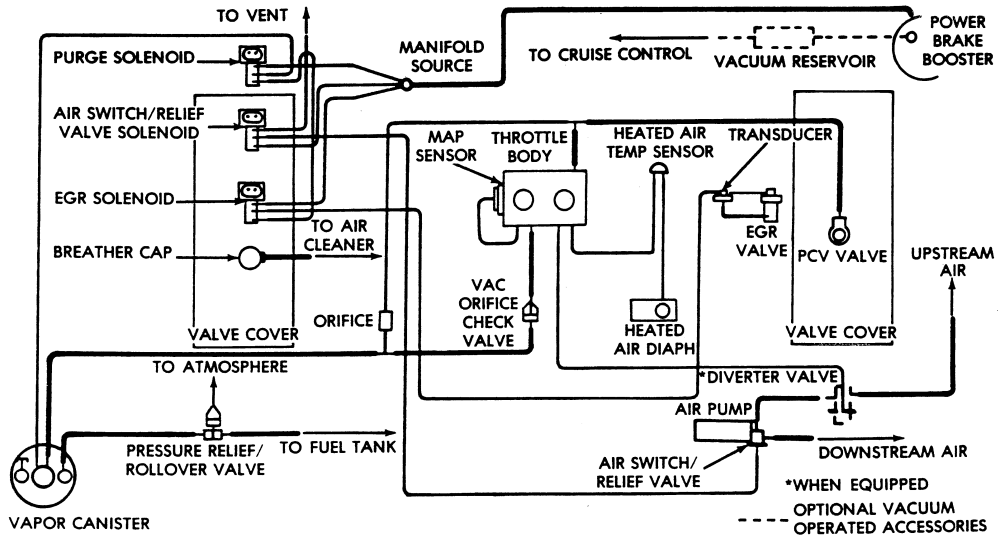
Alright, let's dive into the vacuum line system on your 2001 Dodge Ram 1500 with the 5.9L engine. Vacuum lines might seem like simple rubber tubes, but they're critical for a ton of engine functions. Understanding their layout and purpose is invaluable for DIY repairs, troubleshooting performance issues, and even just general engine health maintenance. This article will walk you through a detailed vacuum line diagram, equipping you with the knowledge to tackle your Ram's vacuum system with confidence.
Why This Diagram Matters
The vacuum system on your 5.9L Dodge Ram controls a surprising number of components. A vacuum leak, even a small one, can lead to a whole host of problems. Here’s why understanding the vacuum diagram is so important:
- Diagnosis and Repair: Vacuum leaks can cause rough idling, poor fuel economy, reduced power, and even trigger your check engine light. The diagram allows you to pinpoint the source of the leak quickly and efficiently, instead of blindly replacing parts.
- Performance Tuning/Modding: If you're planning any performance upgrades that affect engine vacuum (like a new intake manifold or carburetor swap - though unlikely on a 2001 model, the principle applies), knowing the original vacuum routing is essential for proper installation and tuning.
- General Maintenance: Regularly inspecting your vacuum lines for cracks, dry rot, or disconnections is part of preventative maintenance. The diagram helps you ensure everything is connected correctly after other repairs or maintenance tasks.
- Learning Engine Systems: Understanding the vacuum system is a fantastic way to learn about the overall operation of your engine, the sensors it utilizes, and how these elements work together to deliver the best performance.
Key Specs and Main Parts
Let's get familiar with the core components of the vacuum system on your 2001 Dodge Ram 1500 5.9L:
- Vacuum Source: The primary vacuum source is the intake manifold. The engine's pistons create a vacuum in the manifold as they move down during the intake stroke.
- Vacuum Lines: These are typically rubber or plastic hoses that transmit the vacuum from the intake manifold to various components. Different sizes and materials are used for different applications, handling different vacuum levels and heat exposure.
- Check Valves: These valves allow vacuum to flow in only one direction, preventing backflow. They are crucial for systems like the PCV (Positive Crankcase Ventilation) system and cruise control.
- Vacuum Reservoir: This is a small tank that stores vacuum. It ensures a consistent vacuum supply to components that require it, even under varying engine loads.
- EGR Valve: The EGR (Exhaust Gas Recirculation) valve reduces emissions by recirculating a portion of the exhaust gas back into the intake manifold. It is controlled by vacuum.
- PCV Valve: The PCV valve regulates the flow of crankcase gases back into the intake manifold to be burned. It relies on vacuum to function.
- Charcoal Canister: Part of the EVAP (Evaporative Emission Control) system, the charcoal canister stores fuel vapors from the fuel tank. Vacuum is used to purge these vapors into the engine.
- Vacuum Actuators: These are devices that convert vacuum pressure into mechanical motion, often used to control things like the HVAC blend doors or the 4WD engagement system (if equipped with vacuum-operated CAD).
Decoding the Vacuum Line Diagram
The vacuum line diagram is essentially a roadmap of the vacuum system. Here's how to interpret the symbols and conventions:
- Lines: The solid lines represent vacuum hoses. Different line thicknesses might indicate different hose diameters.
- Colors: Colors are often used to differentiate between different vacuum circuits. For instance, one color might represent the EGR system, while another represents the EVAP system. The diagram *key* is crucial for understanding these color codes.
- Arrows: Arrows indicate the direction of vacuum flow.
- Component Symbols: Each component (EGR valve, PCV valve, vacuum reservoir, etc.) will have a symbol representing it. The diagram usually includes a legend explaining these symbols.
- Connectors/Fittings: The diagram shows how the vacuum lines connect to each component. Look for 'T' connectors (where one line splits into two), 'L' connectors (for 90-degree bends), and straight connectors (for joining two lines).
Example: A solid blue line with an arrow pointing from the intake manifold to a T-connector, and then splitting to the EGR valve and a vacuum reservoir, indicates that the intake manifold provides vacuum to both the EGR valve and the reservoir via that blue line.
How It Works: A Simplified Explanation
The engine creates a vacuum in the intake manifold. This vacuum is then distributed through the vacuum lines to various components that require it to operate. For example:
- The EGR valve uses vacuum to open and allow exhaust gas to flow back into the intake manifold. The amount of vacuum applied to the EGR valve is controlled by the engine control unit (ECU), based on engine load and speed.
- The PCV valve uses vacuum to draw crankcase gases into the intake manifold to be burned. This prevents pressure buildup in the crankcase and reduces emissions.
- The EVAP system uses vacuum to purge fuel vapors from the charcoal canister into the engine. This prevents fuel vapors from escaping into the atmosphere.
The specific operation of each component varies, but the fundamental principle is the same: the vacuum pressure acts as a signal or force to control the component's function.
Real-World Use: Basic Troubleshooting Tips
Here are some practical troubleshooting tips using the vacuum line diagram:
- Identifying Vacuum Leaks: The most common symptom of a vacuum leak is a rough idle. Use the diagram to systematically inspect each vacuum line and connection. Look for cracks, dry rot, or disconnections. A vacuum gauge can be helpful for measuring vacuum levels at different points in the system.
- Tracing Lines: If you find a disconnected line, use the diagram to identify where it should be connected. Even if you don't know the specific name of the component, you can follow the line on the diagram to its destination.
- Testing Components: Some components, like check valves, can be tested using a vacuum pump. The diagram will help you identify the location of the check valve and how it should be connected.
- Using a Vacuum Tester: A hand-held vacuum pump can be used to test vacuum actuators. By applying vacuum to the actuator, you can verify that it is functioning properly. Again, refer to the diagram to identify the actuator and its vacuum line connection.
- Spraying Carb Cleaner or Starting Fluid: CAREFULLY and sparingly spraying carb cleaner or starting fluid around vacuum lines and connections can help locate leaks. If the engine RPM changes when you spray a particular area, you've likely found a leak. BE EXTREMELY CAREFUL – this is a flammable substance.
Safety Considerations
Working on the vacuum system is generally safe, but be aware of these potential hazards:
- Hot Engine Components: Be careful not to touch hot engine components like the exhaust manifold or catalytic converter. Let the engine cool down before working on the vacuum system.
- Sharp Edges: Watch out for sharp edges on metal components. Wear gloves to protect your hands.
- Flammable Substances: As mentioned earlier, carb cleaner and starting fluid are flammable. Use them sparingly and avoid spraying them near ignition sources. Ensure good ventilation when using these products.
- Moving Parts: Avoid working on the vacuum system while the engine is running, unless absolutely necessary for diagnostic purposes. Keep your hands and tools away from moving parts like the belts and pulleys.
And one more thing, please be aware that modifying or disconnecting vacuum lines can affect your vehicle's emissions and may be illegal in some areas. Ensure any work performed complies with local regulations.
Now you're armed with a solid understanding of your 2001 Dodge Ram 1500 5.9L's vacuum system. Remember to take your time, consult the diagram, and work safely. With a little patience and attention to detail, you can confidently tackle most vacuum-related issues on your truck.
We have the complete vacuum line diagram file ready for you. You can download the diagram here for detailed reference during your repairs and maintenance tasks.