
5.9 Cummins Fuel Return Line Diagram
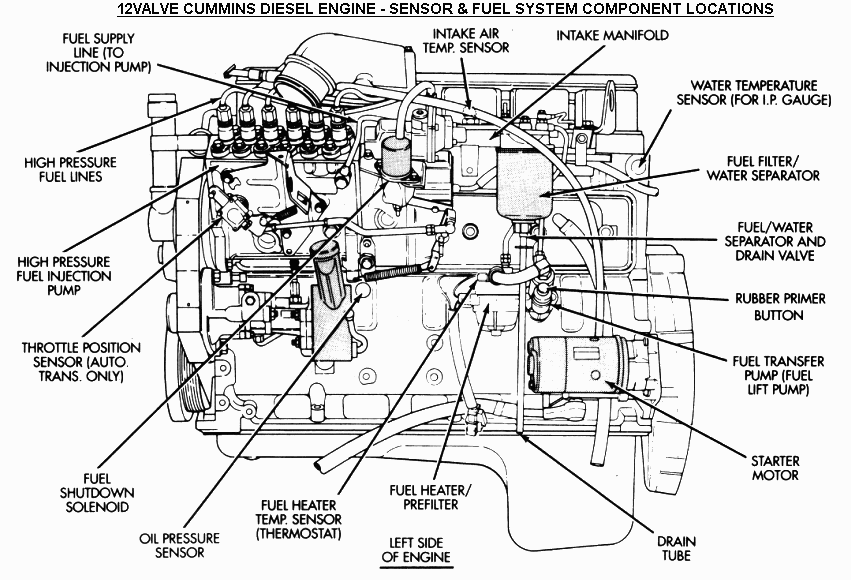
The fuel return system in your 5.9 Cummins engine is a crucial part of maintaining fuel pressure and overall engine health. Understanding the fuel return line diagram is vital for anyone tackling repairs, upgrades, or even just aiming for a deeper understanding of their diesel engine. This article will provide a comprehensive breakdown of the 5.9 Cummins fuel return line diagram, explaining its components, function, and how to troubleshoot common issues. We'll cover everything from the purpose of the system to practical troubleshooting tips, presented in a way that's accessible to experienced DIYers.
Purpose of Understanding the Fuel Return Line Diagram
Why bother learning about the fuel return system? Several reasons. Firstly, it's essential for diagnosing and repairing fuel system problems. A leaky return line, a clogged overflow valve, or other issues can negatively impact fuel pressure, leading to poor performance, hard starting, or even engine damage. Secondly, if you're considering any performance modifications like larger injectors or a different fuel pump, understanding the return system is crucial to ensure it can handle the increased fuel flow. Thirdly, simply knowing how the system works empowers you to perform preventative maintenance and identify potential problems before they escalate.
Key Specs and Main Parts
The 5.9 Cummins fuel return system, in its simplest form, is designed to return excess fuel from the fuel injectors and injection pump back to the fuel tank. This process helps to cool the fuel, maintain proper fuel pressure at the injectors, and prevent vapor lock. The key components include:
- Fuel Injectors: These spray fuel into the cylinders. Excess fuel, after each injection event, is routed to the return line.
- Injection Pump: The injection pump (typically a Bosch VE or P7100, depending on the model year) also has a return port to bleed off excess pressure and heat.
- Fuel Return Lines: These are the hoses or metal lines that connect the injectors and injection pump to the fuel return manifold/rail.
- Fuel Return Manifold/Rail: This is a common collection point for the fuel returning from all the injectors and the injection pump.
- Overflow Valve (also known as a Fuel Pressure Relief Valve): This valve regulates the pressure in the fuel system. It's typically located on the injection pump or fuel filter housing. It bleeds off excess fuel pressure, ensuring the injectors operate within their optimal range. This valve is *critical* to system operation.
- Return Line to Fuel Tank: This line carries the excess fuel from the overflow valve (or sometimes directly from the fuel return manifold) back to the fuel tank.
- Fuel Tank: Acts as the reservoir to supply fuel to the engine, and also to receive returned fuel.
Important Note: The specific layout and components can vary slightly depending on the year and model of your 5.9 Cummins. Always refer to a diagram specific to your engine.
Symbols and Diagram Conventions
Fuel system diagrams use specific conventions to represent the various components. Understanding these symbols is key to interpreting the diagram accurately:
- Solid Lines: Typically represent fuel lines. The thickness of the line may or may not indicate the diameter of the line.
- Dashed Lines: Can represent vacuum lines, electrical wiring, or in some cases, low-pressure fuel lines. Pay attention to the legend if provided.
- Arrows: Indicate the direction of fuel flow. These are *essential* for understanding the system.
- Squares/Rectangles: Often represent components like the fuel pump, fuel filter, or fuel tank.
- Circles: Can represent various sensors, valves, or fittings.
- Specific Icons: Injectors, injection pumps, and the overflow valve will typically have specific icons that resemble their physical appearance. Look for a legend accompanying the diagram.
- Color Coding: Some diagrams use color coding to differentiate between fuel supply lines, fuel return lines, and other fluid lines (e.g., coolant lines). Always refer to the legend for the color key. It is not safe to assume the purpose of any colored line without first viewing the legend.
Typically, fuel supply lines are represented in black or blue, while fuel return lines might be shown in green or brown. However, this is not always the case, so *never* rely solely on color without consulting the diagram's legend.
How It Works: A Step-by-Step Explanation
Here's a simplified explanation of how the 5.9 Cummins fuel return system functions:
- Fuel Delivery: The fuel pump draws fuel from the tank and delivers it to the injection pump.
- Injection Pump Distribution: The injection pump pressurizes the fuel and distributes it to the injectors.
- Injection and Excess: Each injector injects a precise amount of fuel into the cylinder. After each injection event, the excess fuel, which is not injected, is routed into the fuel return line.
- Return Manifold Collection: The fuel return lines from all the injectors converge at the fuel return manifold or rail. The injection pump itself also has a return line connected to this manifold.
- Pressure Regulation: The overflow valve, located either on the injection pump or fuel filter housing, maintains the correct fuel pressure in the system. It bleeds off excess fuel when the pressure exceeds a certain threshold.
- Return to Tank: The fuel that passes through the overflow valve flows through the return line back to the fuel tank. This completes the loop.
This continuous circulation of fuel helps to cool the fuel, remove air bubbles, and maintain consistent fuel pressure throughout the system. This is why issues in the fuel return system often manifest as performance problems.
Real-World Use: Basic Troubleshooting Tips
Understanding the fuel return system diagram is invaluable for troubleshooting common issues:
- Low Fuel Pressure: If you're experiencing low fuel pressure, check the overflow valve first. A weak or malfunctioning overflow valve can allow too much fuel to return to the tank, lowering the pressure at the injectors. You can often test this with a pressure gauge. If the pressure is low, and you can confirm that the supply side is functioning properly, the overflow valve is a likely suspect.
- Hard Starting: A leaky fuel return line can allow air to enter the system, making it difficult to start. Inspect all return lines for cracks, leaks, or loose connections. Particularly check the rubber hoses, as they are prone to deterioration over time.
- Poor Performance/Rough Idle: A partially clogged fuel return line can restrict the flow of fuel back to the tank, causing the fuel pressure to fluctuate and leading to poor performance. Check for kinks or obstructions in the lines.
- Fuel Leaks: Obvious fuel leaks are the easiest to diagnose. Trace the fuel return lines from the injectors and injection pump to the fuel tank to identify the source of the leak.
Important: Before working on any fuel system component, relieve the pressure by disconnecting the negative battery cable and allowing the engine to cool down completely. Always use appropriate fuel-resistant hoses and fittings when replacing components.
Safety Precautions
Working with fuel systems requires caution. Fuel is highly flammable, and some components are under high pressure. Consider these safety tips:
- Disconnect Battery: Always disconnect the negative battery cable before working on the fuel system to prevent sparks.
- Work in a Well-Ventilated Area: Fuel fumes are toxic. Work in a well-ventilated area to avoid inhaling them.
- Wear Safety Glasses: Protect your eyes from fuel splashes.
- Use Fuel-Resistant Gloves: Protect your skin from fuel exposure.
- No Open Flames: Keep open flames, sparks, and smoking materials away from the work area.
- Proper Disposal: Dispose of used fuel and fuel-soaked rags properly in accordance with local regulations.
- High-Pressure Components: Be extremely cautious when working around the injection pump and injectors. These components operate at very high pressures, and fuel can be injected with enough force to penetrate skin. Never loosen fuel lines while the engine is running or immediately after it has been running.
The injection pump can retain substantial pressure even after the engine is shut off. Loosen fittings carefully and slowly to relieve pressure. Wrap a rag around the fitting to absorb any escaping fuel. The overflow valve is *often* a source of issues, but also a spot where high pressures can be released unexpectedly, so follow the above advice.
By understanding the fuel return line diagram and following these safety precautions, you can effectively diagnose and repair fuel system issues on your 5.9 Cummins engine.
We have a downloadable fuel return line diagram available for your reference. It provides a detailed visual representation of the system, making it easier to understand and troubleshoot. Contact us to receive the file.