
7.3 Powerstroke Starter Solenoid Wiring Diagram
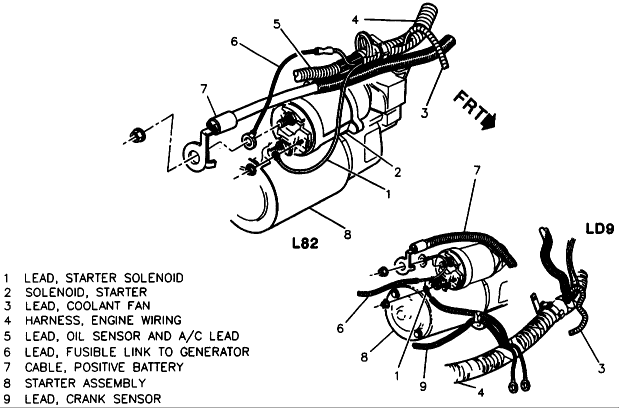
For the seasoned DIY mechanic or aspiring diesel enthusiast, understanding the 7.3 Powerstroke starter solenoid wiring diagram is crucial. It's the key to diagnosing starting issues, performing routine maintenance, and even embarking on custom electrical modifications. Think of it as the roadmap to your truck's ignition system. This article breaks down the diagram, explaining the purpose, components, and troubleshooting techniques necessary to confidently tackle starter-related problems on your 7.3 Powerstroke.
Purpose of Understanding the Starter Solenoid Wiring Diagram
Why bother learning about this wiring diagram? Several reasons make it invaluable:
- Diagnostics: When your truck won't start, the wiring diagram helps you pinpoint the source of the problem. Is it a faulty solenoid, a broken wire, or a dead battery? The diagram guides your testing.
- Repairs: Once you've identified the faulty component, the diagram shows you how to properly disconnect and reconnect wires, ensuring a safe and correct repair.
- Modifications: Planning to add an aftermarket alarm, remote start, or other electrical accessory? Understanding the starter circuit is crucial to avoid damaging your truck's electrical system.
- Learning: Even if you're not currently experiencing problems, studying the diagram provides a deeper understanding of your truck's electrical system, empowering you to handle future issues with greater confidence.
Key Specs and Main Parts
The starter solenoid is an electromagnetic switch. It's essentially a heavy-duty relay designed to handle the high current required to crank the engine. Here's a breakdown of the key components involved in the starting circuit:
- Battery: The primary power source (typically two 12V batteries in parallel). The 7.3 Powerstroke relies on substantial cranking power due to its diesel engine's high compression ratio.
- Starter Solenoid: Mounted on the inner fender, it acts as the switch that connects the battery to the starter motor.
- Starter Motor: The electric motor that engages with the flywheel and rotates the engine for starting.
- Ignition Switch: The switch in the steering column that sends the initial signal to the solenoid.
- Neutral Safety Switch (NSS): Located on the transmission, this switch prevents the engine from starting unless the transmission is in Park or Neutral. This is a critical safety feature.
- Wiring Harness: The network of wires that connects all these components.
- Fuses and Relays: These protect the circuit from overloads and control the flow of current.
Symbols, Lines, Colors, and Icons in the Diagram
Wiring diagrams use a standardized set of symbols to represent electrical components. Understanding these symbols is essential for interpreting the diagram correctly.
- Solid Lines: Represent wires. Thicker lines often indicate wires carrying higher current.
- Dashed Lines: Sometimes used to represent ground connections or connections within a component.
- Circles: Often represent connectors or terminals.
- Rectangles: Can represent various components, such as relays, switches, or modules. The specific function is usually labeled inside the rectangle.
- Zigzag Line: Represents a resistor.
- Coil Symbol: Represents the solenoid coil itself.
- Ground Symbol: A series of descending horizontal lines, indicating a connection to the vehicle's chassis for ground.
Color coding is also vital. While wire colors can vary slightly between model years and aftermarket repairs, some common conventions exist. Here are a few examples:
- Red: Typically indicates a positive (+) battery connection.
- Black: Usually indicates a ground (-) connection.
- Purple: Often used for the starter signal wire from the ignition switch.
- Brown: Can be used for other control or signal wires.
Consult the specific wiring diagram for your truck's year and model for the definitive color coding. Keep in mind that aftermarket modifications may introduce non-standard colors. Always double-check with a multimeter.
How It Works: Following the Current Flow
Let's trace the flow of electricity through the starting circuit:
- Turning the Key: When you turn the ignition key to the "Start" position, you are closing a switch. This sends a low-current signal (typically 12V) through the purple wire (or similar color, depending on the model) to the starter solenoid's control terminal.
- Solenoid Activation: This low-current signal energizes the solenoid's internal coil. The coil creates a magnetic field.
- Plunger Engagement: The magnetic field pulls a plunger inside the solenoid. This plunger mechanically connects the two high-current terminals on the solenoid.
- High-Current Flow: When the high-current terminals connect, a direct, high-amperage current flows from the battery, through the solenoid, and directly to the starter motor.
- Starter Engagement: The starter motor engages with the flywheel, cranking the engine.
- Releasing the Key: When you release the key, the ignition switch opens, cutting off the signal to the solenoid. The solenoid de-energizes, the plunger retracts, and the connection between the battery and starter motor is broken.
The Neutral Safety Switch (NSS) is crucial. It's wired in series with the signal wire from the ignition switch to the solenoid. If the transmission is not in Park or Neutral, the NSS remains open, preventing the signal from reaching the solenoid and preventing the engine from starting. This prevents accidental starts in gear.
Real-World Use: Basic Troubleshooting Tips
Here are some common starting problems and how the wiring diagram can help diagnose them:
- Clicking Sound, No Start: This often indicates a weak battery, a poor connection, or a faulty starter solenoid. Use the diagram to check the voltage at the solenoid's battery terminal and the output terminal when the key is in the "Start" position. Low voltage indicates a voltage drop or poor connections.
- No Sound, No Start: Could be a dead battery, a faulty ignition switch, a bad NSS, or a broken wire in the starter circuit. The wiring diagram helps you systematically check each component. For example, you can bypass the NSS (with extreme caution) to see if it's the problem.
- Starter Stays Engaged: This is a dangerous situation! It could be a faulty solenoid that's stuck in the "on" position. Immediately disconnect the battery to prevent damage to the starter and flywheel. The wiring diagram confirms the solenoid wiring to rule out miswiring.
Using a Multimeter: A multimeter is essential for troubleshooting electrical problems. Use it to check voltage, continuity, and resistance. Continuity testing verifies that a wire is intact and not broken. Voltage tests confirm that the correct voltage is reaching the components. Resistance tests check for excessive resistance in the wiring, which can cause voltage drops.
Safety Considerations
Working with electrical systems can be dangerous. Take these precautions:
- Disconnect the Battery: Always disconnect the negative battery terminal before working on the electrical system. This prevents accidental shorts and electrical shocks.
- High-Current Wires: The wires connected to the starter solenoid carry very high current. Be extremely careful when working with these wires. Accidental shorts can cause severe burns and damage to the electrical system.
- Proper Tools: Use insulated tools designed for electrical work.
- Fuse Protection: Ensure the correct fuses are installed in the circuit. Never bypass fuses with wire or other conductive materials.
Warning: Bypassing the Neutral Safety Switch (NSS) for testing purposes should only be done with extreme caution and with the vehicle secured. Accidental starts in gear can cause serious injury or property damage.
By understanding the 7.3 Powerstroke starter solenoid wiring diagram and following safe practices, you can confidently diagnose and repair starting issues, saving time and money. Remember to always consult the specific wiring diagram for your truck's year and model. A correct diagram is a invaluable resource for your toolbox.
We have a copy of the 7.3 Powerstroke Starter Solenoid Wiring Diagram available for download. It's in a high-resolution format, making it easy to zoom in and see all the details. This diagram is essential for any DIY mechanic working on a 7.3 Powerstroke. Contact us to request access to the file.