
A/c Compressor Clutch Wiring Diagram
Understanding your A/C compressor clutch wiring diagram is crucial for diagnosing and repairing air conditioning issues in your vehicle. Whether you're troubleshooting a non-functioning A/C system, attempting a custom A/C installation, or simply looking to expand your automotive knowledge, this guide will provide you with the necessary insights. We'll break down the diagram, explain its components, and offer practical advice to help you navigate the electrical aspects of your A/C system. We even have a sample diagram you can download at the end of this article to help you get started.
Purpose of the A/C Compressor Clutch Wiring Diagram
The A/C compressor clutch wiring diagram is essentially a roadmap for the electrical circuit that controls the engagement of your A/C compressor. Its primary purpose is to illustrate the interconnections between various components, enabling you to:
- Diagnose electrical faults: Quickly identify open circuits, shorts, or incorrect voltage readings within the A/C system.
- Repair or replace components: Accurately locate and replace faulty relays, switches, pressure sensors, or the compressor clutch itself.
- Perform custom installations or modifications: Safely wire aftermarket A/C systems or integrate existing components into different vehicles.
- Understand system operation: Gain a deeper understanding of how the A/C system functions and the role each component plays.
Key Specs and Main Parts
Before diving into the diagram itself, let's familiarize ourselves with the key components typically found in an A/C compressor clutch circuit. These components are represented in the wiring diagram and understanding their function is essential.
- Battery: The power source for the entire A/C system. The diagram will show the positive (+) and negative (-) terminals.
- Fuse: A safety device designed to protect the circuit from overcurrent. It's a sacrificial component that blows if the current exceeds a specified limit.
- Ignition Switch: Provides power to the A/C system only when the engine is running, usually when the key is in the "ON" or "RUN" position.
- A/C Switch: The primary on/off switch for the A/C system, usually located on the dashboard.
- Pressure Switches (High and Low): These switches monitor the refrigerant pressure in the system. They prevent the compressor from engaging if the pressure is too low (indicating a leak) or too high (indicating overcharge or blockage). These act as safety interlocks.
- Thermostat/Temperature Sensor: Prevents the evaporator core from freezing by cycling the compressor off when the temperature drops too low.
- A/C Relay: An electrically operated switch that controls the flow of current to the compressor clutch. It's used because the A/C switch typically cannot handle the high current draw of the clutch.
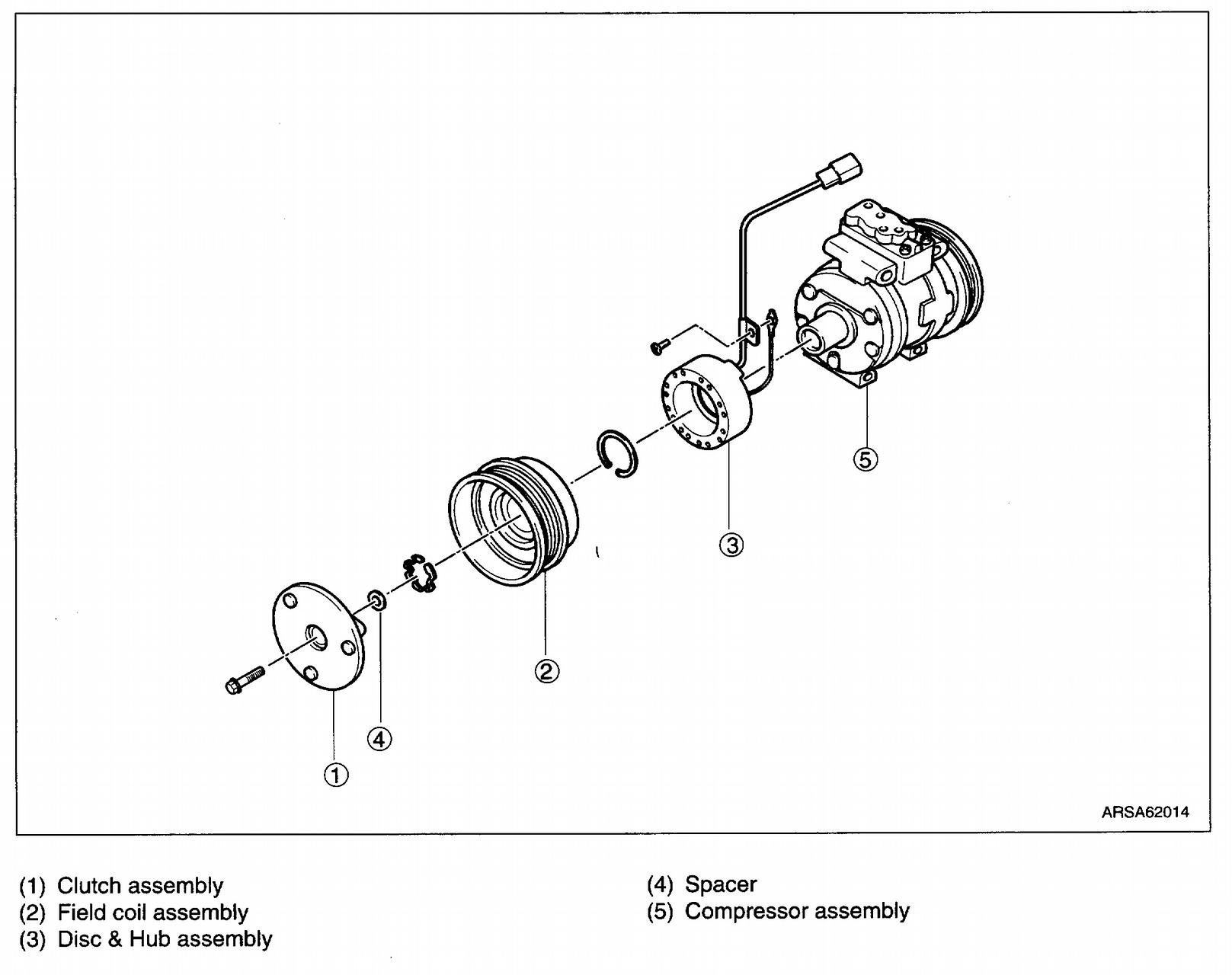
- Compressor Clutch: An electromagnetic device that engages the compressor, allowing it to be driven by the engine. It consists of a coil and a clutch plate. The coil, when energized, creates a magnetic field that pulls the clutch plate against the compressor pulley, engaging the compressor.
- Ground: Provides a return path for the current back to the battery. Ground connections are typically made to the vehicle's chassis or engine block.
Symbols: Lines, Colors, and Icons
A wiring diagram uses standard symbols and conventions to represent the various components and connections. Understanding these symbols is crucial for interpreting the diagram correctly.
- Lines: Represent wires or conductors. The thickness of the line may sometimes indicate the wire gauge (thicker lines for higher current capacity).
- Colors: Each wire is typically assigned a specific color code, which is indicated on the diagram. These color codes help you identify the correct wire when working on the vehicle. Common colors include Red (power), Black (ground), Blue, Green, Yellow, and White. A key to the color codes is usually provided on the diagram.
- Icons: Standardized symbols represent the various components:
- Battery: A series of long and short parallel lines.
- Fuse: A zigzag line or a rectangle with a diagonal line.
- Switch: A line with a break, representing the open or closed state of the switch.
- Relay: A coil symbol connected to a switch.
- Compressor Clutch: Often represented as a coil symbol with a clutch plate.
- Ground: A series of descending horizontal lines.
- Connectors: Small circles or squares where wires connect to each other or to components.
- Splices: Represented by a dot where multiple wires join together.
How It Works
The A/C compressor clutch circuit works as follows:
- When the ignition switch is turned on, power is supplied to the A/C system.
- When the A/C switch is activated, it sends a signal to the A/C control module (or directly to the relay in simpler systems).
- The A/C control module (if present) evaluates inputs from the pressure switches and the thermostat/temperature sensor. If the refrigerant pressure is within the acceptable range and the evaporator temperature is not too low, the control module signals the A/C relay to engage.
- The A/C relay, when energized, closes the circuit, allowing current to flow from the battery, through the fuse, to the compressor clutch coil.
- When the coil is energized, it creates a magnetic field that pulls the clutch plate against the compressor pulley, engaging the compressor.
- The compressor then begins to pump refrigerant, cooling the air that enters the cabin.
- If the refrigerant pressure drops too low or rises too high, or if the evaporator temperature drops too low, the pressure switches or thermostat will open the circuit, de-energizing the relay and disengaging the compressor clutch to protect the system.
Real-World Use: Basic Troubleshooting Tips
Here are some basic troubleshooting tips based on the wiring diagram:
- A/C not working at all: Check the fuse first! A blown fuse is the most common cause of A/C failure. Use a multimeter to confirm continuity. If the fuse blows repeatedly, there's likely a short circuit in the system.
- Compressor clutch not engaging: Use a multimeter to check for voltage at the compressor clutch connector when the A/C is turned on. If there's no voltage, check the A/C relay, pressure switches, and wiring for open circuits or shorts. You can also try manually grounding the relay control wire to see if the clutch engages - be careful not to short anything else out!
- Compressor clutch engages intermittently: This could be due to a faulty pressure switch, a loose connection, or a failing relay. Check the wiring and connectors for corrosion or damage.
- Use a test light: A simple test light can be incredibly useful for checking for power at various points in the circuit.
Safety
Working with automotive electrical systems can be dangerous. Observe the following safety precautions:
- Disconnect the battery: Always disconnect the negative battery terminal before working on the electrical system to prevent short circuits and electrical shocks.
- Use insulated tools: Use tools with insulated handles to protect yourself from electrical shock.
- Be aware of high-pressure refrigerant: Refrigerant can cause frostbite if it comes into contact with your skin. If you suspect a refrigerant leak, wear appropriate protective gear. The A/C system is a closed and pressurized system, so do not disconnect any lines without proper recovery equipment and training.
- Don't bypass safety devices: Never bypass pressure switches or other safety devices, as this could damage the A/C system or create a dangerous situation.
By carefully studying the A/C compressor clutch wiring diagram and following these guidelines, you can effectively diagnose and repair electrical issues in your A/C system. Remember to always consult your vehicle's service manual for specific wiring diagrams and procedures.
We have a sample A/C Compressor Clutch Wiring Diagram available for download. You can access it here.