
Belt Diagram 2007 Pontiac Grand Prix
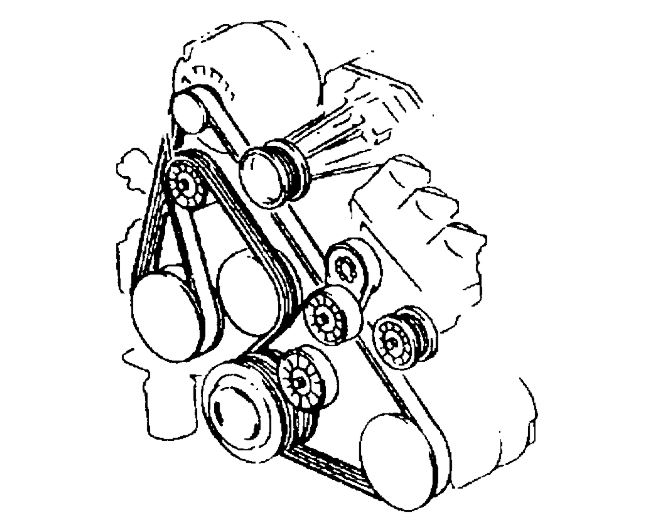
Let's talk about the serpentine belt diagram for a 2007 Pontiac Grand Prix. Understanding this diagram is crucial for anyone tackling engine repairs, maintenance, or even just wanting to better understand how their car works. Whether you're replacing a worn belt, diagnosing a squealing noise, or swapping out a failing accessory like the alternator, having this information at your fingertips will save you time, money, and potentially a lot of frustration.
Purpose of the Serpentine Belt Diagram
The serpentine belt diagram serves as a visual roadmap for the serpentine belt's routing around the various pulleys connected to your Grand Prix's engine. Its primary purpose is to illustrate the correct path the belt should take. This is critical for several reasons:
- Correct Installation: Ensures the belt is routed correctly after replacement or when reinstalling components like the alternator or power steering pump. An incorrectly routed belt will not drive the accessories properly, leading to malfunctions.
- Troubleshooting: Helps diagnose problems. If a belt is slipping or throwing itself off, comparing the actual routing to the diagram can reveal if something is misaligned or if a pulley is failing.
- Identification: Allows you to quickly identify the various pulleys and their corresponding accessories (alternator, power steering pump, AC compressor, etc.).
- Education: Provides a clear understanding of how the engine accessories are driven by the crankshaft.
Key Specs and Main Parts
The 2007 Pontiac Grand Prix was offered with different engines, each having a slightly different serpentine belt arrangement. Most commonly, you'll find the 3.8L V6 or the 5.3L V8 in the GXP model. The serpentine belt routing differs significantly between these engines, making the correct diagram essential. Here are the key components you'll see in the diagram:
Main Components:
- Crankshaft Pulley (Harmonic Balancer): The main pulley driven directly by the engine's crankshaft. It's responsible for transmitting the engine's power to the belt.
- Alternator Pulley: Driven by the belt, the alternator generates electricity to power the car's electrical system and charge the battery.
- Power Steering Pump Pulley: Driven by the belt, the power steering pump provides hydraulic assistance to make steering easier.
- Air Conditioning (AC) Compressor Pulley: Driven by the belt, the AC compressor compresses refrigerant to provide cooling for the car's cabin.
- Idler Pulley(s): Smooth pulleys that guide the belt and maintain proper tension. They don't drive any accessories.
- Tensioner Pulley: A spring-loaded pulley that maintains the correct tension on the serpentine belt. This is *critical* for preventing slippage and ensuring proper operation of all accessories.
- Water Pump Pulley: Driven by the belt, the water pump circulates coolant throughout the engine to prevent overheating.
Key Specs:
- Belt Length: The overall length of the serpentine belt, which varies depending on the engine and accessories. This measurement is critical when purchasing a replacement belt. Consult your vehicle's specifications or parts catalog.
- Belt Width: The width of the serpentine belt. While less critical than the length, using the wrong width can lead to slippage or premature wear.
- Tensioner Torque Specification: When replacing the tensioner, it's important to tighten it to the correct torque specification. Overtightening can damage the tensioner or mounting bracket.
Understanding the Diagram's Symbols
Serpentine belt diagrams use a variety of symbols to convey information quickly and clearly. Let's break down some common ones:
- Solid Lines: Usually represent the main path of the serpentine belt.
- Dashed Lines: May indicate the back (smooth) side of the belt. This is crucial because the accessories are driven by either the grooved or smooth side of the belt, depending on the design.
- Arrows: Indicate the direction of rotation for each pulley. This is useful for confirming the belt routing and understanding how each accessory is driven.
- Circles with Letters: Typically represent the different pulleys. The letters (e.g., "A" for Alternator, "P/S" for Power Steering, "AC" for Air Conditioning) identify which accessory each pulley is connected to.
- Tensioner Symbol: Often a small rectangle or square with an arrow indicating the direction the tensioner arm moves to release tension.
How It Works: A Simplified Explanation
The serpentine belt system is a brilliant example of efficient power transfer. The engine's crankshaft, through the crankshaft pulley (also called the harmonic balancer), provides the rotational force that drives the entire system. The serpentine belt wraps around this pulley and then snakes its way around all the other accessory pulleys, transferring the rotational force to each of them. The tensioner pulley plays a vital role in maintaining the correct belt tension. Too little tension, and the belt will slip, causing accessories to malfunction. Too much tension, and you risk premature belt wear, pulley bearing failure, or even snapping the belt. The diagram is a snapshot of this system; understanding it makes diagnosing issues much easier.
Real-World Use: Basic Troubleshooting Tips
Here's how to use the serpentine belt diagram for basic troubleshooting:
- Squealing Noise: A common symptom of a slipping serpentine belt. Check the belt tension first. Is the tensioner moving freely? Is the belt glazed or cracked? Compare the belt routing to the diagram to ensure it's correct. Misalignment can also cause squealing.
- Accessory Malfunction (e.g., Alternator Not Charging, Power Steering Not Working): If an accessory stops working, check the serpentine belt. Is it broken or missing? Is it routed correctly? If the belt seems fine, the problem may lie within the accessory itself, but verifying the belt is a crucial first step.
- Belt Thrown Off: If the belt keeps coming off, suspect a misaligned pulley, a worn tensioner, or a damaged belt. Use the diagram to verify the pulley alignment. Check for excessive wear or damage to the pulley grooves.
Important Note: Always inspect the pulleys for signs of damage, wear, or misalignment. A damaged pulley can quickly destroy a new belt.
Safety Considerations
Working around the serpentine belt system can be dangerous if proper precautions aren't taken. Here's what to watch out for:
- Moving Parts: The engine must be OFF and the key removed from the ignition before working on the serpentine belt system. Accidental starting of the engine can cause serious injury.
- Hot Engine: Allow the engine to cool down completely before working on the serpentine belt system. The engine components can become extremely hot and cause burns.
- Tensioner Spring: The tensioner is spring-loaded and can snap back with considerable force when released. Use the correct tools to safely release the tension and avoid injury. A serpentine belt tool set makes this process much safer and easier.
- Battery Disconnect: Consider disconnecting the negative battery cable to prevent accidental electrical shorts while working on the engine.
Remember, if you're unsure about any step in the process, it's always best to consult a qualified mechanic. Working on your car can be rewarding, but safety should always be your top priority.
We have the serpentine belt diagram for your 2007 Pontiac Grand Prix available for download. This diagram is essential for ensuring proper belt routing and troubleshooting potential issues. We highly recommend keeping it handy for any future maintenance or repairs you may undertake.