
Belt Routing 6.0 Vortec Serpentine Belt Diagram
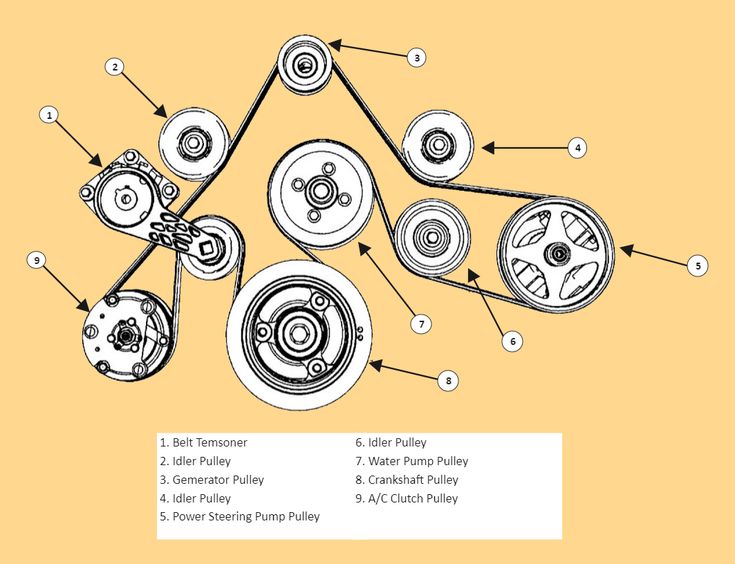
The serpentine belt on your 6.0 Vortec engine is a critical component, responsible for powering several vital accessories. Understanding its routing is essential for performing maintenance, diagnosing issues, and even undertaking some modifications. This article provides a comprehensive guide to interpreting the 6.0 Vortec serpentine belt diagram, empowering you to confidently tackle related tasks.
Purpose of the Serpentine Belt Diagram
Why is a serpentine belt diagram so important? Several reasons:
- Replacement: The most common reason. When replacing a worn or broken belt, the diagram ensures you route the new belt correctly. Incorrect routing can lead to accessory failure, belt damage, and even engine damage.
- Troubleshooting: A squealing belt often indicates a problem. The diagram helps you identify which accessory might be causing the issue (e.g., a failing power steering pump putting excessive load on the belt).
- Repair and Maintenance: When replacing accessories like the alternator, power steering pump, or A/C compressor, you'll need to remove and reinstall the belt. The diagram guarantees proper reassembly.
- Learning and Understanding: Even if you're not currently working on your engine, studying the diagram provides valuable insights into the engine's accessory drive system.
- Modifications: If you're installing an underdrive pulley or modifying the accessory drive system in any way, the diagram is crucial for ensuring correct belt length and routing.
Key Specs and Main Parts of the 6.0 Vortec Serpentine Belt System
Before diving into the diagram, let's identify the key components involved:
- Crankshaft Pulley (Harmonic Balancer): Located at the bottom of the engine, this pulley is driven directly by the engine and transfers power to the serpentine belt. It also acts as a harmonic balancer, dampening torsional vibrations in the crankshaft.
- Water Pump Pulley: Driven by the serpentine belt, the water pump circulates coolant throughout the engine, preventing overheating.
- Alternator Pulley: The alternator, driven by the belt, generates electricity to power the vehicle's electrical system and charge the battery.
- Power Steering Pump Pulley: Provides hydraulic pressure for power steering, making the vehicle easier to steer.
- A/C Compressor Pulley: The A/C compressor, driven by the belt, circulates refrigerant to cool the cabin air.
- Idler Pulley(s): Smooth, non-driven pulleys that guide the belt and maintain proper tension and wrap angle around the driven pulleys. They reduce belt vibration and increase the lifespan of the belt and driven components.
- Tensioner Pulley: A spring-loaded pulley that automatically maintains the correct tension on the serpentine belt. This is crucial for preventing slippage and ensuring optimal accessory performance. A failing tensioner can cause belt squealing and premature wear.
- Serpentine Belt: The main component, a single, continuous belt that snakes around all the pulleys, transmitting power from the crankshaft to the accessories.
The specific arrangement of these components can vary slightly depending on the year and model of your 6.0 Vortec. Consult the correct diagram for your specific vehicle.
Understanding the Serpentine Belt Diagram Symbols
A serpentine belt diagram isn't just a picture; it's a symbolic representation. Here's how to decipher it:
- Lines: Solid lines represent the path of the front of the serpentine belt. Dotted or dashed lines, if present, sometimes indicate the path of the back of the belt, particularly when it's making contact with a smooth pulley surface.
- Arrows: Arrows indicate the direction of rotation for each pulley. This is essential for understanding how the belt should be routed.
- Pulley Symbols: Each pulley is represented by a circle. The symbols may include abbreviations such as "ALT" for alternator, "P/S" for power steering, "A/C" for air conditioning, "WP" for water pump, and "CRANK" for the crankshaft pulley.
- Tensioner Symbol: The tensioner pulley is typically represented with an arrow indicating the direction it moves when relieving tension for belt installation or removal. It might also have a spring symbol indicating its tensioning mechanism.
Some diagrams use color-coding, but this is less common. If present, a key will explain the meaning of each color.
How the Serpentine Belt System Works
The serpentine belt system operates on a simple principle: power transfer through friction. The crankshaft pulley, driven by the engine's rotation, spins the serpentine belt. The belt, in turn, grips the various accessory pulleys, causing them to rotate. This rotational force drives the accessories – alternator, water pump, power steering pump, and A/C compressor – enabling them to perform their respective functions.
The tensioner plays a vital role in maintaining the correct level of friction between the belt and the pulleys. Too little tension results in belt slippage, reducing accessory performance and causing the characteristic squealing sound. Too much tension can overload the accessory bearings, leading to premature failure and potential belt breakage.
Real-World Use: Basic Serpentine Belt Troubleshooting Tips
Here are a few common issues you might encounter and how the diagram can assist you:
- Squealing Belt:
- Diagnosis: Is the belt routed correctly according to the diagram? Is the tensioner functioning properly? Does the squealing occur when the A/C is turned on (suggesting an issue with the A/C compressor)?
- Solution: Verify belt routing, replace the tensioner, or investigate the specific accessory causing the increased load.
- Belt Slippage:
- Diagnosis: The belt may be worn, glazed, or contaminated with oil or coolant. The tensioner could also be weak. Check the diagram to ensure proper wrap angle around each pulley.
- Solution: Replace the belt, clean the pulleys, or replace the tensioner.
- Accessory Failure:
- Diagnosis: If an accessory stops working (e.g., the alternator isn't charging), confirm that the belt is properly routed and has sufficient tension. The diagram helps you quickly identify which pulley drives the malfunctioning accessory.
- Solution: Replace the faulty accessory, ensuring proper belt tension and routing after installation.
- Belt Walking Off:
- Diagnosis: Check if the pulleys are aligned correctly. Misalignment can cause the belt to walk off to one side. Use a straight edge to see if the pulleys line up.
- Solution: Correct the pulley misalignment. This might involve replacing a bracket or pulley.
Safety Precautions
Working on the serpentine belt system involves some inherent risks. Pay close attention to these safety points:
- Hot Engine: Never work on the serpentine belt system with a hot engine. Allow the engine to cool completely to avoid burns.
- Moving Parts: Keep your hands, clothing, and tools clear of the serpentine belt and pulleys while the engine is running. Accidental contact can cause serious injury.
- Battery Disconnection: Disconnect the negative battery cable before working on any electrical components, such as the alternator, to prevent short circuits and electrical shock.
- Tensioner Safety: Be aware that the tensioner is spring-loaded. Use the correct tool (typically a serpentine belt tool) to relieve tension carefully and avoid injury.
- Eye Protection: Wear safety glasses to protect your eyes from debris or flying objects.
Download Your 6.0 Vortec Serpentine Belt Diagram
Having the correct diagram readily available is crucial. We have a downloadable file containing various 6.0 Vortec serpentine belt diagrams to suit your specific vehicle configuration. Click the link below to download it and keep it handy for all your maintenance and repair needs.
Note: While this guide provides a comprehensive overview, it's always recommended to consult your vehicle's repair manual for specific instructions and torque specifications.