
Chevy 5.3 Vortec Engine Wiring Harness Diagram
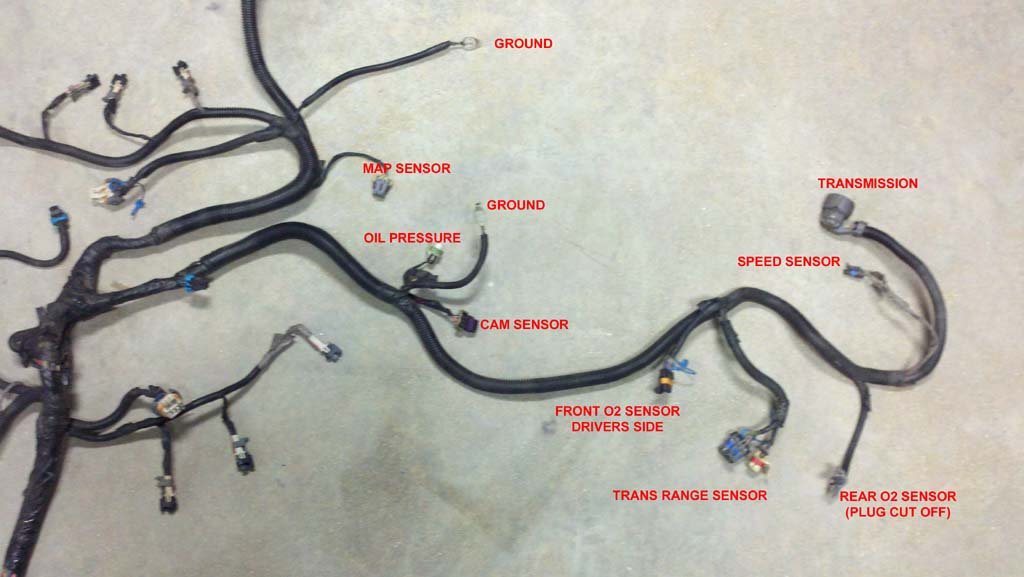
The Chevy 5.3 Vortec engine is a workhorse, powering millions of trucks and SUVs. Whether you're tackling a swap, troubleshooting electrical issues, or just trying to understand your engine better, having a clear understanding of the 5.3 Vortec engine wiring harness is crucial. This article will break down the wiring harness diagram, making it approachable and useful for the experienced DIY mechanic.
Purpose of Understanding the Wiring Harness Diagram
The wiring harness diagram is essentially a roadmap of your engine's electrical system. It's indispensable for:
- Repairs: Identifying broken, corroded, or shorted wires to restore functionality.
- Troubleshooting: Pinpointing the root cause of electrical problems by tracing circuits.
- Engine Swaps: Integrating a 5.3 Vortec into a different vehicle chassis, requiring careful wiring modifications.
- Modifications: Adding aftermarket components (e.g., performance injectors, sensors) and ensuring proper integration.
- Learning: Gaining a deeper understanding of how the engine's sensors, actuators, and control systems interact.
Key Specs and Main Parts of the 5.3 Vortec Wiring Harness
Before diving into the diagram, let's cover the basic components and their roles. Keep in mind that there are subtle variations between different model years and vehicle applications (truck, SUV, etc.), but the fundamental principles remain the same.
Key Specifications:
- Engine Type: 5.3L (325 cu in) V8, typically featuring an iron block and aluminum heads. Later versions used all-aluminum blocks.
- Fuel Injection: Sequential Fuel Injection (SFI). Each injector is controlled individually by the PCM.
- Ignition System: Coil-on-Plug (COP). Each cylinder has its own ignition coil.
- Sensor Suite: Comprehensive sensor array including MAF, MAP, TPS, CKP, CMP, coolant temperature, oil pressure, and O2 sensors.
- PCM: Powertrain Control Module (PCM) – the engine's central computer. Different PCMs were used over the years, such as the 411 PCM popular for tuning.
Main Wiring Harness Components:
- Engine Harness: The primary harness covering the engine itself, connecting sensors, injectors, coils, and other engine-mounted components to the PCM.
- Transmission Harness: Connects the transmission to the PCM (if automatic).
- Body Harness Interface: Where the engine harness ties into the vehicle's main wiring system (power, ground, gauges, etc.).
- Connectors: A wide variety of connectors are used, each keyed to prevent misconnection. Weatherpack connectors are common for their environmental sealing.
- Ground Straps: Essential for proper electrical grounding, preventing voltage drops and ensuring accurate sensor readings.
Understanding the Wiring Harness Diagram: Symbols and Conventions
The diagram uses standardized symbols to represent electrical components and connections. Here's a breakdown:
- Lines: Lines represent wires. Thicker lines often indicate wires carrying more current (e.g., power wires).
- Colors: Each wire is assigned a color code (e.g., RED, BLK, YEL/BLK - Yellow with a Black stripe). The diagram uses abbreviations for colors. This is absolutely crucial for identifying the correct wire.
- Connectors: Represented by various shapes (squares, circles, rectangles) with pins identified by numbers or letters.
- Grounds: Typically shown as a downward-pointing triangle or a series of lines diminishing in size.
- Splices: Represented by a dot where multiple wires connect.
- Relays: Shown as a coil symbol and a switch symbol, indicating the relay's control circuit and switched circuit.
- Fuses/Circuit Breakers: Represented by a symbol resembling a wavy line within a rectangle.
- Sensors: Each sensor will have its own unique symbol, but they generally show the sensor name or abbreviation (e.g., MAP, TPS).
Common Abbreviations:
Understanding abbreviations is key to reading the diagram. Here are a few common ones:
- PCM: Powertrain Control Module
- MAF: Mass Air Flow sensor
- MAP: Manifold Absolute Pressure sensor
- TPS: Throttle Position Sensor
- CKP: Crankshaft Position sensor
- CMP: Camshaft Position sensor
- ECT: Engine Coolant Temperature sensor
- IAT: Intake Air Temperature sensor
- O2S: Oxygen Sensor
- SFI: Sequential Fuel Injection
- COP: Coil-on-Plug
- GND: Ground
- VREF: Voltage Reference (typically 5V)
How It Works: Tracing a Circuit
The best way to understand the diagram is to trace a circuit. Let's take the example of the Mass Air Flow (MAF) sensor:
- Locate the MAF sensor on the diagram. It will be clearly labeled.
- Identify the wires connected to the MAF sensor. Typically, a MAF sensor will have a power wire (often VREF), a ground wire, a signal wire (the MAF reading), and potentially an IAT (Intake Air Temperature) sensor signal within the same connector.
- Trace the wires back to their source. The power wire will likely connect to the PCM or a voltage distribution block. The ground wire will connect to a ground point on the engine or chassis. The signal wire will go directly to the PCM.
- Pay attention to connectors and splices along the way. Note the connector numbers, as these are critical for locating the physical connector on the harness.
By following these steps, you can trace any circuit on the diagram, understanding how each component is connected and powered.
Real-World Use: Basic Troubleshooting Tips
Here are a few common troubleshooting scenarios where the wiring diagram is invaluable:
- No Start: Check the power and ground to the PCM and the ignition coils. Use the diagram to verify the wiring integrity.
- Check Engine Light (CEL): Use a scan tool to read the Diagnostic Trouble Code (DTC). The DTC will point to a specific sensor or circuit. Use the wiring diagram to check the sensor's power, ground, and signal wires.
- Misfire: Check the coil pack wiring, injector wiring, and spark plug wires (if applicable). The diagram will help you identify the correct wires and connectors.
- Sensor Failure: Before replacing a sensor, use the wiring diagram to check its power and ground. A faulty wire or connector can mimic a bad sensor. Use a multimeter to check for voltage and continuity.
Example: You get a P0102 code (MAF sensor circuit low input). Use the wiring diagram to check the MAF sensor's power (VREF), ground, and signal wires. A low voltage on the VREF wire, or high resistance on the ground wire, could cause this code. Check the connector for corrosion or damage. Check the wire for shorts to ground or open circuits.
Safety: Highlighting Risky Components
Working with electrical systems can be dangerous. Here are a few safety precautions:
- Disconnect the battery: Always disconnect the negative battery cable before working on the electrical system to prevent shorts and potential fires.
- High Voltage: Be extremely cautious around the ignition coils. They generate high voltage that can be dangerous.
- Fuel Injectors: Be careful when working with fuel injectors, as they contain pressurized fuel. Relieve fuel pressure before disconnecting fuel lines or injectors.
- Airbag System: Avoid disturbing the airbag system wiring. Accidental deployment can cause serious injury.
- Use Proper Tools: Use insulated tools and a multimeter designed for automotive use.
Always prioritize safety. If you're unsure about any procedure, consult a qualified mechanic.
By carefully studying the 5.3 Vortec wiring harness diagram and applying the principles outlined in this article, you'll be well-equipped to tackle a wide range of electrical repairs and modifications. Remember to take your time, double-check your work, and prioritize safety.
We have a detailed wiring diagram for the Chevy 5.3 Vortec engine, that can be downloaded. This diagram covers most years and applications of the engine. This resource can be a valuable asset for your repair or modification project.