
Cooling System Ford 5.4 Heater Hose Diagram
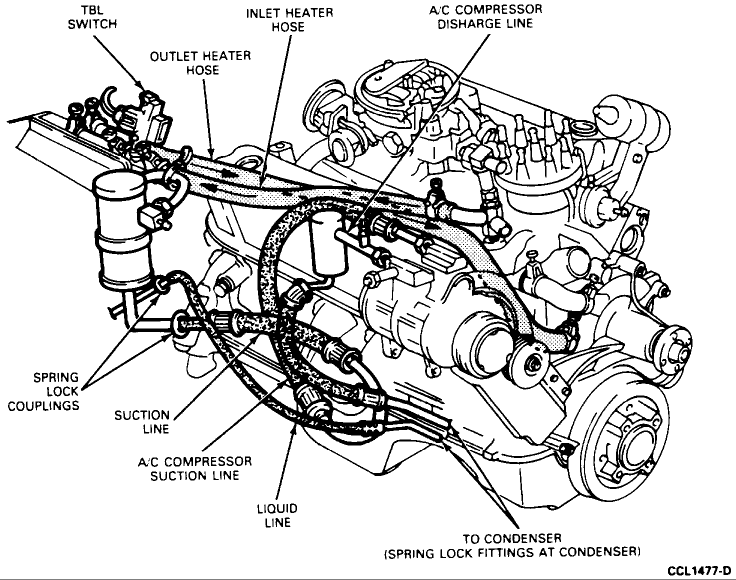
Alright, let's dive into the cooling system of a Ford 5.4L engine, specifically focusing on the heater hose diagram. Understanding this diagram is crucial for several reasons. Maybe you're tackling a leaky heater core, diagnosing overheating issues, or perhaps just expanding your automotive knowledge. Whatever the reason, knowing how the heater hoses are routed and how they function within the overall cooling system will save you time, money, and potentially a lot of headaches.
Purpose of the Heater Hose Diagram
The heater hose diagram is essentially a roadmap for the coolant's journey to and from the heater core. Its primary purpose is to provide a visual representation of the hose connections, ensuring they are correctly installed during maintenance or repairs. Specifically, the diagram allows you to:
- Identify the correct hoses for replacement.
- Verify proper routing, preventing kinks and restrictions that can lead to overheating.
- Diagnose cooling system problems related to coolant flow, such as a cold heater or engine overheating.
- Understand the heater core's role within the entire cooling loop.
Key Specs and Main Parts
Before we get to the diagram specifics, let's cover some core components involved:
- Heater Core: This is essentially a small radiator located inside the vehicle's dashboard. Hot coolant flows through it, and a blower motor forces air across it to provide heat for the cabin. Think of it as a mini-radiator dedicated to keeping you warm.
- Heater Hoses: These are rubber hoses that connect the engine's cooling system to the heater core. They are designed to withstand high temperatures and pressures.
- Water Pump: The water pump is the heart of the cooling system, responsible for circulating coolant throughout the engine block, radiator, and heater core.
- Thermostat: This device regulates the engine's temperature by controlling the flow of coolant to the radiator. It allows the engine to warm up quickly and maintain a consistent operating temperature.
- Radiator: The main cooling component. Hot coolant from the engine flows through the radiator, where it's cooled by airflow before being returned to the engine.
- Coolant Reservoir (Overflow Tank): This tank holds excess coolant and allows the system to expand and contract as the temperature changes.
- Heater Control Valve (on some models): This valve regulates the flow of coolant to the heater core, allowing you to control the temperature in the cabin. It might be vacuum-operated or electronically controlled.
The 5.4L engine, depending on the year and specific vehicle model (e.g., F-150, Expedition, etc.), may have slight variations in the heater hose routing. That’s why a specific diagram for your vehicle is important.
Symbols – Understanding the Diagram
A typical heater hose diagram will use various symbols to represent different components and connections. Here’s a breakdown of common symbols:
- Solid Lines: Typically represent the heater hoses themselves, showing the physical path of the hoses.
- Dotted Lines: Might represent vacuum lines (if the heater control valve is vacuum-operated) or auxiliary lines.
- Arrows: Indicate the direction of coolant flow. This is crucial for understanding how the system works.
- Component Icons: These are simplified drawings of components like the water pump, heater core, thermostat housing, and coolant reservoir.
- Color Coding (if present): While not always present, color coding can help differentiate between the inlet and outlet hoses. For example, a red line might indicate the hose carrying hot coolant *to* the heater core, while a blue line might represent the return hose *from* the heater core.
- Clamps: The diagram might show the locations of hose clamps to ensure proper reinstallation.
It’s important to note that the specific symbols and notations may vary slightly depending on the source of the diagram (e.g., factory service manual, aftermarket repair manual). Always refer to the diagram's legend or key for clarification.
How It Works: Coolant Flow Explained
Here's a simplified explanation of how the heater core circuit works within the 5.4L cooling system:
- The water pump circulates coolant throughout the engine.
- A portion of this hot coolant is diverted from the engine block (typically near the thermostat housing) and flows through a heater hose to the heater core.
- Inside the heater core, the coolant transfers its heat to the metal fins.
- The blower motor then blows air across these hot fins, heating the air that enters the vehicle's cabin.
- After passing through the heater core, the now-cooler coolant flows through another heater hose back to the engine, usually returning to the water pump or a point on the engine block.
- If equipped, the heater control valve modulates the flow of coolant to the heater core, allowing you to adjust the temperature. When you set the temperature to "cold," the valve restricts or shuts off coolant flow to the heater core.
Real-World Use: Troubleshooting Tips
Here are some common problems you might encounter and how the heater hose diagram can help:
- No Heat: Check the heater hoses for kinks or blockages. Verify that coolant is flowing through both hoses. If the hoses are hot but there's still no heat, the problem might be a clogged heater core or a malfunctioning heater control valve.
- Overheating: While the heater hoses themselves are unlikely to *cause* overheating directly, a leak in one of the hoses will certainly contribute to coolant loss, which *can* lead to overheating. Inspect the hoses and connections for leaks.
- Coolant Leaks: The diagram helps pinpoint the location of the leak. Trace the hoses to find the source. Pay close attention to hose clamps and connections, as these are common leak points.
- Incorrect Hose Routing: If you've recently replaced a heater hose and are experiencing cooling system problems, double-check the hose routing against the diagram to ensure it's correct. Incorrect routing can restrict coolant flow.
Safety Considerations
Working on the cooling system involves dealing with hot coolant and potentially high pressures. Exercise caution and follow these safety guidelines:
- Never remove the radiator cap or work on the cooling system while the engine is hot. Allow the engine to cool completely before starting any work. Pressurized coolant can cause severe burns.
- Wear safety glasses to protect your eyes from splashing coolant.
- Use gloves to protect your skin from coolant, which can be irritating.
- Be aware of the electric cooling fans. Even with the engine off, the fans can cycle on if the engine is hot enough. Disconnect the negative battery cable for added safety.
- Dispose of used coolant properly. Coolant is toxic and should not be dumped down the drain or onto the ground. Contact your local recycling center for disposal options.
The thermostat housing and the area around the water pump can be particularly risky due to the high temperature of the coolant and the potential for leaks under pressure. Approach these areas with extra caution.
By understanding the heater hose diagram and how the cooling system operates, you’ll be well-equipped to diagnose and repair issues, saving you time and money.
We have a detailed heater hose diagram specific to the Ford 5.4L engine available for download. This diagram includes precise routing information, component locations, and other helpful details. Feel free to download it and use it as a reference guide for your cooling system work.