
Diagram Chevy Hydroboost Power Steering Pump
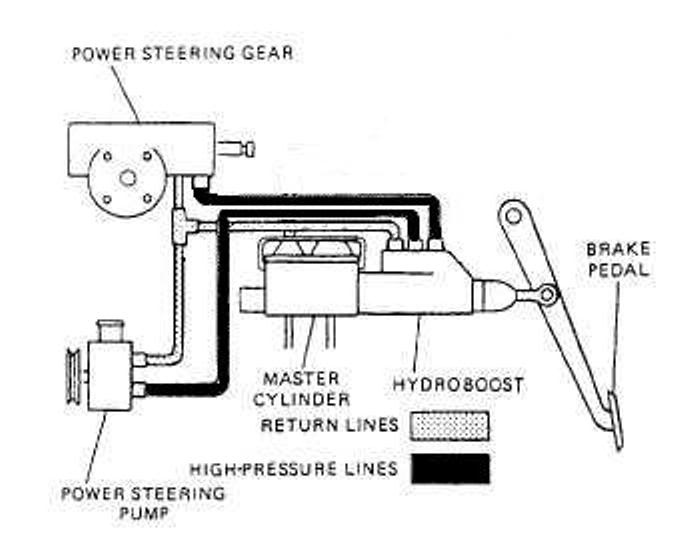
Alright, let's dive into the inner workings of a Chevy Hydroboost power steering system, specifically focusing on understanding the hydraulic diagram. This isn't just some pretty picture; it's your roadmap for diagnosing issues, performing repairs, and even undertaking modifications to your power steering and braking systems. Think of it as the schematics to your automotive circulatory system – crucial for keeping everything flowing smoothly. We've got the full diagram available for you to download, so you can have it on hand while we go through this.
Purpose of Understanding the Hydroboost Diagram
Why bother with this diagram? Simple. It empowers you to:
- Accurately diagnose power steering and brake problems by tracing the flow of hydraulic fluid.
- Perform repairs with confidence, knowing exactly which components are connected and how they interact.
- Understand the system's function, which is essential for troubleshooting even without a specific error code.
- Plan modifications, such as upgrading components or adapting the system for different applications. For instance, if you're swapping a Hydroboost system into a classic car, you'll need to understand the plumbing to ensure compatibility.
- Save money by performing your own repairs instead of relying solely on a mechanic.
Key Specs and Main Parts
Before we delve into the diagram itself, let’s cover some key specs and the main players in the Hydroboost system. While specific values vary between Chevy models (trucks, SUVs, etc.), the core principles remain the same.
- Operating Pressure: Hydroboost systems typically operate at pressures between 800 and 1200 PSI. This is significantly higher than a conventional vacuum booster system, providing much more braking force.
- Fluid Type: Use only the specified power steering fluid for your vehicle. Using the wrong fluid can damage seals and other components. GM often uses a specific power steering fluid, so check your owner's manual.
- Reservoir Capacity: The power steering reservoir holds the hydraulic fluid. Capacity varies, but it's usually around 1-2 quarts.
The main components are:
- Power Steering Pump: The heart of the system, providing the necessary hydraulic pressure. This pump is usually a vane-type pump, designed for relatively high pressure and continuous operation.
- Power Steering Reservoir: Stores the hydraulic fluid and allows air to separate from the fluid. It often includes a filter.
- Hydroboost Unit: This is the brake booster that uses hydraulic pressure from the power steering pump instead of vacuum from the engine. It contains a spool valve that controls the flow of fluid to the brake master cylinder.
- Brake Master Cylinder: Converts the hydraulic pressure from the Hydroboost unit into hydraulic pressure to activate the wheel brakes.
- Power Steering Gear/Rack and Pinion: (If equipped) Uses hydraulic pressure to assist steering.
- Hoses and Lines: Connect all the components and carry the hydraulic fluid. High-pressure hoses are essential in this system.
Understanding the Diagram's Symbols
The diagram uses a standard set of symbols to represent the different components and connections. Here's a breakdown:
- Lines: Solid lines usually represent high-pressure hydraulic lines. Dashed lines might indicate low-pressure return lines or signal lines. The thickness of the line can also sometimes indicate the flow rate or pressure it carries.
- Arrows: Indicate the direction of fluid flow. A single arrow shows unidirectional flow, while a double-headed arrow could represent bidirectional flow.
- Circles: Often represent fluid reservoirs or accumulators.
- Squares/Rectangles: Can represent valves, pumps, or other control components. The internal arrangement of lines and symbols within the square or rectangle indicates the component's function.
- Diamonds: May represent filters.
- Color Coding: Diagrams may use color coding to differentiate between pressure lines, return lines, and drain lines. For example:
- Red: High-pressure supply lines
- Blue: Low-pressure return lines
- Green: Drain lines
Carefully study the legend on the diagram. It will explain any specific symbols or conventions used in that particular diagram. Understanding these symbols is crucial to interpreting the diagram correctly.
How the Hydroboost System Works
The Hydroboost system is an ingenious way to use the power steering pump to provide braking assistance. Here's a simplified explanation:
- The power steering pump draws hydraulic fluid from the reservoir and pressurizes it.
- The pressurized fluid flows to the Hydroboost unit.
- When the brake pedal is *not* depressed, the fluid flows through the Hydroboost unit and returns to the power steering pump reservoir, usually through the power steering gear (if equipped).
- When the brake pedal *is* depressed, the spool valve inside the Hydroboost unit redirects the pressurized fluid to the brake master cylinder.
- The pressurized fluid from the Hydroboost unit provides the force needed to actuate the master cylinder pistons, which then send hydraulic pressure to the wheel brakes.
- The fluid then returns to the power steering reservoir.
A critical aspect of the Hydroboost system is its fail-safe design. If the power steering pump fails or the engine stalls, a reserve of hydraulic pressure stored in the Hydroboost accumulator allows for a few assisted brake applications. After that, braking is still possible, but it requires significantly more pedal effort, similar to manual brakes.
Real-World Use and Basic Troubleshooting
Let's talk about putting this knowledge to work. Here are a few troubleshooting scenarios where the diagram can be invaluable:
- Hard Brake Pedal: If the brake pedal is hard to press, the Hydroboost unit may not be receiving enough pressure. Check the power steering fluid level, pump condition, and hoses for leaks or restrictions. The diagram will show you the path the fluid takes.
- Power Steering Issues with Brake Problems: If you experience both power steering problems and braking issues, it's likely a problem with the power steering pump itself. The diagram clearly shows that both systems rely on the same pump.
- Fluid Leaks: Trace the source of the leak using the diagram to identify the affected component (hose, fitting, Hydroboost unit, etc.). Pay close attention to high-pressure lines and connections.
- Noisy Power Steering Pump: A noisy pump can indicate low fluid level, air in the system, or pump failure. The diagram helps you check the routing and connections of the lines to spot potential problems.
Important Tip: Before replacing any components, thoroughly flush the system to remove any contaminants. Contamination is a common cause of Hydroboost failure. Consult your vehicle's service manual for the proper flushing procedure.
Safety Considerations
Working with a Hydroboost system involves high pressures and potentially hazardous fluids. Safety is paramount:
- Depressurize the System: Before disconnecting any lines, depressurize the system by pumping the brake pedal several times with the engine off. This will relieve some of the pressure.
- Wear Eye Protection: Hydraulic fluid under pressure can cause serious eye injury. Always wear safety glasses or a face shield.
- Avoid Open Flames: Hydraulic fluid is flammable. Keep open flames and sources of ignition away from the system.
- Handle Fluid Properly: Hydraulic fluid can be harmful to the environment. Collect any spilled fluid and dispose of it properly according to local regulations.
- High-Pressure Hoses: Be extremely cautious when handling high-pressure hoses. Even a small leak can create a jet of fluid that can penetrate skin. These are typically the lines coming directly off the power steering pump and going to the Hydroboost unit.
Warning: The Hydroboost accumulator stores hydraulic pressure even when the engine is off. Be extremely careful when working around the accumulator. Accidental release of pressure can cause serious injury.
By understanding the Hydroboost power steering pump diagram and the principles behind its operation, you'll be better equipped to diagnose and repair your system, saving time and money. Remember to always consult your vehicle's service manual for specific procedures and specifications. Remember, we have the full Hydroboost diagram available for download to assist you further. Good luck!