
Diagrama Sistema De Enfriamiento Nissan Frontier
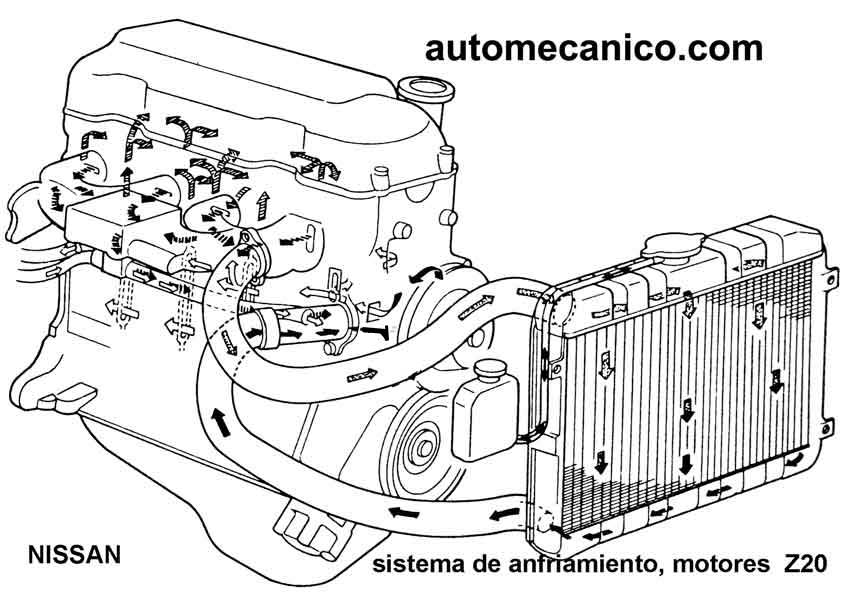
Understanding the cooling system of your Nissan Frontier is crucial for maintaining its engine health and preventing costly repairs. This detailed explanation of the cooling system diagram will empower you, the experienced DIYer, to diagnose issues, perform maintenance, and even modify your cooling system with confidence. Having access to the system diagram provides a clear roadmap of all components and their interconnections.
Purpose of the Cooling System Diagram
Why bother with a diagram? Simply put, it's your engine's lifeline when things go wrong. The cooling system is responsible for regulating engine temperature, preventing overheating and ensuring optimal performance. A detailed diagram is invaluable for:
- Diagnostics: Quickly identify the source of overheating, leaks, or other cooling-related problems.
- Repair and Maintenance: Precisely locate components when replacing parts like the thermostat, water pump, or radiator hoses.
- Modification: Plan and execute modifications to the cooling system, such as installing an aftermarket radiator or electric fan.
- Understanding the System: Gain a comprehensive understanding of how the entire cooling system functions.
Key Specs and Main Parts
Before diving into the diagram itself, let's review the core components of the Nissan Frontier's cooling system. Keep in mind that specific specs, like coolant capacity, may vary slightly depending on the engine (e.g., 2.4L KA24DE, 3.3L VG33E, 4.0L VQ40DE) and model year. Always consult your vehicle's service manual for exact specifications.
Main Components:
- Radiator: This is the primary heat exchanger. Coolant flows through the radiator core, and air passing through the fins dissipates heat.
- Radiator Cap: A pressure-regulating valve that maintains pressure within the cooling system, raising the boiling point of the coolant. This is essential for efficient cooling.
- Thermostat: A temperature-sensitive valve that regulates coolant flow to the radiator. It remains closed when the engine is cold, allowing it to warm up quickly, and opens as the engine reaches operating temperature.
- Water Pump: Driven by the engine's belt, the water pump circulates coolant throughout the engine and cooling system.
- Coolant Reservoir/Overflow Tank: A plastic container that allows for coolant expansion and contraction as the engine heats up and cools down. It maintains a consistent coolant level in the radiator.
- Coolant Hoses: Rubber hoses that connect the various components of the cooling system, allowing coolant to flow freely.
- Coolant Temperature Sensor (CTS): An electrical sensor that monitors coolant temperature and sends this information to the engine control unit (ECU).
- Cooling Fan(s): Pull or push air through the radiator to enhance heat dissipation, especially at low speeds or when idling. Some Frontiers have a mechanically driven fan, while others have an electric fan controlled by the ECU.
- Heater Core: Located inside the vehicle's dashboard, the heater core is a small radiator that provides heat to the cabin.
Diagram Symbols: Lines, Colors, and Icons
Understanding the symbols used in the cooling system diagram is paramount to interpreting it correctly. Here's a breakdown of common symbols:
- Solid Lines: Represent coolant hoses or pipes. Thicker lines often indicate larger diameter hoses.
- Dotted Lines: May indicate vacuum lines related to cooling system components, such as the ventilation system.
- Arrows: Show the direction of coolant flow.
- Colors: While not always present, colors can differentiate between different types of hoses or fluids within the system. For example, blue might indicate coolant lines, and red might indicate heater hoses. Always refer to the diagram's legend for specific color codes.
- Component Icons: Each component is represented by a stylized icon. These icons typically resemble the actual part. Learn to recognize these icons to quickly identify components on the diagram. For example, the radiator is usually represented by a rectangular box with wavy lines inside, symbolizing the fins. The water pump is often shown as a circular pump symbol.
Pay close attention to the legend or key provided with the diagram. It will provide detailed explanations of all symbols and abbreviations used.
How It Works: Coolant Circulation
The cooling system operates on a closed-loop principle. Here's how it works:
- The water pump circulates coolant from the bottom of the radiator, through the engine block and cylinder head(s), where it absorbs heat generated by combustion.
- The heated coolant then flows past the thermostat. If the engine is cold, the thermostat remains closed, redirecting the coolant back to the water pump to circulate within the engine, promoting faster warm-up.
- Once the engine reaches its operating temperature (typically around 195°F or 90°C), the thermostat opens, allowing the hot coolant to flow to the radiator.
- In the radiator, the hot coolant flows through the core, where heat is dissipated to the surrounding air via the fins. The cooling fan(s) augment this process, especially at lower speeds.
- The cooled coolant then returns to the water pump, completing the cycle.
- As the engine heats and cools, the coolant expands and contracts. The coolant reservoir accommodates these volume changes, preventing air from entering the system and maintaining proper coolant level.
- The heater core receives hot coolant from the engine. A blower fan directs air across the heater core, providing heat to the vehicle's cabin.
Real-World Use: Basic Troubleshooting Tips
The cooling system diagram can be your best friend when troubleshooting. Here are some basic tips:
- Overheating: Use the diagram to trace the coolant flow path. Check the thermostat for proper operation. Ensure the water pump is functioning correctly (look for coolant circulation in the reservoir). Inspect the radiator for blockages (fins clogged with debris). Verify the cooling fan(s) are operating.
- Coolant Leaks: The diagram helps pinpoint the location of leaks. Carefully inspect all hoses, connections, the radiator, water pump, and thermostat housing. Look for signs of coolant residue. Remember that coolant leaks can occur at any point in the system, the diagram helps you follow where it travels.
- No Heat: Check the heater hoses for obstructions. Inspect the thermostat. A low coolant level can also cause a lack of heat.
Remember to always consult your vehicle's service manual for specific diagnostic procedures and torque specifications.
Safety: Highlight Risky Components
Working on the cooling system can be hazardous. Exercise extreme caution when dealing with these components:
- Hot Coolant: Never remove the radiator cap when the engine is hot. Pressurized hot coolant can cause severe burns. Allow the engine to cool completely before attempting to open the system.
- Electric Fans: Disconnect the negative battery cable before working near electric cooling fans to prevent accidental activation.
- Pressurized System: Be aware that the cooling system is pressurized when the engine is running. Relieve pressure slowly when opening the system.
- Chemicals: Coolant (antifreeze) is toxic. Avoid contact with skin and eyes. Clean up spills immediately and dispose of used coolant properly.
Following these safety precautions can save you from serious injury.
With the knowledge gained from this explanation and the cooling system diagram, you're well-equipped to tackle cooling system maintenance and repairs on your Nissan Frontier.
We have the Nissan Frontier Cooling System Diagram available for download. This diagram will provide you with a visual guide to the system and assist you in troubleshooting and repairs.