
Engine Subaru Cooling System Diagram
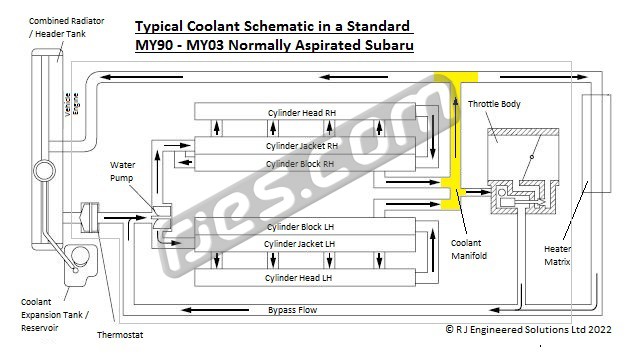
Alright, let's dive into the heart of keeping your Subaru cool: the cooling system. Understanding this system, and specifically the cooling system diagram, is absolutely crucial for anyone tackling DIY repairs, upgrades, or even just preventative maintenance on their Subaru. This isn't just about knowing where the hoses go; it's about understanding the *flow*, the components, and how they interact. Having the diagram at your fingertips is like having a roadmap for your engine's temperature regulation.
Purpose of the Subaru Cooling System Diagram
Why bother with a diagram? Well, several reasons:
- Diagnostics: When your Subaru is overheating (or underheating), the diagram helps you pinpoint the potential problem areas. Is the thermostat stuck? Is there a blockage in a hose? The diagram guides your investigation.
- Repairs: Replacing a water pump, thermostat, radiator, or even just a hose becomes significantly easier and less error-prone with a visual reference. You know exactly where everything goes.
- Modifications/Upgrades: Planning to upgrade your radiator for better cooling on a modified engine? The diagram is essential for understanding how the new components will integrate into the existing system.
- Learning and Understanding: Simply understanding how your engine stays cool is a valuable skill. The diagram demystifies the process.
Consider this diagram your cooling system's Rosetta Stone. It translates the complex network of hoses and components into a language you can understand.
Key Specs and Main Parts
The specifics of the cooling system can vary slightly depending on your Subaru model and engine (EJ25, FA20, etc.), but the fundamental components remain the same. Here's a rundown of the major players:
- Radiator: The radiator is the primary heat exchanger. It's responsible for dissipating heat from the coolant to the atmosphere. Look for inlet and outlet ports, usually located on opposite sides. Radiators can have single or dual core designs, and different fin densities depending on the application.
- Water Pump: The water pump is the heart of the system, circulating coolant throughout the engine block, heads, and radiator. It's typically driven by the timing belt or a separate accessory belt. A failing water pump leads to quick overheating.
- Thermostat: The thermostat is a temperature-sensitive valve that regulates coolant flow to the radiator. It ensures the engine reaches its optimal operating temperature quickly and maintains it. A stuck-open thermostat can cause the engine to run too cold, while a stuck-closed thermostat leads to overheating.
- Coolant Hoses: A network of hoses connects all the components, carrying coolant throughout the system. These are typically made of rubber and are prone to degradation over time. Look for swelling, cracks, or leaks.
- Coolant Reservoir (Expansion Tank): This tank provides a space for coolant to expand as it heats up. It also allows the system to draw coolant back in as it cools down, preventing air pockets.
- Radiator Cap: The radiator cap maintains pressure within the cooling system, raising the boiling point of the coolant and improving cooling efficiency. It also acts as a pressure relief valve.
- Cooling Fans: These fans draw air through the radiator, especially when the vehicle is stationary or moving slowly. They're typically electrically driven and controlled by a temperature sensor.
- Coolant Temperature Sensor (CTS): The CTS monitors the coolant temperature and sends this information to the engine control unit (ECU). The ECU uses this data to adjust engine parameters, such as fuel injection and ignition timing.
- Heater Core: Located inside the vehicle's dashboard, the heater core is a small radiator that provides heat to the passenger compartment. Coolant flows through the heater core, and a fan blows air across it to warm the interior.
Key Specs: Understanding your system's specifications is important. This includes:
- Coolant Capacity: How much coolant does your system hold? This is crucial for proper mixing ratios.
- Thermostat Opening Temperature: At what temperature does the thermostat begin to open? Using the wrong thermostat can cause problems.
- Radiator Pressure Rating: What pressure should your radiator cap maintain?
Symbols on the Cooling System Diagram
The diagram uses a standardized set of symbols to represent the various components and their connections. Understanding these symbols is key to interpreting the diagram effectively.
- Solid Lines: These represent the main coolant flow paths. They usually indicate a hose or pipe carrying coolant.
- Dotted Lines: These often represent vacuum lines or overflow paths. For instance, the line from the radiator cap to the overflow tank.
- Arrows: Arrows indicate the direction of coolant flow. Follow the arrows to trace the coolant's path through the system.
- Rectangles: These usually represent major components like the radiator, heater core, or coolant reservoir.
- Circles: These can represent sensors or valves.
- Colors (if present): Some diagrams use colors to differentiate between hot and cold coolant lines. Red might indicate hot coolant, while blue might indicate cooler coolant. This varies by diagram.
Example: A solid line with an arrow pointing from the water pump to the engine block indicates that the water pump is pushing coolant into the engine block.
How It Works: A Step-by-Step Explanation
Let's break down the cooling system's operation:
- Coolant Circulation: The water pump circulates coolant throughout the engine block and cylinder heads, absorbing heat generated by combustion.
- Thermostat Regulation: When the engine is cold, the thermostat remains closed, preventing coolant from flowing to the radiator. This allows the engine to reach its optimal operating temperature quickly.
- Radiator Cooling: Once the engine reaches its operating temperature, the thermostat opens, allowing coolant to flow to the radiator. As coolant passes through the radiator, it dissipates heat to the atmosphere.
- Coolant Return: Cooled coolant returns to the engine block to continue the cycle.
- Expansion and Overflow: As coolant heats up, it expands. The coolant reservoir provides a space for this expansion, preventing pressure buildup. If the pressure exceeds the radiator cap's rating, the cap releases coolant into the reservoir. As the engine cools down, coolant is drawn back into the system from the reservoir.
The cooling system is a closed loop. Coolant continuously circulates, removing heat from the engine and dissipating it to the atmosphere.
Real-World Use: Basic Troubleshooting Tips
Armed with the cooling system diagram, you can tackle some basic troubleshooting. Here are a few common scenarios:
- Overheating: Check the coolant level. Look for leaks in the hoses, radiator, or water pump. A visual inspection using the diagram can quickly show you the path coolant takes, and where leaks are most likely. Is the radiator fan working? Is the thermostat opening? A blown head gasket can also cause overheating, by introducing combustion gases into the coolant.
- Coolant Leaks: Trace the leak back to its source using the diagram. Pay close attention to hose connections, the water pump, and the radiator. Coolant leaks often leave a tell-tale residue.
- No Heat in Cabin: Check the coolant level. Is the heater core hose blocked or kinked? Is the heater control valve functioning correctly? The diagram will help you locate the heater core and its associated components.
- Low Coolant Temperature: The thermostat might be stuck open. Replace the thermostat.
Important: Always allow the engine to cool completely before opening the radiator cap or working on the cooling system. Hot coolant can cause severe burns.
Safety Considerations
The cooling system contains several potentially hazardous components:
- Hot Coolant: As mentioned before, hot coolant can cause severe burns. Never open the radiator cap when the engine is hot.
- Pressurized System: The cooling system is pressurized. Releasing the pressure suddenly can cause coolant to spray out.
- Electrical Components: The cooling fans are electrically driven. Disconnect the battery before working on them.
- Coolant Toxicity: Ethylene glycol-based coolant is toxic. Avoid skin contact and prevent spills. Dispose of used coolant properly.
Remember: Safety first! Always wear appropriate personal protective equipment (PPE), such as gloves and eye protection, when working on the cooling system.
By understanding the cooling system diagram and how the components interact, you'll be better equipped to diagnose problems, perform repairs, and keep your Subaru running cool.
We have a detailed Subaru Cooling System Diagram available for download. This diagram is specific to [Common Subaru Engine Type, e.g., EJ25] and will provide you with a clear visual representation of the entire system. It includes all the components we discussed, along with their locations and connections. Download it now and keep it handy for future reference.