
Ford 6 Pin Power Window Switch Wiring Diagram
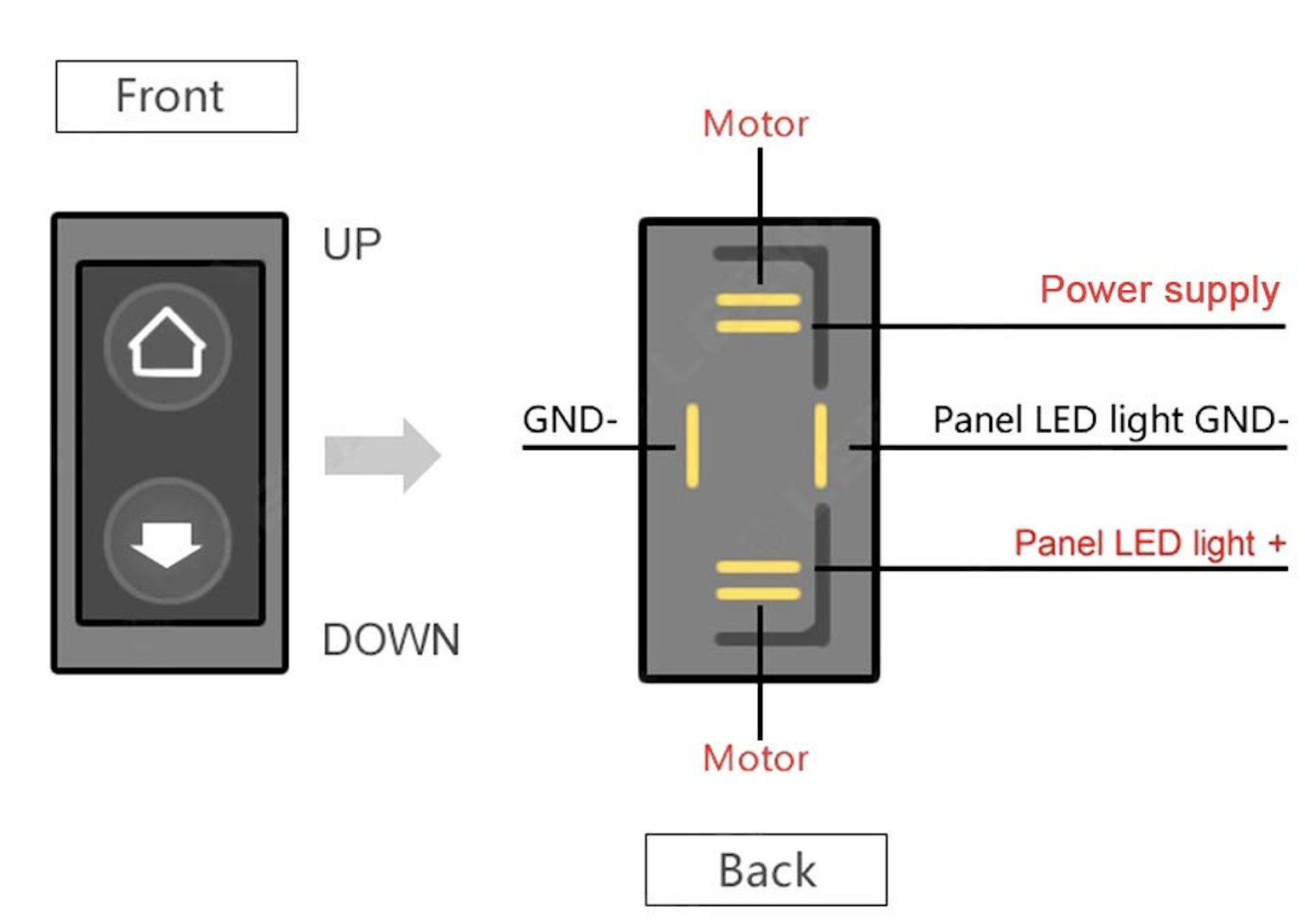
So, you're diving into the world of automotive electrical systems, specifically tackling the intricacies of Ford power window switch wiring. Excellent! Understanding this system is crucial for repairs, customization (like adding aftermarket accessories), and even just general automotive knowledge. This article will dissect the Ford 6-pin power window switch wiring diagram, providing you with the know-how to diagnose issues, make repairs, and possibly even modify your system with confidence.
Why This Diagram Matters
The power window system is a convenience we often take for granted, until it stops working. A wiring diagram is your roadmap to understanding how the system is designed and functions. Here's why grasping the 6-pin Ford power window switch diagram is essential:
- Troubleshooting: When your window refuses to budge, the diagram helps you pinpoint the fault, whether it's a faulty switch, a broken wire, a blown fuse, or a malfunctioning motor.
- Repair: Once you've identified the problem, the diagram guides your repair process, ensuring you're connecting the right wires in the right order. Avoiding short circuits is paramount!
- Modification: Thinking of adding remote window control, or perhaps integrating your power windows with an aftermarket alarm system? The diagram is crucial for understanding the existing wiring and safely integrating new components.
- Learning: Even if you're not currently facing a problem, studying the diagram is a fantastic way to understand automotive electrical systems in general. It provides a tangible example of how circuits work and how components interact.
Key Specs and Main Parts
Before we dive into the diagram itself, let's identify the key components involved in a typical Ford 6-pin power window system:
- Power Window Switch (6-Pin): This is the heart of the system, controlling the direction of current flow to the window motor. The 6 pins typically represent:
- Power Input (12V): This is the source of voltage for the switch, typically coming from the vehicle's fuse box.
- Ground: Provides the return path for the current.
- Motor Up Output: Sends power to the motor to raise the window.
- Motor Down Output: Sends power to the motor to lower the window.
- Motor Up Input: Receives power from the other switch for the passenger window to move up.
- Motor Down Input: Receives power from the other switch for the passenger window to move down.
- Power Window Motor: A DC motor that converts electrical energy into mechanical energy to move the window regulator.
- Window Regulator: The mechanical linkage that actually raises and lowers the window glass.
- Wiring Harness: The bundle of wires that connects all the components of the system. Pay close attention to wire insulation integrity.
- Fuses: A critical safety device that protects the circuit from overcurrent conditions. Always replace a blown fuse with one of the same amperage rating.
- Relays (Sometimes): Some systems use relays to handle the high current required by the window motor. Relays are electromechanical switches that allow a small current to control a larger current.
Decoding the Symbols
Understanding the symbols used in the wiring diagram is crucial for interpreting the information it conveys. Here's a breakdown of common symbols:
- Lines: Solid lines represent wires. Dashed lines might indicate shielded cables or wires within a harness. The thickness of the line doesn't necessarily indicate wire gauge.
- Colors: Wire colors are typically indicated by abbreviations (e.g., RD for Red, BK for Black, BL for Blue, GN for Green, YL for Yellow, WH for White). A wire might be striped with another color (e.g., RD/WH indicates a red wire with a white stripe). Knowing wire colors is invaluable for tracing circuits.
- Ground Symbol: Typically represented as a downward-pointing triangle or a series of horizontal lines getting progressively shorter. This indicates a connection to the vehicle's chassis, providing a path for current to return to the battery.
- Fuse Symbol: A zigzag line enclosed in a rectangle or a simple rectangle with a line through it. Indicates the location of a fuse.
- Switch Symbol: A break in the line, with a lever or button symbol indicating how the switch is activated. In a power window switch, you'll likely see symbols for both "up" and "down" positions.
- Motor Symbol: A circle with an "M" inside. Indicates the power window motor.
- Connector Symbol: Often depicted as interlocking shapes, indicating where wires are joined together. These connectors can be points of corrosion and resistance.
How It Works: A Simplified Circuit
Let's trace a simplified version of the circuit for raising a window:
- Power Source: The circuit begins at the vehicle's battery, with power flowing through a fuse to protect the circuit.
- Power Window Switch: When you press the "up" side of the switch, it closes a circuit, allowing power to flow from the power input pin to the "Motor Up Output" pin.
- Motor Activation: The voltage at the "Motor Up Output" energizes the window motor, causing it to rotate in the direction that raises the window.
- Ground Return: The motor's other terminal is connected to ground, completing the circuit and allowing current to flow back to the battery.
- Reversing Direction: When you press the "down" side of the switch, it reverses the polarity of the voltage applied to the motor, causing it to rotate in the opposite direction, lowering the window.
The 6-pin switch design incorporates a reversing switch. This allows for the window motor's polarity to be reversed so that the window can travel in both directions. A faulty reversing switch can also be the cause of a window not operating in one or both directions. A multimeter can be used to test for continuity to determine the location of the break within the switch.
Real-World Use: Basic Troubleshooting
Here's how you can use the diagram to troubleshoot common power window problems:
- Window Doesn't Work at All:
- Check the Fuse: Use a multimeter to check for continuity across the fuse. If it's blown, replace it with a fuse of the same amperage.
- Test the Switch: Use a multimeter to check for voltage at the power input pin of the switch. If there's no voltage, the problem lies upstream (e.g., a broken wire or a faulty connection).
- Inspect the Motor: If the switch is receiving power, check for voltage at the motor terminals when the switch is activated. If there's voltage but the motor doesn't run, the motor itself is likely faulty.
- Check Ground Connections: Ensure all ground connections are clean and secure. A poor ground can cause intermittent or complete failure.
- Window Only Works in One Direction:
- Test the Switch: The switch may be faulty. Use a multimeter to check the output voltage in both directions.
- Check Wiring: Inspect the wiring between the switch and the motor for any damage or corrosion.
- Consider Motor: If only moving in one direction, the motor may have internal damage preventing movement in the other direction.
- Other Windows Also Fail:
- Check the Fuse: Power windows are commonly on the same circuit. Verify that the fuse is working correctly.
- Check the Relay: A faulty relay can cause failure of other windows.
Safety First!
Working with automotive electrical systems can be dangerous. Here are some crucial safety precautions:
- Disconnect the Battery: Always disconnect the negative terminal of the battery before working on any electrical components. This prevents accidental shorts and potential electrocution.
- Use a Multimeter Safely: Understand how to use a multimeter correctly. Incorrect use can damage the meter or even cause injury.
- Protect Yourself: Wear safety glasses and gloves to protect yourself from sparks and potential hazards.
- Don't Work Alone: It's always a good idea to have someone nearby when working on electrical systems, in case of an emergency.
- Be Aware of Airbags: If you're working near airbags, take extra precautions to avoid accidentally triggering them. Consult your vehicle's service manual for specific instructions.
- High Current: The window motor can draw a significant amount of current. Be mindful of this when testing and avoid creating short circuits.
With a solid understanding of the 6-pin Ford power window switch wiring diagram, and armed with the right tools and precautions, you can confidently tackle power window repairs and modifications. Remember to always consult your vehicle's specific wiring diagram for the most accurate information. Don't be afraid to take your time, double-check your work, and seek help from experienced mechanics if you're unsure about anything.