
Ford Brake Proportioning Valve Diagram
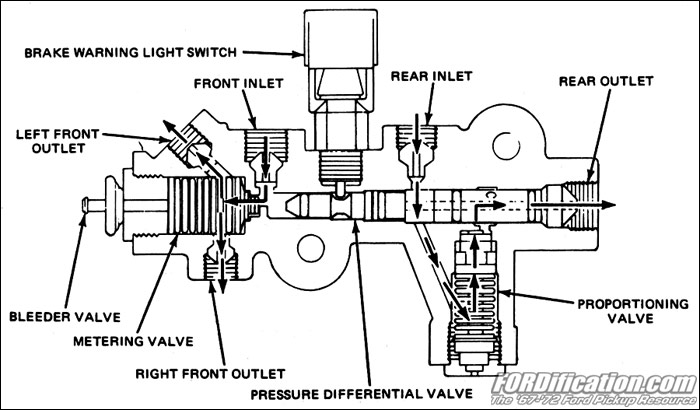
Understanding the Ford brake proportioning valve is crucial for anyone tackling brake system repairs, upgrades, or performance modifications on their vehicle. A brake proportioning valve diagram serves as a roadmap to understanding its function and troubleshooting potential issues. This article will provide a detailed explanation of a typical Ford brake proportioning valve diagram, its components, and its operation. Think of it as your guide to confidently navigating the intricacies of your braking system.
Purpose of a Ford Brake Proportioning Valve Diagram
Why bother understanding this diagram? Several reasons:
- Repairs: Identifying the correct valve type for your vehicle and its specific port configurations is essential when replacing a faulty valve.
- Troubleshooting: Diagnosing braking issues, such as rear wheel lock-up or uneven brake wear, often involves understanding how the proportioning valve is supposed to function.
- Modifications: Upgrading to larger brakes or modifying the suspension requires careful consideration of the proportioning valve to maintain balanced braking performance. Incorrect proportioning can lead to dangerous handling characteristics.
- Learning: Gaining a deeper understanding of your vehicle's braking system empowers you to make informed decisions about maintenance and upgrades.
Key Specs and Main Parts
Ford vehicles have used various types of proportioning valves over the years. The specific design depends on the vehicle model, year, and whether it has ABS (Anti-lock Braking System). The diagram highlights these key components:
- Valve Body: The main housing containing the internal mechanisms. Often made of brass or aluminum.
- Inlet Ports: Typically two inlet ports, one connected to the master cylinder's front brake circuit and one to the rear brake circuit.
- Outlet Ports: Two outlet ports leading to the front and rear brake lines, distributing hydraulic pressure to the wheels.
- Piston/Spool Valve: A sliding component inside the valve that regulates the pressure to the rear brakes.
- Spring(s): Provides resistance to the piston movement, determining the pressure at which the proportioning effect begins. The spring rate influences braking balance.
- Metering Valve (Combination Valves): Some Ford valves incorporate a metering valve that holds off pressure to the front brakes initially to improve braking feel. This is a combination valve, integrating multiple functions.
- Pressure Differential Switch (Combination Valves): Another feature often found in combination valves, this switch activates a warning light on the dashboard if there's a pressure imbalance between the front and rear brake circuits, indicating a potential leak or failure.
Symbols in a Brake Proportioning Valve Diagram
Understanding the symbols is key to reading the diagram effectively. Here's a breakdown of common symbols:
- Lines:
- Solid Lines: Represent hydraulic lines carrying brake fluid.
- Dashed Lines: May represent vacuum lines (for vacuum-assisted braking systems) or electrical connections.
- Arrows: Indicate the direction of fluid flow.
- Colors: While not standardized across all diagrams, colors often represent different brake circuits:
- Red: Typically used for the front brake circuit.
- Blue or Green: Typically used for the rear brake circuit.
- Icons: Standardized symbols represent components:
- Rectangles: Often represent the valve body itself.
- Circles: Can represent pistons, springs, or pressure switches.
- Triangles: May indicate pressure relief valves.
How It Works: A Deeper Dive
The proportioning valve's primary function is to prevent rear wheel lock-up during hard braking. Here's how it achieves this:
Without a proportioning valve, equal hydraulic pressure would be applied to both the front and rear brakes. However, during braking, weight shifts forward, increasing the load on the front wheels and decreasing the load on the rear wheels. This means the rear wheels are more prone to locking up since they have less weight (and therefore less traction) to resist the braking force.
The proportioning valve addresses this by reducing the hydraulic pressure to the rear brakes after a certain pressure threshold (the "split point") is reached. Up to that split point, the pressure to the front and rear brakes increases equally. Beyond that point, the proportioning valve reduces the rate at which pressure increases to the rear brakes. This is achieved by the internal piston or spool valve and spring(s).
Specifically:
- Initial braking applies equal pressure to both front and rear brakes.
- As pressure increases, the pressure to the rear brakes rises linearly until it reaches the pre-determined split point of the proportioning valve, defined by the spring's pre-load.
- Beyond this point, the proportioning valve begins to restrict pressure increase to the rear brakes by moving the internal piston. The piston movement regulates rear brake pressure based on a specific ratio (e.g., 60% of the front brake pressure increase).
This differential pressure application helps maintain rear wheel grip, preventing skidding and improving braking stability. Some vehicles utilize adjustable proportioning valves, allowing fine-tuning of the braking balance.
Real-World Use: Basic Troubleshooting Tips
A faulty proportioning valve can manifest in several ways:
- Rear Wheel Lock-up: This is the most common symptom, indicating the valve isn't properly reducing rear brake pressure.
- Uneven Brake Wear: If the rear brakes are wearing significantly faster than the front brakes, the proportioning valve may not be functioning correctly.
- Soft Brake Pedal: In some cases, a malfunctioning valve can contribute to a spongy brake pedal feel. This is especially true of combination valves with integrated metering.
- Brake Warning Light: If your car has a combination valve with a pressure differential switch, the brake warning light may illuminate, indicating a pressure imbalance.
Troubleshooting Steps:
- Visual Inspection: Check for leaks around the valve and brake lines. Look for any signs of damage or corrosion.
- Brake Fluid Level: Ensure the brake fluid reservoir is at the correct level. Low fluid can cause various braking issues.
- Brake Bleeding: Air in the brake lines can mimic the symptoms of a faulty proportioning valve. Bleed the brakes thoroughly to eliminate air.
- Pressure Testing: Use a brake pressure gauge to measure the pressure at the front and rear brake calipers. Compare the readings at different braking forces. If the rear brake pressure is consistently higher than expected, the proportioning valve is likely faulty.
Replacing a proportioning valve is a relatively straightforward process, but it's crucial to ensure you have the correct replacement part and follow proper bleeding procedures after installation.
Safety: Risky Components
The braking system is a critical safety component, so caution is paramount when working on it. Never work under a vehicle supported only by a jack. Always use jack stands. Brake fluid is corrosive; wear eye protection and gloves. The proportioning valve deals with high hydraulic pressures, and improper handling can lead to serious injury or vehicle damage.
When dealing with combination valves, do not attempt to disassemble them unless you have specific knowledge and tools. Internal components are precisely calibrated, and improper reassembly can render the valve useless or, worse, unsafe.
It's also important to highlight the dangers of modifying a braking system without proper understanding. Simply removing or bypassing the proportioning valve can lead to extremely dangerous braking characteristics, especially in emergency situations. If you're considering modifications, consult with a qualified brake specialist.
By understanding the diagram and functionality of your Ford brake proportioning valve, you're taking a significant step towards maintaining and potentially improving your vehicle's braking performance. Remember, safety is paramount, and if you're ever unsure about a procedure, seek professional assistance. We have a digital file of a generic Ford Brake Proportioning Valve Diagram available for you to download. This file can be a helpful resource as you navigate the complexities of your vehicle's brake system.