
Ford F150 Trailer Plug Wiring Diagram
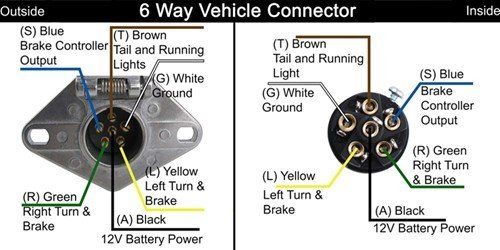
Alright, let's dive into the wiring diagram for the Ford F-150 trailer plug. Understanding this is crucial whether you're tackling a faulty trailer light issue, upgrading your tow setup, or just satisfying your curiosity about your truck's electrical system. This isn't just about connecting wires; it's about ensuring safe and compliant towing. We're talking about preventing accidents and keeping everyone on the road safe.
Why Understanding the Trailer Plug Diagram Matters
Think of the trailer plug as the communication lifeline between your F-150 and whatever you're towing – a boat, camper, utility trailer, you name it. A properly wired plug ensures that your trailer's lights (brake lights, turn signals, running lights), electric brakes (if equipped), and auxiliary power are all functioning correctly. Knowing the wiring diagram empowers you to:
- Diagnose and Repair Faults: Identify and fix problems like flickering lights, non-functional brakes, or short circuits.
- Install Trailer Accessories: Wire up accessories like backup cameras, interior lights, or winches on your trailer.
- Ensure Safe Towing: Properly functioning lights and brakes are essential for safe towing, especially at night or in inclement weather.
- Avoid Costly Shop Visits: Many common trailer wiring issues can be resolved with a little know-how and a multimeter.
- Verify Correct Wiring After Modifications: If you or a previous owner have modified the trailer wiring, a diagram helps you verify that everything is connected correctly.
Key Specs and Main Parts of the F-150 Trailer Plug Wiring
The most common trailer plug on F-150s is the 7-way RV blade connector. You might also encounter a 4-way flat connector for smaller trailers without brakes or auxiliary power. Let's focus on the 7-way, as it's the most versatile.
Here's a breakdown of the typical functions and color-coding (though always verify with your specific truck's diagram, as minor variations can exist):
- White: Ground (connects to the trailer frame)
- Blue: Electric Brakes (sends power to the trailer's brake magnets)
- Yellow: Left Turn/Brake Light
- Green: Right Turn/Brake Light
- Brown: Tail/Running Lights
- Red or Black: Auxiliary Power (12V+, for charging trailer batteries or powering accessories)
- Black (sometimes Orange/Purple): Reverse Lights (activates when the truck is in reverse)
Key Components in the trailer wiring system include:
- Trailer Plug (Vehicle Side): The socket on your F-150 where the trailer plug connects.
- Trailer Plug (Trailer Side): The plug on the trailer that connects to the vehicle.
- Wiring Harness: The bundle of wires that connects the trailer plug to the truck's electrical system.
- Fuses and Relays: Protect the wiring circuits from overloads and control power flow. These are usually located in the engine compartment or under the dashboard.
- Trailer Brake Controller (if equipped): A device that allows you to manually adjust the braking force applied to the trailer's electric brakes.
Decoding the Wiring Diagram: Symbols and Conventions
A wiring diagram is a schematic representation of the electrical circuits. Understanding the symbols is key to interpreting it correctly. Here's a quick rundown:
- Lines: Represent wires. A solid line indicates a continuous wire; a dashed line might indicate a wire within a harness or a connection that's not always present.
- Colors: Wires are often color-coded, as mentioned above. The diagram will typically indicate the color of each wire.
- Circles: Represent terminals or connection points.
- Squares or Rectangles: Can represent various components, such as switches, relays, or fuses. The diagram will usually label what the component is.
- Ground Symbol (usually a downward-pointing triangle or a series of parallel lines): Indicates a connection to the vehicle's chassis, providing a return path for the electrical current.
- Fuse Symbol (a squiggly line inside a rectangle): Indicates a fuse, which is a safety device that protects the circuit from overcurrent.
- Relay Symbol (a coil and a switch): Indicates a relay, which is an electrically operated switch.
Important Conventions:
- Diagrams typically show the wiring in a "de-energized" state, meaning the ignition is off.
- Wire gauge (thickness) may be indicated on the diagram, which is important for selecting the correct replacement wire.
How It Works: A Simplified Explanation
The trailer plug wiring system taps into the F-150's existing electrical system to provide power and control signals to the trailer. When you activate your turn signal, for example, the truck sends a signal through the appropriate wire (yellow or green) to the trailer's corresponding turn signal light. Similarly, when you press the brake pedal, the truck sends a signal through the brake light wires (yellow and green) to activate the trailer's brake lights.
If your trailer has electric brakes, the blue wire is crucial. When you apply the brakes in your truck, the trailer brake controller (if equipped) sends a variable voltage signal through the blue wire to the trailer's brake magnets. These magnets then engage the trailer's brake drums or rotors, helping to slow the trailer down. The amount of voltage sent to the trailer brakes is typically controlled by the brake controller, allowing you to adjust the braking force to match the trailer's weight and the road conditions.
The auxiliary power wire (red or black) provides a constant 12V+ source to the trailer, which can be used to charge the trailer's battery or power other accessories. The ground wire (white) provides a return path for the electrical current, completing the circuit.
Real-World Use: Basic Troubleshooting Tips
Here's where the rubber meets the road. Let's say your trailer's brake lights aren't working:
- Check the Fuses: The first step is always to check the fuses related to the trailer wiring. Consult your owner's manual to locate the correct fuses.
- Inspect the Plugs: Look for corrosion, bent pins, or loose connections on both the truck-side and trailer-side plugs. Clean or repair as needed. Dielectric grease can help prevent corrosion.
- Test the Truck-Side Plug: Use a multimeter to test the voltage at each pin of the truck-side plug when the corresponding function is activated (e.g., brake pedal pressed, turn signal on). This will tell you if the truck is sending the correct signals.
- Check the Trailer Wiring: If the truck-side plug is working correctly, the problem is likely on the trailer side. Inspect the trailer wiring for damage, loose connections, or shorts.
- Use a Test Light or Multimeter on Trailer: With the trailer connected, check for power and ground at the trailer light fixtures themselves. This helps you isolate the problem to a specific area.
Pro Tip: A trailer wiring tester is a handy tool that plugs into the truck-side plug and simulates a trailer, allowing you to quickly check the functionality of the truck's trailer wiring circuits.
Safety Considerations
Working with electrical systems can be dangerous. Always disconnect the negative battery cable before working on the trailer wiring. This will help prevent accidental shorts and electrical shocks.
Risky Components: The auxiliary power wire (red or black) can carry a significant amount of current, so be extra careful when working with it. Always use properly insulated tools and avoid creating shorts. If your F-150 is equipped with the optional towing package with an integrated brake controller, be extremely mindful not to short circuit any wiring, as the integrated modules can be very expensive to replace. It's often best to consult a mechanic if troubleshooting problems around this equipment.
Never work on the electrical system in wet conditions. Always wear safety glasses to protect your eyes from sparks or debris. When in doubt, consult a qualified electrician or mechanic.
We have an F-150 Trailer Plug Wiring Diagram file available for you to download. Understanding and using these diagrams, you'll be equipped to maintain your F-150's towing capabilities, diagnose issues, and perform necessary repairs with confidence, all while ensuring safe operation. Safe towing practices are important.