
Ford Taurus 3.0 Serpentine Belt Diagram
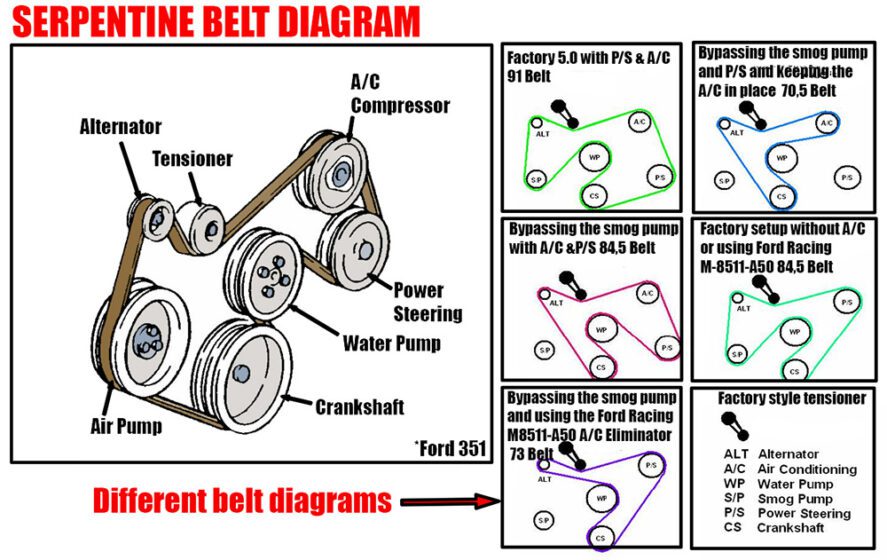
Let's dive into the serpentine belt system on the Ford Taurus equipped with the 3.0L Vulcan engine. Understanding the serpentine belt diagram is crucial for anyone performing maintenance, repairs, or even just wanting to get a better grasp of how their car's accessories are driven. This article will walk you through everything you need to know about the diagram, its components, and how to use it effectively.
Purpose of the Serpentine Belt Diagram
The serpentine belt diagram is your roadmap for the accessory drive system. Its main purpose is to show you the exact routing of the serpentine belt around all the pulleys driven by the engine's crankshaft. This is vital for several reasons:
- Belt Replacement: When replacing a worn or broken serpentine belt, the diagram ensures you route the new belt correctly. Incorrect routing can lead to improper operation, damage to components, or even belt failure.
- Troubleshooting: If you're experiencing issues like a squealing belt, or a malfunctioning power steering pump, alternator, or AC compressor, the diagram helps you identify the components involved and potential causes.
- Component Diagnosis: Knowing the belt routing can aid in diagnosing specific component failures. For example, if the AC compressor isn't working, you can quickly verify if the belt is properly engaging the compressor pulley.
- General Understanding: Simply understanding how the engine drives its accessories is a valuable skill for any car owner. The diagram provides a clear visual representation of this process.
We have the serpentine belt diagram readily available, and you can download it using the link at the end of this article. Having a copy on hand can save you time and frustration during repairs.
Key Specs and Main Parts of the 3.0L Taurus Serpentine Belt System
The Ford Taurus 3.0L Vulcan engine utilizes a single serpentine belt to drive several key accessories. Here's a breakdown of the key components and some typical specifications:
- Crankshaft Pulley (Harmonic Balancer): This pulley is directly connected to the engine's crankshaft and is the primary driver of the serpentine belt.
- Alternator Pulley: The alternator generates electrical power for the car. The serpentine belt spins the alternator pulley.
- Power Steering Pump Pulley: The power steering pump provides hydraulic assistance to the steering system.
- Air Conditioning Compressor Pulley: The AC compressor circulates refrigerant in the air conditioning system.
- Idler Pulley(s): Idler pulleys are smooth pulleys that help guide the belt and maintain proper tension. The 3.0L Vulcan often has one or more idler pulleys.
- Tensioner Pulley: This spring-loaded pulley maintains the correct tension on the serpentine belt. It's crucial for proper operation and belt life. A malfunctioning tensioner is a common cause of belt noise and premature failure.
- Water Pump Pulley: While not always directly on the serpentine belt in all years of the 3.0L Vulcan, the water pump circulates coolant through the engine to prevent overheating. Note: Some models might use a separate belt for the water pump. Always verify your specific model.
- Serpentine Belt: The belt itself is a reinforced rubber belt with multiple V-shaped ribs that grip the pulleys.
Typical Serpentine Belt Specs:
Belt Length: The exact length will vary depending on the year and specific options of your Taurus. Refer to your vehicle's repair manual or a parts catalog for the correct length. Typical lengths are around 90-95 inches.
Rib Count: Typically 6 ribs (6PK belt).
Always use a belt specifically designed for your vehicle. Using the wrong size can lead to performance issues and premature belt failure.
Understanding the Serpentine Belt Diagram Symbols
Serpentine belt diagrams use a standardized set of symbols to represent the various components and the belt path. Here's a breakdown of the common symbols you'll encounter:
- Solid Line: Represents the serpentine belt itself. The thicker the line, the easier it is to see the belt's path.
- Pulleys: Pulleys are depicted as circles. The name of the component (e.g., ALT, P/S, A/C) is usually written inside or next to the circle.
- Arrows: Arrows indicate the direction of rotation for each pulley. This is helpful for understanding how the belt drives the accessories.
- Tensioner: The tensioner pulley is often depicted with an arrow indicating the direction it moves to apply tension to the belt. Sometimes, the spring symbol of the tensioner is also drawn beside the tensioner pulley.
- Idler Pulley: Idler pulleys are usually labeled "IDLER" or simply marked as a smooth pulley with no specific component designation.
Some diagrams may use different colors to highlight specific sections of the belt or components, but this is less common. The most important aspect is to understand the flow of the solid line representing the belt.
How the Serpentine Belt System Works
The serpentine belt system is a relatively simple but crucial system. The engine's crankshaft rotates, turning the crankshaft pulley. This pulley, in turn, drives the serpentine belt. The belt then snakes around the other pulleys, transferring rotational force to the alternator, power steering pump, AC compressor, water pump (in some cases), and idler and tensioner pulleys. The tensioner maintains constant pressure on the belt, preventing slippage.
The accessories, thus powered, perform their respective functions. The alternator charges the battery and powers the electrical system, the power steering pump provides steering assistance, and the AC compressor cools the cabin. Without a properly functioning serpentine belt system, these essential accessories would fail.
Real-World Use: Basic Troubleshooting Tips
Here are some common problems and how the serpentine belt diagram can help:
- Squealing Belt: A squealing belt often indicates slippage. Check the diagram to ensure the belt is routed correctly and that the tensioner is functioning properly. A worn or glazed belt can also cause squealing.
- Accessory Failure: If an accessory (e.g., alternator) stops working, use the diagram to verify the belt is properly engaging its pulley. Check the tensioner to ensure adequate tension.
- Belt Damage: Inspect the belt for cracks, fraying, or missing ribs. The diagram helps you identify areas where the belt might be rubbing against other components.
- Incorrect Routing After Replacement: If you've replaced the belt and something isn't working correctly, double-check the routing against the diagram. Even a slight deviation can cause problems.
Using the diagram in conjunction with visual inspection can quickly narrow down the source of many serpentine belt-related issues.
Safety Considerations
Working on the serpentine belt system can be hazardous. Here are some key safety precautions:
- Disconnect the Negative Battery Terminal: Before working on any electrical components (like the alternator), disconnect the negative battery terminal to prevent electrical shock.
- Never Work on a Running Engine: Keep your hands and tools clear of the belt and pulleys when the engine is running. The rotating components can cause serious injury.
- Be Aware of Hot Components: The engine and exhaust system can be very hot. Allow the engine to cool down before working on the serpentine belt system.
- Tensioner Spring: The tensioner pulley is under spring tension. Use the correct tool (usually a wrench or socket) to relieve the tension before removing the belt. Releasing the tension without the proper tool can be dangerous.
- Eye Protection: Wear safety glasses to protect your eyes from debris.
Remember: If you're not comfortable working on the serpentine belt system, it's always best to consult a qualified mechanic.
By understanding the serpentine belt diagram and following these guidelines, you can confidently tackle many common maintenance and repair tasks on your Ford Taurus 3.0L. Good luck!
Click here to download the Ford Taurus 3.0L Serpentine Belt Diagram. (Link Placeholder - Insert Download Link Here)