
Front Wheel Drive Transmission Diagram
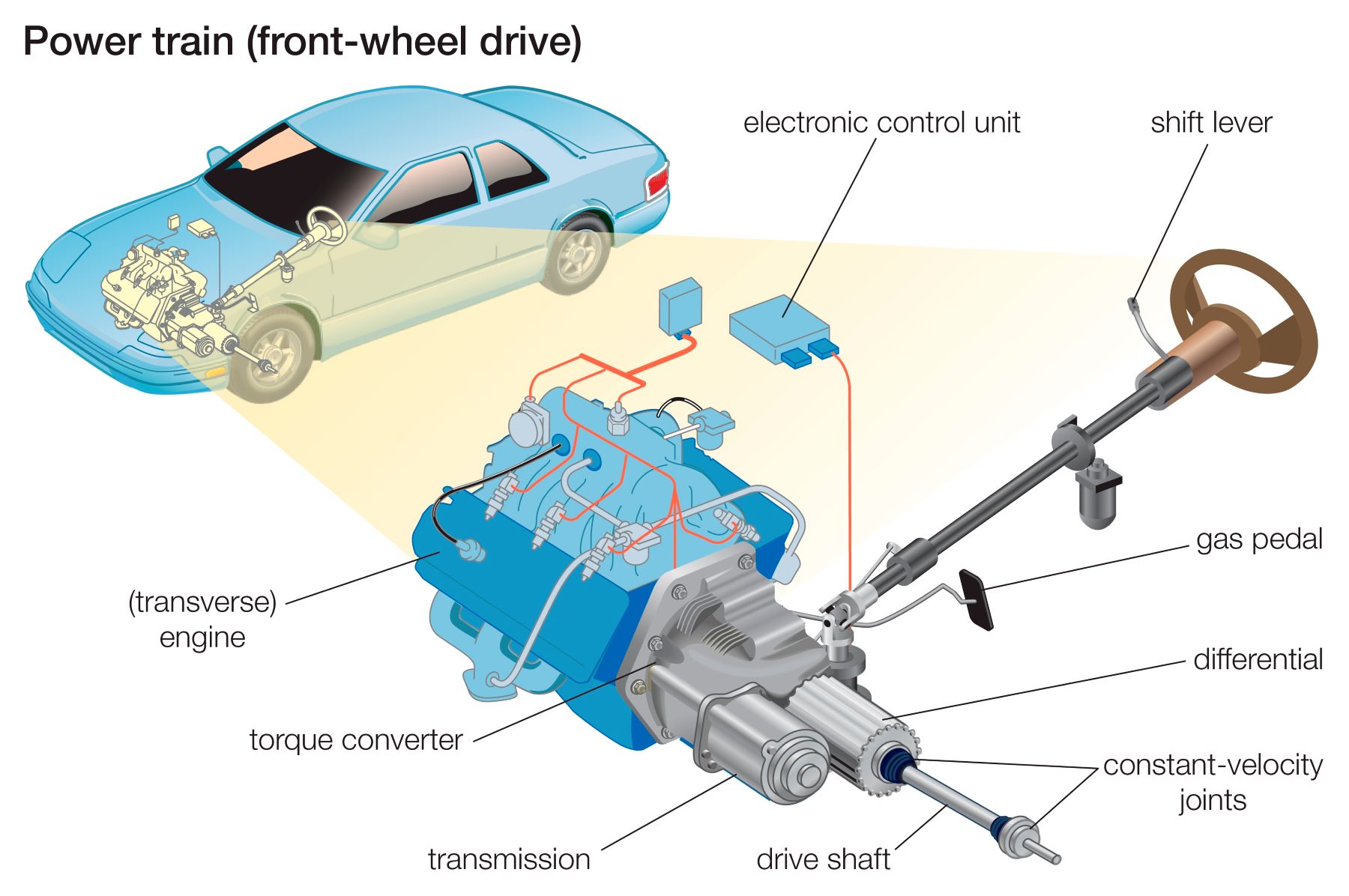
So, you're diving into the world of front-wheel drive (FWD) transmissions? Excellent! This article will serve as your guide to understanding the FWD transmission diagram, a crucial tool for diagnosing, repairing, and even modifying your vehicle. We'll break down the key components, explain how they work together, and provide some real-world troubleshooting tips. Think of this as your experienced mechanic buddy walking you through it.
Purpose of a FWD Transmission Diagram
Why bother with a diagram, you ask? Well, a FWD transmission diagram is your roadmap to understanding this complex piece of machinery. It allows you to:
- Identify Components: Pinpoint specific parts for replacement or repair.
- Trace Power Flow: Understand how power travels from the engine to the wheels.
- Diagnose Problems: Relate symptoms to potential component failures.
- Perform Repairs: Guide disassembly, inspection, and reassembly procedures.
- Plan Modifications: Evaluate the impact of upgrades or alterations.
Whether you're tackling a simple fluid change or a complete rebuild, having a clear understanding of the transmission's inner workings is essential.
Key Specs and Main Parts of a FWD Transmission
A FWD transmission combines the functions of a gearbox, differential, and (often) a final drive into a single unit. Let's look at the main parts that you'll find represented on a diagram:
Key Components:
- Input Shaft: Receives power directly from the engine, usually through a torque converter (for automatic transmissions) or a clutch (for manual transmissions).
- Gears: Sets of interlocking gears that provide different gear ratios for varying speed and torque requirements. Common types include spur gears and helical gears.
- Output Shaft: Delivers power from the transmission to the differential.
- Differential: Allows the wheels to rotate at different speeds during turns. Key components include the pinion gear, ring gear, side gears, and spider gears.
- Final Drive: Often integrated into the differential housing, the final drive gear set provides a final reduction in gear ratio.
- Synchronizers (Manual Transmissions): Mechanisms that match the speed of the gears before they engage, preventing grinding.
- Valve Body (Automatic Transmissions): A complex hydraulic control system that directs fluid pressure to engage different clutches and bands, controlling gear shifts.
- Clutches and Bands (Automatic Transmissions): Used to engage and disengage different gear sets in automatic transmissions.
- Torque Converter (Automatic Transmissions): A fluid coupling that transfers power from the engine to the transmission, also providing torque multiplication.
- Transmission Case: Houses all the internal components and provides mounting points for the transmission.
Key Specs you might find on a diagram include:
- Gear Ratios: The ratio of the input shaft speed to the output shaft speed for each gear.
- Torque Capacity: The maximum torque the transmission can handle.
- Fluid Type: The specific type of transmission fluid required.
- Bolt Torque Specifications: The recommended torque values for tightening bolts.
Symbols Used in FWD Transmission Diagrams
Understanding the symbols on a diagram is crucial for interpreting its information. Here are some common symbols and their meanings:
- Solid Lines: Represent mechanical connections, such as shafts and gears. Thickness can indicate size or strength.
- Dashed Lines: Represent hydraulic or pneumatic lines, often used in automatic transmissions for controlling valve body functions.
- Circles and Arcs: Typically represent gears. The number of teeth may be indicated.
- Rectangles: Can represent various components, such as clutches, brakes, or valve bodies.
- Arrows: Indicate the direction of power flow or fluid flow.
- Color Coding: (If present) Can be used to differentiate between different systems or components (e.g., hydraulic circuits, lubrication pathways).
- Text Labels: Identify specific components, such as "Input Shaft," "Output Shaft," or "Differential Case."
A detailed legend is usually provided with the diagram to explain all the symbols used. Always refer to the legend if you're unsure about a symbol's meaning.
How It Works: Power Flow in a FWD Transmission
Let's trace the flow of power through a typical FWD transmission:
- Engine to Transmission: Power from the engine enters the transmission through the input shaft. In an automatic transmission, the torque converter connects the engine to the input shaft. In a manual transmission, the clutch performs this function.
- Gear Selection: The driver selects a gear, which engages a specific set of gears within the transmission. In a manual transmission, the driver manually selects the gears. In an automatic transmission, the valve body automatically selects the gears based on factors like vehicle speed and engine load.
- Torque Multiplication and Speed Reduction: The selected gear set multiplies torque and reduces speed (or vice-versa, depending on the gear). This allows the engine to operate within its optimal RPM range while providing the necessary power to the wheels.
- Power to the Differential: The power from the selected gear set is then transferred to the output shaft.
- Differential Action: The differential splits the power between the two front wheels, allowing them to rotate at different speeds when turning. The final drive gears provide a final gear reduction.
- Wheels: The power is finally transmitted to the wheels, propelling the vehicle forward.
Real-World Use: Basic Troubleshooting Tips
Using the diagram, you can begin to troubleshoot common transmission problems. Here are a few examples:
- Slipping Gears: In an automatic transmission, this could indicate worn clutches or bands, or a problem with the valve body. The diagram can help you locate these components. In a manual, worn synchros or a worn clutch are prime suspects.
- Grinding Gears: In a manual transmission, this often points to worn synchronizers. The diagram can help you identify and locate the synchronizers for each gear.
- Whining Noise: A constant whining noise can indicate worn bearings or gears. The diagram can help you identify the potential source of the noise.
- Fluid Leaks: The diagram can help you identify potential leak points, such as seals around the input shaft, output shaft, or differential housing.
Remember to always consult your vehicle's service manual for specific troubleshooting procedures and torque specifications.
Safety Considerations
Working on a transmission involves certain risks. Here are some key safety precautions:
- Support the Vehicle Properly: Always use jack stands to support the vehicle securely before working underneath it.
- Wear Safety Glasses: Protect your eyes from flying debris and fluids.
- Use Proper Tools: Using the right tools for the job can prevent damage to the transmission and injury to yourself.
- Handle Transmission Fluid Carefully: Transmission fluid can be hot and slippery. Wear gloves and avoid contact with skin.
- High-Pressure Components: Be extremely careful when working with automatic transmissions, as they contain high-pressure hydraulic systems. Improperly disconnecting a line can result in serious injury.
- Never work on a transmission while the engine is running.
The valve body in an automatic transmission is a particularly complex and sensitive component. Disassembling it without proper knowledge and tools can easily damage it.
Hopefully, this article has given you a solid understanding of the FWD transmission diagram and its practical applications. Remember, patience and attention to detail are key when working on transmissions. Good luck, and be safe!
Now that you've read through this guide, you're well-equipped to start working with FWD transmission diagrams. To help you further, we have a downloadable FWD transmission diagram file ready for you. It's packed with detailed illustrations and specifications that can be invaluable for your repairs and modifications. Reach out, and we'll get it to you!