
Fuel Pump Relay Bypass Wiring Diagram
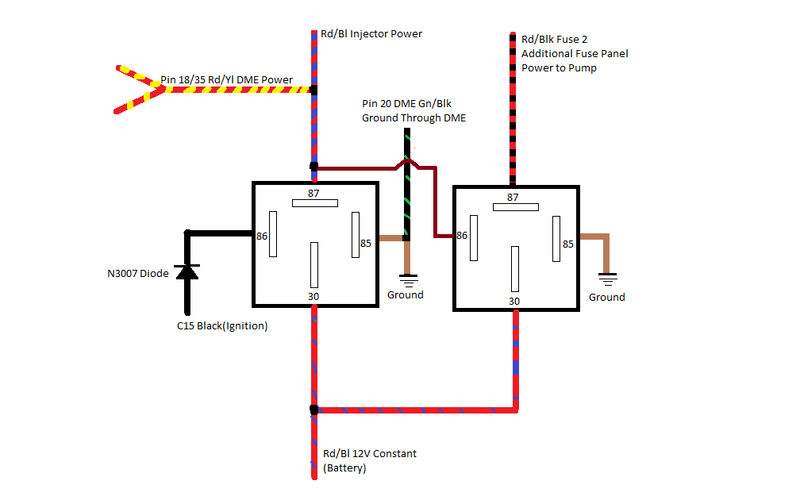
Alright, let's dive into the world of fuel pump relay bypass wiring. This is a technique every serious DIY mechanic or car enthusiast should understand. Whether you're diagnosing a fuel system problem, getting a race car ready, or just expanding your automotive knowledge, knowing how to bypass the fuel pump relay can be invaluable.
Purpose of a Fuel Pump Relay Bypass
The fuel pump relay controls the power supply to your fuel pump. It's a safety and efficiency measure. It prevents the pump from running unnecessarily when the engine isn't running, like after an accident or if the key is just in the "on" position without the engine cranking. Bypassing it lets you directly power the fuel pump, which is useful for several reasons:
- Diagnostics: To quickly test if the fuel pump itself is the problem. If you bypass the relay and the pump runs, you know the relay, wiring to the relay, or the ECU signal that triggers the relay is faulty.
- Emergency Starting: In some cases, a failing relay can prevent the car from starting. Bypassing it might get you home.
- Fuel System Priming: When working on the fuel system, you might need to prime it (fill the fuel lines with fuel) before starting the engine. Bypassing the relay is a quick way to do this.
- Performance Applications: Some performance modifications require running the fuel pump at a higher voltage or directly from a switch, bypassing the factory relay for increased fuel delivery.
Key Specs and Main Parts
Before we get to the wiring diagram, let's review the components and their typical specifications. Understanding these will make interpreting the diagram much easier.
- Fuel Pump Relay: A small electromagnetic switch. It typically has four or five terminals, numbered 30, 85, 86, 87, and sometimes 87a. Its voltage rating is usually 12V DC, and the current rating should be sufficient for the fuel pump's amperage draw (typically 10-20 amps, but check your vehicle's specifications).
- Fuel Pump: An electric pump submerged in the fuel tank or mounted inline. Its operating voltage is typically 12V DC. Pay close attention to the pump's current draw; exceeding it can damage wiring.
- Fuse: A safety device that protects the circuit from overcurrent. The fuel pump circuit has its own fuse, usually located in the fuse box. Its amperage rating should be slightly higher than the fuel pump's normal operating current.
- Wiring: Automotive-grade wiring, usually 16-14 gauge for the fuel pump circuit. Color coding is important, as we'll see in the diagram.
- Jumper Wire: The "bypass" component – a piece of wire with spade connectors (or appropriate connectors for your vehicle) to bridge the relay terminals. Use wire of the same gauge or slightly larger than the existing fuel pump wiring.
Symbols in the Wiring Diagram
Understanding the symbols in a wiring diagram is critical. Here's a breakdown of what you'll typically see:
- Solid Lines: Represent wires. The thicker the line, the thicker the wire (and typically, the higher its current carrying capacity).
- Dashed Lines: Often indicate a ground connection or a wire that's part of a harness but not directly involved in the circuit.
- Color Codes: Wires are often color-coded. Common abbreviations include:
- BK: Black (Ground)
- RD: Red (+12V Power)
- BL: Blue
- GN: Green
- YW: Yellow
- WH: White
- Relay Symbol: A rectangle with terminals labeled 30, 85, 86, 87. Terminal 30 is usually the power input, 85 is the ground, 86 is the trigger signal from the ECU, and 87 is the output to the fuel pump. 87a (if present) is the normally closed contact.
- Fuse Symbol: A wavy line inside a rectangle or a simple rectangle.
- Ground Symbol: Looks like a downward-pointing tree or stacked horizontal lines.
- Connector Symbol: Often shown as interlocking shapes, indicating a point where wires are connected and can be disconnected.
How It Works: The Relay and the Bypass
Normally, the fuel pump relay works like this:
- When the ignition is turned on and the ECU sees the engine cranking or running, it sends a small voltage signal to terminal 86 of the fuel pump relay.
- This signal energizes the relay's internal coil, creating an electromagnetic field.
- The electromagnetic field pulls a switch inside the relay closed, connecting terminal 30 (which is connected to a fused +12V power source) to terminal 87.
- Terminal 87 is connected directly to the fuel pump, providing it with power and making it run.
Bypassing the relay short-circuits this process. You're essentially manually connecting terminal 30 directly to terminal 87, forcing the fuel pump to run, regardless of the ECU's signal or the relay's condition. This is why it's crucial to know what you're doing and use a fused jumper wire.
The Bypass Wiring Diagram (Conceptual):
   +12V (Fused) --- Terminal 30 (Relay)
                     |
                     |--- Jumper Wire --- Terminal 87 (Relay) --- Fuel Pump --- Ground
IMPORTANT: You must identify terminals 30 and 87 correctly on your specific vehicle's fuel pump relay. The easiest way to do this is to consult your vehicle's wiring diagram or the service manual. Some relays also have the terminal numbers printed on the relay itself.
Real-World Use: Troubleshooting Tips
Here's how you might use the bypass for troubleshooting:
- Car won't start: If you suspect a fuel pump issue, locate the fuel pump relay.
- Identify Terminals: Determine which terminals are 30 (power in) and 87 (power out to the pump). Consult your wiring diagram!
- Bypass: With the ignition OFF, carefully insert a fused jumper wire between terminals 30 and 87.
- Listen: Turn the ignition to the "ON" position (but don't start the engine). Listen for the fuel pump running (a whirring sound from the fuel tank area).
- Interpret Results:
- Pump runs: The fuel pump itself is likely good. The problem lies in the relay, the ECU signal to the relay, or the wiring between the ECU and the relay.
- Pump doesn't run: The fuel pump is likely faulty, or there's a wiring problem between the relay and the pump (check for a blown fuel pump fuse first!). Verify voltage at the pump connector with a multimeter.
Important Notes:
- Don't run the fuel pump continuously for extended periods while bypassed, as it could overheat. Keep the bypass short – just long enough to test.
- Always remove the jumper wire after testing.
- If bypassing the relay fixes the problem, replace the fuel pump relay immediately. It's a cheap and easy fix compared to replacing the fuel pump unnecessarily.
Safety Considerations
Working with electrical systems and fuel is inherently risky. Take these precautions:
- Disconnect the Battery: Whenever possible, disconnect the negative terminal of the battery before working on the fuel system or electrical components.
- Use a Fused Jumper Wire: This is non-negotiable. A fuse protects the circuit from overcurrent and potential fires. The fuse amperage should be slightly higher than the normal fuel pump amperage.
- Work in a Well-Ventilated Area: Gasoline fumes are flammable and harmful to breathe.
- Have a Fire Extinguisher Nearby: Just in case.
- Inspect Wiring: Before bypassing, carefully inspect the wiring around the fuel pump relay for any signs of damage, corrosion, or exposed wires. Repair any damage before proceeding.
- Avoid Sparks: Be extremely careful not to create sparks near the fuel system. Static electricity can also be a hazard.
- Understand Your Vehicle's Wiring: Every vehicle is different. Consult your vehicle's wiring diagram before attempting any modifications or repairs.
High-Risk Components:
- Fuel Lines: Fuel lines under pressure can spray fuel if disconnected improperly.
- Fuel Pump Connector: Be careful when disconnecting the fuel pump connector, as it may contain residual fuel.
- Exposed Wires: Any exposed wires pose a risk of short circuits and electric shock.
This article provides a general overview. Because specific wiring configurations vary greatly from vehicle to vehicle, you must acquire the exact wiring diagram for your car's make, model and year. We have a generic Fuel Pump Relay Bypass Wiring Diagram, which you can download as a reference. However, do not rely on this generic diagram for any repairs. Always consult the official service manual for your specific vehicle before starting any work.