
Fuse Box Diagram For A 2006 Ford F150
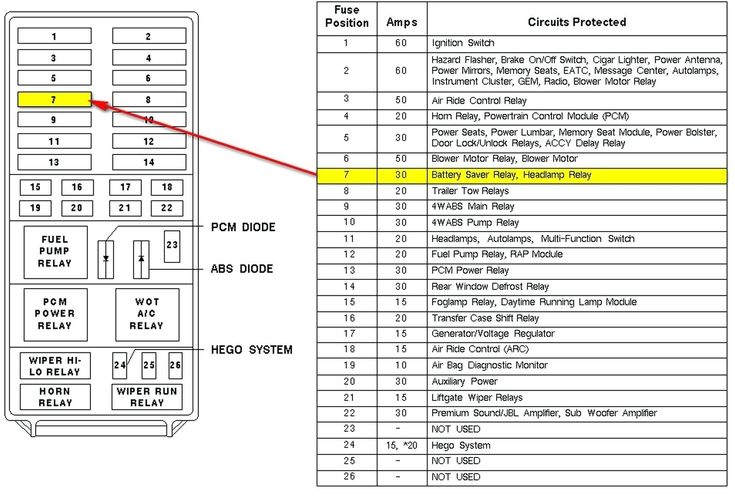
Understanding the fuse box diagram for your 2006 Ford F150 is an invaluable skill for any intermediate car owner, modder, or DIY mechanic. This knowledge empowers you to diagnose and resolve electrical issues, add aftermarket accessories safely, and generally gain a deeper understanding of your truck's electrical system. This article will provide a detailed, yet approachable, breakdown of the 2006 F150 fuse box diagram, equipping you with the knowledge to confidently tackle electrical projects.
Purpose: Why Bother with the Fuse Box Diagram?
The fuse box diagram isn't just a fancy piece of paper; it's your roadmap to your F150's electrical system. It serves several crucial purposes:
- Troubleshooting Electrical Problems: When a component stops working (lights, radio, power windows, etc.), the first step is often to check the corresponding fuse. The diagram tells you exactly which fuse to inspect.
- Safe Aftermarket Accessory Installation: Adding accessories like amplifiers, auxiliary lights, or remote starters requires tapping into the truck's electrical system. Knowing the function of each fuse allows you to choose a safe and appropriate power source.
- Preventing Extensive Damage: A blown fuse is often a sign of a bigger problem, like a short circuit. Ignoring blown fuses can lead to more significant electrical damage, potentially requiring costly repairs.
- Learning Your Truck's Electrical Architecture: Studying the diagram provides insight into how different systems are connected and protected, fostering a better understanding of your vehicle.
Key Specs and Main Parts
The 2006 Ford F150 typically has two main fuse boxes:
- Battery Junction Box (BJB): Located under the hood, usually near the battery. This box houses high-amperage fuses and relays that protect major circuits like the starter motor, alternator, and fuel pump. This is where you'll find the larger, more robust fuses that protect entire systems.
- Central Junction Box (CJB): Located inside the cab, usually under the dashboard or to the side of the steering column. This box contains fuses and relays for interior components like lights, the radio, power windows, and climate control.
The fuse box diagram provides information about each fuse and relay, including its:
- Fuse Number: A unique identifier for each fuse, allowing you to locate it on the diagram and in the fuse box itself.
- Ampere Rating (Amps): The maximum current (measured in amps) that the fuse can handle before blowing. This is critical for replacing fuses with the correct value. Using a fuse with a higher amperage rating than specified can damage the circuit it's protecting.
- Circuit Description: A brief description of the component or system that the fuse protects (e.g., "Fuel Pump Relay," "Headlamp - Left").
Understanding the Symbols, Lines, Colors and Icons
Fuse box diagrams use various symbols, lines, colors, and icons to represent different components and connections. Understanding these symbols is crucial for interpreting the diagram correctly. Here's a breakdown of common elements:
- Fuse Symbol: Typically represented by a zigzag line enclosed in a rectangle. This is the universal symbol for a fuse.
- Relay Symbol: Often depicted as a square with a coil symbol inside, connected to a switch. A relay is an electromechanical switch that allows a low-current circuit to control a high-current circuit.
- Lines: Lines represent electrical wires connecting different components. Solid lines indicate a direct connection, while dashed lines might indicate a connection through a switch or other device.
- Colors: While the diagram itself might not be in color, the actual wires in your truck are color-coded. The circuit descriptions in the diagram often mention wire colors, which can be helpful for tracing circuits. For instance, "LB/RD" might indicate a Light Blue wire with a Red stripe.
- Icons: Some diagrams use icons to represent specific components, such as a lightbulb for headlights or a speaker for the radio. These icons vary but are usually self-explanatory.
How It Works: A Simplified Explanation
The fuse box works as a central distribution point for electrical power in your F150. The battery provides power, which is then distributed to various circuits through the fuse boxes. Each circuit is protected by a fuse, which is a small, sacrificial component designed to break the circuit if the current exceeds its rating.
Think of a fuse like a thin wire designed to melt under excessive heat. When the current flowing through a circuit becomes too high (due to a short circuit or overload), the fuse wire melts, opening the circuit and stopping the flow of electricity. This prevents damage to the wiring and components in the circuit.
Relays are used to control high-current circuits with low-current signals. For example, the headlight switch in your truck doesn't directly control the headlights; it controls a relay. The relay, in turn, switches on the high-current circuit that powers the headlights. This prevents excessive current from flowing through the headlight switch, which could damage it.
Real-World Use: Basic Troubleshooting Tips
Here's a basic troubleshooting scenario using the fuse box diagram:
- Problem: The interior lights are not working.
- Consult the Diagram: Locate the CJB diagram and find the fuse labeled "Interior Lights" (or something similar). Note the fuse number and amperage rating.
- Locate the Fuse: Find the fuse in the CJB that corresponds to the fuse number identified in the diagram.
- Inspect the Fuse: Visually inspect the fuse. If the thin wire inside the fuse is broken or blackened, the fuse is blown.
- Replace the Fuse: Replace the blown fuse with a new fuse of the exact same amperage rating. Never use a fuse with a higher amperage rating.
- Test: Turn on the interior lights to see if they now work. If the fuse blows again immediately, there's likely a short circuit in the wiring or a faulty component in the interior lights circuit. Further investigation is required.
Important Considerations:
- Blown Fuses Indicate a Problem: Replacing a blown fuse might temporarily solve the problem, but it's crucial to identify the underlying cause. Repeatedly blown fuses indicate a more serious issue that needs to be addressed.
- Wiring Diagrams: For more complex troubleshooting, a complete wiring diagram is invaluable. This diagram shows the entire electrical circuit, including all components, wiring connections, and ground points.
Safety: Highlighting Risky Components
Working with electrical systems can be dangerous. Always take the following precautions:
- Disconnect the Battery: Before working on any electrical circuit, disconnect the negative terminal of the battery to prevent accidental shocks or short circuits.
- Use Insulated Tools: Use tools with insulated handles to prevent electric shock.
- Never Work on a Live Circuit: If you must test a live circuit, use extreme caution and wear appropriate safety gear, such as insulated gloves.
- High-Amperage Fuses: Be especially careful when working with high-amperage fuses in the BJB. These fuses protect circuits that can carry significant current, and a short circuit in these circuits can result in a fire.
- Airbag System: The airbag system is an electrically controlled safety system. Improper handling of the airbag system can result in accidental deployment, which can cause serious injury. If you need to work near the airbag system, consult a qualified technician.
Working around the starting system can also be risky. The starter solenoid and the associated wiring carry a very high current. A short circuit here can cause sparks and potentially a fire. Be sure to disconnect the battery before working on any part of the starting system.
Remember, if you're not comfortable working with electrical systems, consult a qualified automotive electrician. It's always better to be safe than sorry.
We have the complete fuse box diagram file available for you to download. This diagram will provide you with all the necessary information to diagnose and repair electrical issues in your 2006 Ford F150. Good luck with your project!