
High And Low Pressure Switch Wiring Diagram
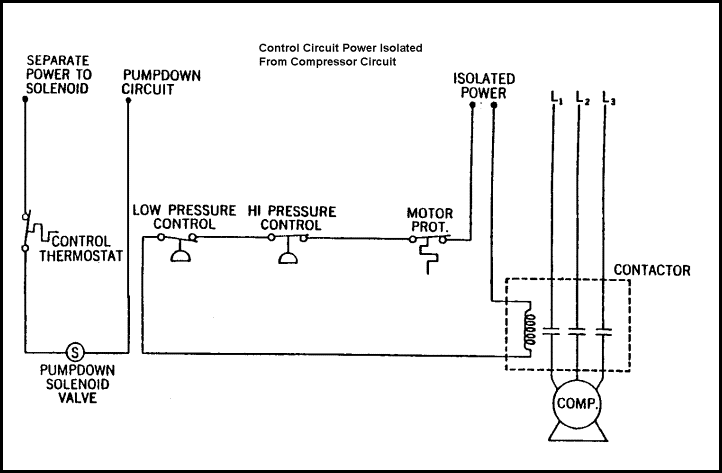
Understanding the high and low pressure switch wiring diagram in your vehicle's air conditioning (A/C) system is crucial for anyone aiming to perform A/C system diagnostics, repairs, or modifications. This isn't just about staying cool in the summer; it's about ensuring your A/C system operates safely and efficiently, preventing costly damage to components like the compressor.
Purpose of the Diagram
The wiring diagram is your roadmap for the A/C system's electrical controls. It serves several key purposes:
- Troubleshooting: It allows you to systematically trace electrical faults within the A/C system, identifying issues like shorts, opens, or faulty switches.
- Repair: It guides you in replacing damaged wiring, switches, or connectors correctly.
- Modification: If you're upgrading your A/C system or integrating aftermarket components, the diagram provides the necessary information for proper wiring.
- Understanding System Operation: By studying the diagram, you gain a deeper understanding of how the high and low pressure switches interact with other components to control the compressor.
Key Specs and Main Parts
Before diving into the diagram, let's familiarize ourselves with the main components and their functions:
- Compressor: The heart of the A/C system, responsible for circulating refrigerant. It's typically driven by the engine through a belt and clutch assembly.
- Condenser: Located at the front of the vehicle, the condenser dissipates heat from the refrigerant.
- Evaporator: Located inside the dashboard, the evaporator absorbs heat from the cabin air, cooling it down.
- Expansion Valve/Orifice Tube: Meters the flow of refrigerant into the evaporator, controlling the cooling process.
- High Pressure Switch: Monitors the refrigerant pressure on the high-pressure side of the system (between the compressor and condenser). If the pressure exceeds a safe limit, the switch opens, disabling the compressor to prevent damage. This overpressure is often caused by a blockage or a faulty cooling fan.
- Low Pressure Switch: Monitors the refrigerant pressure on the low-pressure side of the system (between the evaporator and compressor). If the pressure drops too low, the switch opens, disabling the compressor. Low pressure usually indicates a refrigerant leak or a blockage.
- A/C Relay: An electrically operated switch that controls the power supply to the compressor clutch. It's often controlled by the engine control module (ECM) based on inputs from the pressure switches and other sensors.
- ECM (Engine Control Module): The vehicle's computer, responsible for controlling various engine and accessory functions, including the A/C system. It uses sensor data, including pressure switch readings, to make decisions about compressor operation.
- Wiring Harness: A bundle of wires and connectors that connects all the A/C system components.
Symbols in the Wiring Diagram
Understanding the symbols used in the wiring diagram is essential for interpreting it correctly. Here's a breakdown of common symbols:
- Lines: Solid lines represent wires, indicating the electrical connections between components. Dashed lines may indicate shielding or connections to ground. Line thickness can sometimes (but not always) indicate wire gauge (thicker lines = thicker wire).
- Colors: Wires are color-coded to help identify them. Common colors include red (power), black (ground), blue, green, and yellow. The diagram legend will specify the color codes used in your vehicle's A/C system.
- Switches: Switches are depicted as breaks in the circuit. An open switch indicates that the circuit is broken, while a closed switch indicates that the circuit is complete. The high and low pressure switches are typically represented by their schematic symbols.
- Relays: Relays are represented by a coil and a set of contacts. The coil, when energized, closes the contacts, completing the circuit.
- Fuses: Fuses are represented by a zigzag line inside a rectangle. They protect the circuit from overcurrent.
- Grounds: Ground symbols indicate that the wire is connected to the vehicle's chassis, providing a return path for the electrical current.
- Connectors: Represented by various shapes, showing the electrical connection points between wiring harnesses and components. They may include pin numbers for identifying specific wires within the connector.
How It Works
The high and low pressure switches work in tandem to protect the compressor from damage. Here's a simplified explanation of their operation:
- Normal Operation: When the refrigerant pressure is within the normal range, both the high and low pressure switches are closed. This allows the electrical signal to pass through them, enabling the A/C relay to activate the compressor clutch.
- High Pressure Condition: If the refrigerant pressure rises too high (due to a blockage, faulty condenser fan, or overcharging of the system), the high pressure switch opens. This breaks the circuit to the A/C relay, disabling the compressor.
- Low Pressure Condition: If the refrigerant pressure drops too low (due to a leak or a restricted flow), the low pressure switch opens. This also breaks the circuit to the A/C relay, disabling the compressor.
- ECM Control: In modern vehicles, the ECM often monitors the state of the pressure switches. If a switch opens, the ECM may not only disable the compressor but also store a diagnostic trouble code (DTC) in its memory, which can be retrieved using a scan tool.
Real-World Use – Basic Troubleshooting Tips
Here are some basic troubleshooting tips using the wiring diagram:
- A/C Not Working At All: Check the fuse for the A/C system. If the fuse is blown, replace it. If it blows again immediately, there's likely a short circuit somewhere. Use the wiring diagram to trace the circuit and locate the short.
- Compressor Not Engaging: Check the A/C relay. Use a multimeter to test if the relay is receiving power and ground. You can also try swapping the A/C relay with another known-good relay (of the same type) to see if that fixes the problem. If the relay is good, check the high and low pressure switches. Use a multimeter to test if the switches are closed (conducting electricity). If either switch is open, investigate the refrigerant pressure and the potential cause of the high or low pressure condition.
- Erratic A/C Operation: Intermittent A/C operation can be caused by a loose connection or a faulty switch. Use the wiring diagram to locate the connectors and switches in the A/C circuit. Inspect the connectors for corrosion or damage. Gently wiggle the wiring while the A/C is running to see if that affects the operation.
Remember to always consult your vehicle's specific service manual for accurate wiring diagrams and troubleshooting procedures.
Safety – Highlight Risky Components
Working on the A/C system involves handling refrigerant, which can be hazardous. Here are some safety precautions:
- Refrigerant: Refrigerant is under high pressure and can cause frostbite if it comes into contact with skin. Always wear safety glasses and gloves when working with refrigerant. If you suspect a refrigerant leak, evacuate the system properly using an A/C recovery machine. Never vent refrigerant into the atmosphere; it's illegal and environmentally damaging.
- Electrical Components: The A/C system includes electrical components that can deliver a shock. Disconnect the battery before working on the electrical system.
- Moving Parts: Be careful around the engine belt and compressor clutch while the engine is running. Keep hands and loose clothing away from moving parts.
- High Pressure: Even when the system is 'off' the refrigerant can be under very high pressure, especially in the high-pressure side. Make sure that the system is properly depressurized before disconnecting any components.
If you are not comfortable working with refrigerant or electrical components, it is best to take your vehicle to a qualified A/C technician.
With this knowledge, you're well-equipped to understand and troubleshoot your vehicle's high and low pressure switch wiring. We have a generic wiring diagram file available for download. This diagram can be used to understand the general layout of a HVAC system, but you will still need to refer to your vehicles specific service manual to effectively repair the system.