
How To Read Automotive Electrical Diagrams
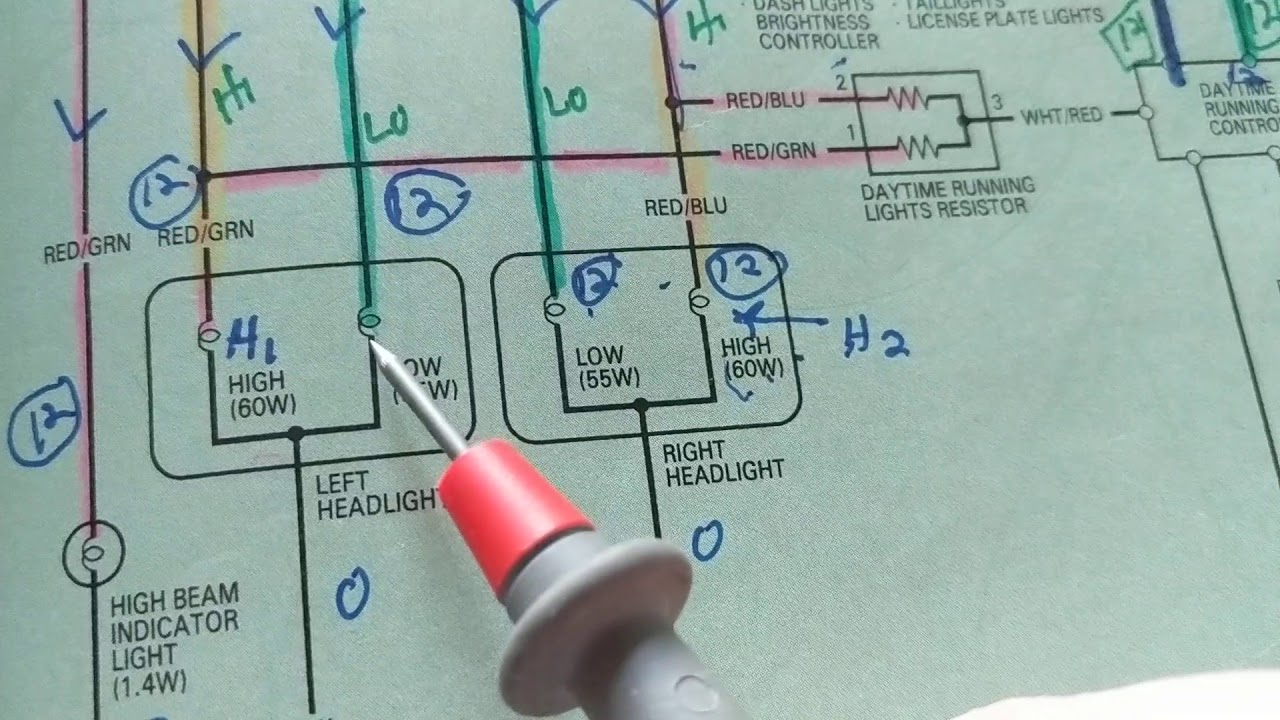
So, you're ready to tackle automotive electrical diagrams? Excellent! Understanding these schematics is a game-changer for anyone serious about DIY car work, modding, or even just routine maintenance. Forget blindly poking around with a multimeter – a diagram guides you directly to the source of the problem, saving you time, money, and potential headaches. We have the file for you. It's available for download at the end of this article.
Purpose: Why Bother with Electrical Diagrams?
The primary purpose of an automotive electrical diagram is to provide a visual representation of the car's electrical system. They are essential for:
- Troubleshooting: Identifying the root cause of electrical issues quickly and efficiently. Instead of guessing, you can trace the circuit and pinpoint the faulty component.
- Repairs: Ensuring you're replacing the correct parts and wiring them up properly.
- Modifications: Adding aftermarket accessories like lights, stereos, or performance upgrades without damaging the existing electrical system. You can safely tap into power sources, understanding the amperage draw and potential impact on other circuits.
- Learning: Gaining a deeper understanding of how your car's electrical system works. This empowers you to perform more complex repairs and maintenance tasks.
- Preventive Maintenance: Checking the wiring and connections according to the diagrams, and looking for problems.
Key Specs and Main Parts of a Diagram
An automotive electrical diagram is more than just a bunch of lines and symbols. It contains crucial information including:
- Circuit Identification: Each circuit is typically labeled with a name or number, indicating its function (e.g., "Headlight Circuit," "Fuel Pump Relay").
- Component Identification: Each component (fuse, relay, switch, sensor, etc.) is represented by a specific symbol and labeled with its name and location within the vehicle.
- Wire Gauge and Color Coding: The diagram indicates the size (gauge) of the wires used in each circuit and their color. This is crucial for replacing wires correctly.
- Ground Points: Grounding is vital for proper electrical function. Diagrams clearly show where each circuit is grounded to the vehicle's chassis.
- Voltage and Current Ratings: Some diagrams may include information about the voltage and current requirements of specific components.
- Connectors: Connectors are represented by symbols and often include information about the number of pins and their specific function within the circuit.
Key Components Depicted
- Power Source: Usually the battery, shown with its positive (+) and negative (-) terminals.
- Fuses and Circuit Breakers: Protective devices designed to prevent overloads and short circuits.
- Relays: Electrically operated switches that control high-current circuits using a low-current trigger.
- Switches: Devices that open or close circuits, controlling the flow of electricity.
- Sensors: Devices that measure physical parameters (temperature, pressure, etc.) and convert them into electrical signals.
- Actuators: Devices that convert electrical signals into mechanical motion (e.g., motors, solenoids).
- Control Modules: Electronic control units (ECUs) that manage various vehicle systems (e.g., engine control, transmission control).
Symbols: Deciphering the Language of the Diagram
Understanding the symbols used in electrical diagrams is fundamental. Here's a breakdown of some common elements:
Lines
- Solid Lines: Represent wires conducting electrical current.
- Dashed Lines: May indicate shielded wires, communication lines (like CAN bus), or wires that are only present in certain configurations.
- Thick Lines: Sometimes, but not always, a thicker line indicates a wire with a larger gauge, carrying more current. Always check the legend.
- Lines Crossing: If lines cross without a dot at the intersection, they are not connected. If there's a dot, it indicates a connection.
Colors
Wire colors are typically abbreviated and defined in a legend. For example:
- RED (RD): Red
- BLK (BK): Black
- WHT (WH): White
- GRN (GN): Green
- BLU (BU): Blue
- YEL (YE): Yellow
Some wires may have stripes, indicated by a slash and another color abbreviation (e.g., "RD/WH" indicates a red wire with a white stripe).
Icons
Here are a few common icons and their meanings:
- Battery: A stylized representation of a battery, with "+" and "-" terminals.
- Fuse: A small rectangle or square with a wavy line inside.
- Relay: A coil symbol connected to a switch.
- Ground: A symbol resembling a series of downward-pointing lines, indicating a connection to the vehicle's chassis ground.
- Resistor: A zigzag line.
- Capacitor: Two parallel lines.
- Diode: A triangle pointing to a vertical line.
- Switch: Several types, from simple on/off to multi-position.
- Connector: Often shown as a circle with lines emanating from it, indicating the number of pins.
Always refer to the diagram's legend for specific definitions, as symbols can vary slightly between manufacturers and even different models within the same brand.
How It Works: Tracing a Circuit
The key to using an electrical diagram is to understand how to trace a circuit. Start at the power source (usually the battery) and follow the circuit path to the component you're investigating. Here's a general approach:
- Identify the Circuit: Locate the circuit you're interested in (e.g., headlight circuit) on the diagram.
- Locate the Power Source: Find the battery or power distribution point for that circuit.
- Follow the Path: Trace the wire from the power source through any fuses, relays, switches, and connectors to the component.
- Note Ground Connections: Pay attention to where the circuit grounds to the vehicle's chassis.
- Understand the Flow: Understand how the circuit works. For example, does the switch directly power the component, or does it trigger a relay?
By carefully tracing the circuit, you can identify potential points of failure, such as broken wires, corroded connectors, or faulty components.
Real-World Use: Basic Troubleshooting Tips
Here's how you can apply your newfound knowledge in real-world troubleshooting scenarios:
- No Power to a Component: Use the diagram to trace the circuit back from the component to the power source, checking for voltage at each point. If you find a point where voltage is missing, the problem lies somewhere between that point and the last point where you had voltage.
- Blown Fuse: The diagram can help you identify all the components powered by that fuse. If the fuse keeps blowing, there's likely a short circuit in one of those components or the wiring leading to them.
- Intermittent Problems: Look for corroded connectors, loose wires, or damaged insulation along the circuit path. The diagram helps you systematically check each connection.
- Using a Multimeter: A multimeter is your best friend. Use it to check for voltage, continuity, and resistance along the circuit, following the diagram as your guide.
For example, let's say your headlights aren't working. You'd consult the electrical diagram to find the headlight circuit. Starting at the headlight connector, you'd use a multimeter to check for voltage. If there's no voltage, you'd trace the circuit back through the headlight switch, relay (if present), and fuse, testing for voltage at each point. This process will help you isolate the faulty component.
Safety: Proceed with Caution!
Automotive electrical systems can be dangerous. Always disconnect the battery's negative terminal before working on any electrical components. Be especially cautious when dealing with:
- Airbag Systems: Airbags are deployed by electrical signals. Mishandling them can lead to accidental deployment and serious injury. Consult the service manual for proper procedures.
- High-Voltage Systems: Hybrid and electric vehicles have high-voltage systems that can be lethal. Only qualified technicians should work on these systems.
- Fuel Pumps: Fuel pumps are controlled by electrical circuits. Avoid creating sparks near fuel lines or the fuel tank.
- Capacitors: Large capacitors can store a dangerous amount of electrical energy even after the battery has been disconnected. Discharge capacitors before handling them.
Always refer to the vehicle's service manual for specific safety precautions. If you are unsure about any aspect of the repair, consult a qualified technician.
Mastering automotive electrical diagrams takes time and practice, but the rewards are well worth the effort. They empower you to diagnose and repair electrical problems with confidence, saving you money and enhancing your understanding of your vehicle. We're providing you the downloadable PDF file.