
How To Read Electrical Schematic Diagram Pdf
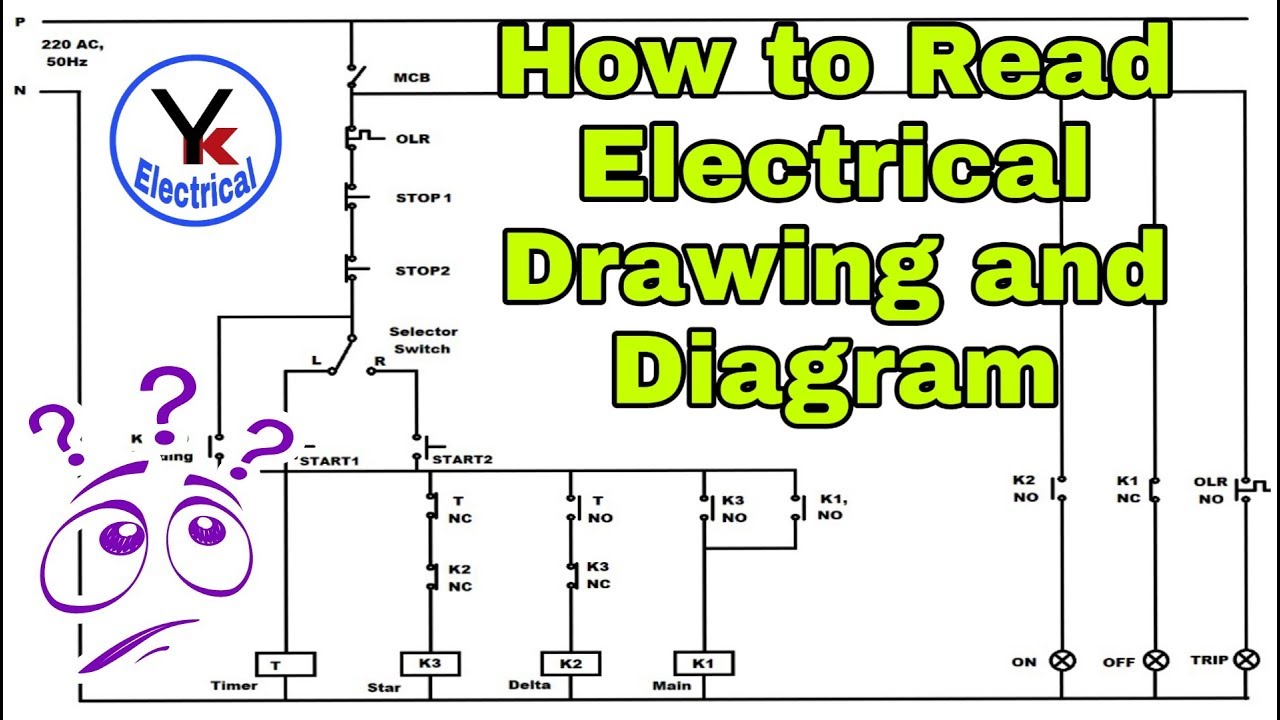
So, you've got an electrical issue with your car. Maybe your headlights are flickering, or the stereo just quit working. Before you start tearing things apart, the smart move is to grab the electrical schematic diagram. Think of it as the roadmap to your car's nervous system. This article will guide you through understanding these diagrams, focusing on PDFs, so you can confidently diagnose and fix electrical problems.
Purpose: Why Bother with a Schematic?
Electrical schematic diagrams are indispensable for several reasons:
- Troubleshooting: They help you trace circuits, identify faulty components (like relays or fuses), and pinpoint the exact location of a short or open circuit.
- Repairs: They guide you through the correct wiring procedures when replacing parts or repairing damaged wires.
- Modifications: If you're adding aftermarket accessories (like a sound system, alarm, or auxiliary lights), the schematic shows you where to safely tap into the existing electrical system.
- Understanding: Even if you don't have a specific problem, studying the schematic helps you understand how your car's electrical system works, making you a more knowledgeable and capable car owner.
Key Specs and Main Parts of an Electrical Schematic
Let's break down what you'll typically find in a schematic diagram:
- Power Source: This is usually the battery, represented by a symbol showing positive (+) and negative (-) terminals. Sometimes, the ignition switch position where a component gets power (e.g., "IGN 1") is noted.
- Fuses and Circuit Breakers: These are safety devices that protect circuits from overcurrent. They are usually represented by a zig-zag line inside a rectangle (for fuses) or a small box with a line going through it (for circuit breakers). The amperage rating (e.g., "10A") is often indicated.
- Switches: These control the flow of current. Common types include toggle switches, push-button switches, and multi-position switches (like headlight switches).
- Relays: These are electrically operated switches that allow a low-current circuit to control a high-current circuit. They are represented by a coil (the electromagnet) and a set of contacts (the switch).
- Wires and Connectors: Wires are represented by lines, and connectors are represented by various symbols (often circles or rectangles with numbers indicating pin positions). Wire colors are usually indicated next to the lines (e.g., "BLU" for blue, "GRN" for green).
- Grounds: Represented by a symbol resembling an inverted Christmas tree, indicating a connection to the vehicle's chassis, which serves as the return path for current.
- Loads: These are the components that use electricity to perform a function, such as lights, motors, solenoids, and sensors. Each load has its own specific symbol.
- Control Modules: Modern cars have numerous control modules (ECU, BCM, ABS module, etc.) They're depicted as rectangles or squares with lines representing input and output signals.
Symbols: Decoding the Diagram
Understanding the symbols is crucial. Here's a closer look:
Lines and Colors
Lines represent wires. The thickness of the line generally doesn't correspond to the wire's gauge. The color of the line is vital! Color codes are typically abbreviated (e.g., BK = Black, RD = Red, YL = Yellow). If a wire has a stripe, it's usually indicated with a slash and the stripe color (e.g., BL/WH = Blue with a White stripe). Multiple lines bundled together often represent a wiring harness.
Component Icons
These are standardized, but there can be slight variations depending on the manufacturer. Here are a few common ones:
- Resistor: A zig-zag line.
- Capacitor: Two parallel lines.
- Diode: A triangle pointing to a line. The direction of the triangle indicates the direction of current flow.
- Transistor: More complex, but generally involves three terminals (base, collector, emitter).
- Motor: A circle with an "M" inside.
- Solenoid: A coil symbol similar to a relay coil.
- Light Bulb: A circle with a filament inside.
Connector Representation
Connectors are used to join wire harnesses and components. In a schematic, they're shown as shapes, circles, or squares. Each pin in the connector is labeled, so you can pinpoint which wire goes to which pin. Sometimes, the physical location of the connector in the vehicle is also noted, which is extremely helpful.
How It Works: Tracing the Circuit
The key to understanding a schematic is to trace the flow of current. Start at the power source (battery). Follow the line (wire) through fuses, switches, relays, and eventually to the load. Pay attention to the switch positions – a switch in the "OFF" position will break the circuit, preventing current flow. Relays are like remote-controlled switches; a small current through the relay coil activates the contacts, completing a larger circuit.
For example, let's say you're tracing the circuit for the headlights. You would start at the battery, follow the line through the fuse box (identifying the headlight fuse), then to the headlight switch. When the headlight switch is turned "ON," it allows current to flow to the headlights, which complete the circuit and light up. If the headlights aren't working, you can use the schematic to systematically check each component in the circuit, starting with the fuse.
Real-World Use: Basic Troubleshooting Tips
Here's how to use a schematic to troubleshoot common electrical problems:
- No Power: If a component isn't working at all, start by checking the fuse for that circuit. The schematic will tell you which fuse to check. If the fuse is blown, replace it. If it blows again immediately, there's likely a short circuit somewhere in the wiring.
- Intermittent Problems: These are trickier. The schematic can help you identify potential points of failure, such as loose connectors or damaged wires. Use a multimeter to check for voltage at various points in the circuit when the problem is occurring.
- Short Circuits: A short circuit occurs when a wire accidentally comes into contact with ground. The schematic can help you isolate the area where the short is likely located. Look for wires that may have been damaged or frayed.
- Open Circuits: An open circuit occurs when a wire is broken or disconnected. Use a multimeter to check for continuity (a complete circuit) between two points on the wire.
Safety: Respect the Electricity
Working with automotive electrical systems can be dangerous. Here are some important safety precautions:
- Disconnect the Battery: Before doing any electrical work, disconnect the negative battery cable. This prevents accidental shorts and electrical shocks.
- Use a Multimeter Safely: Learn how to use a multimeter correctly. Incorrect use can damage the meter or even cause injury.
- Identify Risky Components: Capacitors can store a charge even after the battery is disconnected. Discharge them safely before working on the circuit.
- Don't Cut Wires Blindly: Always identify the wire using the schematic before cutting or splicing it. Incorrect wiring can damage your car's electrical system.
- Work in a Well-Lit Area: Good visibility is essential for safety and accuracy.
Always remember to consult your vehicle's specific repair manual and electrical schematics. These documents provide the most accurate and up-to-date information for your vehicle. Don't hesitate to consult a qualified technician if you're unsure about any aspect of the repair.
You can enhance your troubleshooting by using a wiring harness test kit that includes various connector and wire piercing probes. These tools allow you to safely test circuits without cutting into wires.
Important: Remember that all electrical components are sensitive to voltage spikes and reverse polarity. Always double-check connections before applying power.
Now, get ready to dive into those schematics and tackle those electrical gremlins. Happy wrenching!
Regarding the electrical schematic diagram PDF, we have a resource available. Contact us with your vehicle's year, make, and model, and we can provide you with the appropriate diagram for your specific vehicle.