
Labeled Audi A4 Cooling System Diagram
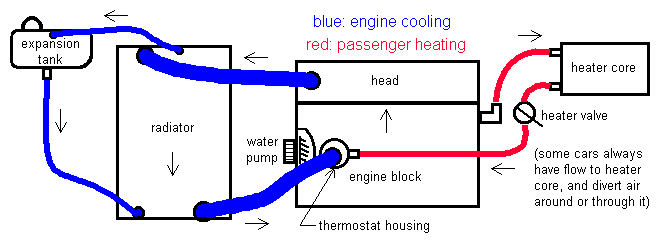
Understanding your Audi A4's cooling system is crucial for maintaining its performance and longevity. A labeled cooling system diagram is an invaluable tool, whether you're performing routine maintenance, diagnosing a problem, or even planning performance modifications. This article provides an in-depth look at the A4 cooling system, explaining its components, how it works, and how to use a diagram to troubleshoot common issues.
Why This Diagram Matters
A cooling system diagram isn't just a pretty picture; it's a roadmap to understanding a complex system. It's essential for:
- Repair Work: Accurately identifying parts, tracing coolant leaks, and ensuring proper reassembly after repairs.
- Diagnosis: Understanding the flow of coolant helps pinpoint the location of problems, such as overheating or coolant loss.
- Maintenance: Knowing the location of drain plugs, bleed screws, and hoses facilitates proper servicing.
- Modifications: If you're considering upgrading your radiator or adding an oil cooler, the diagram provides a vital overview of the system's layout.
- Learning: Gain a deeper understanding of how your car works.
Key Specs and Main Parts of the A4 Cooling System
The specific components can vary slightly depending on the engine and model year of your A4, but the fundamental principles remain the same. Here's a breakdown of the key parts and their function, often depicted in your cooling system diagram:
Radiator
The radiator is the primary heat exchanger. It consists of a core with numerous fins that dissipate heat from the coolant as air flows through it, often assisted by an electric cooling fan. It is usually positioned at the front of the car to maximize airflow.
Coolant Pump (Water Pump)
The coolant pump, typically driven by the engine's serpentine belt, circulates the coolant throughout the engine block, cylinder head, radiator, and heater core. Its impeller creates the pressure necessary to maintain coolant flow.
Thermostat
The thermostat is a temperature-sensitive valve that regulates coolant flow to the radiator. When the engine is cold, it remains closed, allowing the engine to warm up quickly. Once the engine reaches its operating temperature, the thermostat opens, allowing coolant to flow to the radiator for cooling.
Coolant Reservoir (Expansion Tank)
The coolant reservoir serves as a reserve tank for coolant and accommodates changes in coolant volume due to temperature fluctuations. It often incorporates a pressure cap, which maintains system pressure and prevents boiling.
Hoses
Hoses connect the various components of the cooling system, allowing coolant to flow between them. These hoses are typically made of reinforced rubber and are susceptible to deterioration over time.
Heater Core
The heater core is a small radiator located inside the vehicle's dashboard. Hot coolant flows through the heater core, and the blower motor forces air across it, providing heat for the cabin.
Cooling Fan(s)
Cooling fans increase airflow through the radiator, particularly when the vehicle is stationary or moving slowly. These fans are typically electrically driven and controlled by the engine control unit (ECU) based on coolant temperature.
Temperature Sensors
Temperature sensors monitor coolant temperature at various points in the system. These sensors provide data to the ECU, which controls the cooling fans and other cooling system functions.
Understanding Symbols in the Diagram
Cooling system diagrams use standardized symbols to represent different components and fluids. Here's a guide to interpreting those symbols:
- Solid Lines: Typically represent coolant hoses or pipes. Thicker lines may indicate larger diameter hoses.
- Dotted Lines: May indicate vacuum lines or other auxiliary lines related to the cooling system, such as overflow lines.
- Arrows: Indicate the direction of coolant flow.
- Colors: Colors are used to differentiate types of fluids, or distinguish high pressure vs low pressure areas.
- Component Icons: Each component has a specific icon. For example, a radiator is often represented by a rectangular grid, a coolant pump by a circular symbol with an impeller, and the thermostat by a valve symbol.
Pay attention to the legend or key provided with the diagram. This will clarify the specific symbols and colors used.
How the A4 Cooling System Works
The cooling system operates on a closed-loop principle. The coolant pump circulates coolant through the engine block and cylinder head, absorbing heat generated by combustion. The heated coolant then flows to the radiator, where it dissipates heat to the atmosphere. The cooled coolant returns to the engine, completing the cycle.
The thermostat plays a crucial role in maintaining the engine's operating temperature. When the engine is cold, the thermostat remains closed, preventing coolant from flowing to the radiator. This allows the engine to warm up quickly, reducing wear and emissions. Once the engine reaches its operating temperature, the thermostat opens, allowing coolant to flow to the radiator for cooling. In addition, the heater core provides heat to the vehicle's interior by circulating hot coolant through a small radiator within the dashboard.
Real-World Use: Basic Troubleshooting
A cooling system diagram is invaluable when troubleshooting cooling system problems. Here are some examples:
- Overheating: If the engine is overheating, use the diagram to check the thermostat, water pump, radiator, and cooling fans. A faulty thermostat, a failed water pump, a clogged radiator, or malfunctioning cooling fans could be the cause.
- Coolant Leaks: Use the diagram to trace the path of coolant hoses and identify potential leak locations. Check hose connections, hose surfaces, and the water pump seal.
- No Heat: If the heater is not working, use the diagram to locate the heater core and check the coolant hoses leading to it. A clogged heater core, a faulty heater valve, or low coolant level could be the cause.
- Coolant Loss: Use the diagram to inspect all components for signs of leakage, including the radiator, hoses, water pump, and coolant reservoir. Also check the engine oil for signs of coolant contamination (a milky appearance).
Safety Precautions
Working on the cooling system can be dangerous due to hot coolant and pressurized components. Always follow these safety precautions:
- Never open the coolant reservoir cap when the engine is hot. The system is pressurized, and hot coolant can spray out, causing severe burns.
- Allow the engine to cool completely before working on the cooling system.
- Wear eye protection and gloves when working with coolant.
- Dispose of used coolant properly. It is toxic and harmful to the environment.
- Be especially careful around the radiator fan(s). They can switch on automatically, even when the engine is off. Disconnect the battery before working near the fan.
Accessing Your A4 Cooling System Diagram
Having a detailed, labeled diagram specific to your Audi A4's engine and model year is crucial. We have a detailed PDF file containing a comprehensive cooling system diagram. You can download this diagram to assist in your maintenance, troubleshooting, and repair endeavors. It's an invaluable resource for any A4 owner.