
Neutral Safety Switch Wiring Diagram
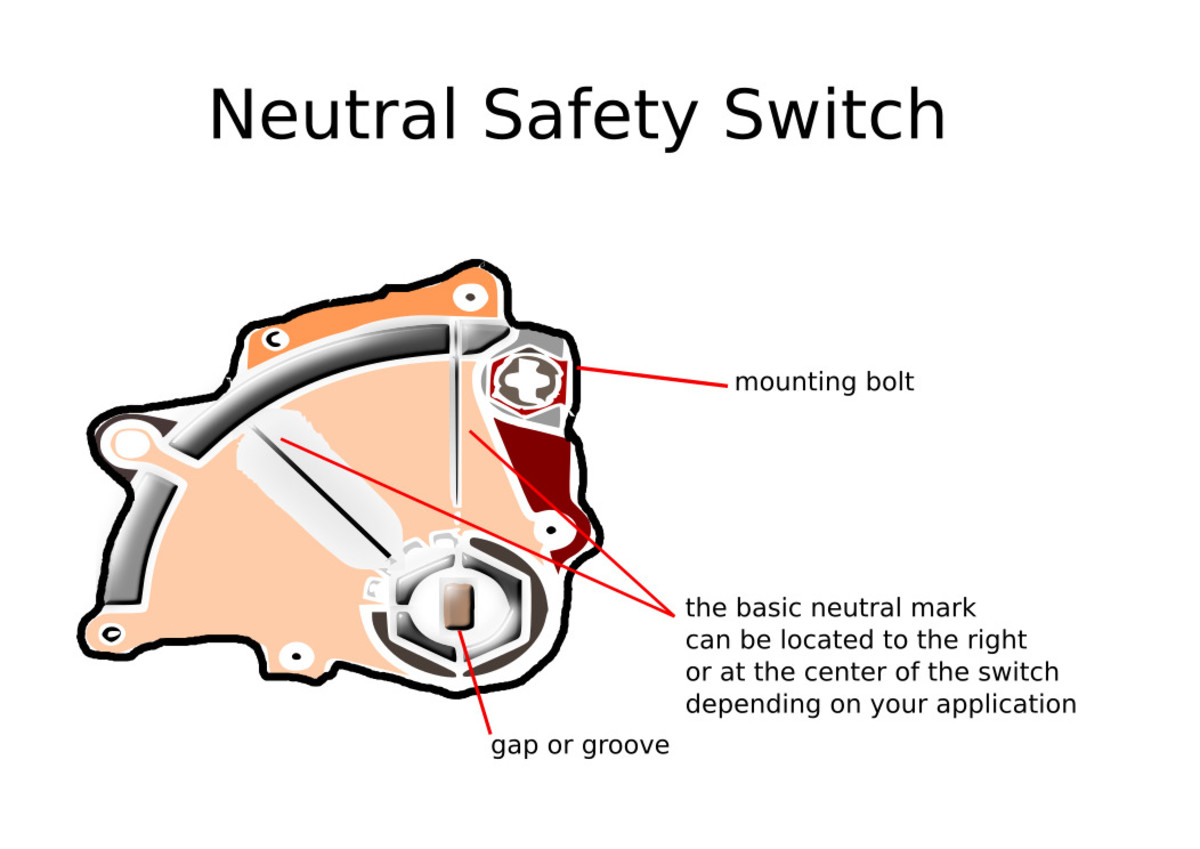
Hey gearheads! Ever found yourself staring at a wiring harness and feeling like you’re decoding hieroglyphics? Let's demystify a crucial component in your car's starting system: the Neutral Safety Switch. Understanding its wiring diagram is paramount for diagnosing starting problems, performing certain modifications, and generally deepening your automotive knowledge. This article will break down the technical aspects in a clear and concise manner. Plus, we've got the complete wiring diagram available for download at the end!
Purpose of Understanding the Neutral Safety Switch Wiring Diagram
Why bother learning about this? The Neutral Safety Switch (NSS), also sometimes referred to as a Park/Neutral Position (PNP) switch, is a safety device that prevents your engine from starting unless the transmission is in Park (P) or Neutral (N). A faulty NSS can cause a no-start condition, intermittent starting issues, or even allow the car to start in gear (a dangerous situation!). Knowing the wiring diagram is essential for:
- Diagnosis: Pinpointing the exact location of a fault in the circuit.
- Repair: Replacing damaged wiring, connectors, or the switch itself.
- Modification: Incorporating aftermarket components or performing transmission swaps.
- Learning: Gaining a deeper understanding of automotive electrical systems.
Key Specs and Main Parts
Before diving into the diagram itself, let’s define the key components involved and their general specifications. Note that the specifics will vary slightly based on your vehicle's make, model, and year.
- Neutral Safety Switch (NSS): The heart of the system. It’s typically located on the transmission, either internally or externally. It contains electrical contacts that close (complete the circuit) only when the transmission is in Park or Neutral.
- Starter Relay: An electromagnetic switch that uses a small current to control a larger current flow to the starter motor.
- Ignition Switch: The switch activated by your key, sending power to various circuits, including the starting system.
- Battery: The power source for the entire electrical system.
- Starter Motor: The electric motor that cranks the engine.
- Wiring Harness: The bundle of wires that connect all these components. Look for common wire gauges like 16 AWG or 18 AWG depending on the circuit.
- Connectors: The plugs that join the wires and components. Inspect these for corrosion.
Common NSS specs you might encounter when replacing one include the number of pins (typically 3-6), the type of connector, and the resistance readings when the switch is in different positions. Consulting your vehicle's service manual for the proper resistance readings is critical.
Symbols – Deciphering the Wiring Diagram
A wiring diagram is a visual representation of the electrical circuits in your car. Understanding the symbols is crucial. Here’s a breakdown of the common elements:
- Lines: Solid lines represent wires. Dashed lines may represent shielded wiring or grounding paths. Thicker lines generally indicate wires that carry higher current.
- Colors: Each wire is typically assigned a color code (e.g., Red, Black, Blue, Green). These colors are usually abbreviated (e.g., R, BK, BL, GR). The wiring diagram key will tell you which color refers to which circuit.
- Connectors: Represented by various shapes, often circles or squares, with numbers indicating the pin connections.
- Ground: Symbolized by a downward-pointing arrow or a series of decreasing horizontal lines. This indicates where the circuit is connected to the vehicle's chassis.
- Battery: Represented by a long and a short line, indicating the positive and negative terminals.
- Switches: Depicted as a break in the line, with a lever or arrow indicating the switch's position (open or closed).
- Relays: Shown as a coil and a switch. The coil, when energized, closes the switch contacts.
- Resistors: Zig-zag line. Used to reduce current flow.
- Fuses: Represented by a squiggly line inside a rectangle or a simple rectangle with the amperage rating often noted nearby.
Pay close attention to the abbreviations used in the diagram. A legend or key should be provided to explain these abbreviations. Understanding the circuit numbers is also vital. These numbers often correspond to specific wire harnesses and connector locations in the vehicle.
How It Works
The Neutral Safety Switch circuit typically works as follows:
- When the ignition switch is turned to the "Start" position, it sends a signal to the NSS.
- If the transmission is in Park or Neutral, the NSS closes the circuit, allowing current to flow to the starter relay.
- The starter relay then closes, sending a large current from the battery to the starter motor.
- The starter motor cranks the engine until it starts.
- If the transmission is not in Park or Neutral, the NSS remains open, preventing current from reaching the starter relay. This prevents the engine from starting in gear.
The specific implementation can vary. Some vehicles use a more complex system involving the Transmission Control Module (TCM) or Powertrain Control Module (PCM). In these cases, the NSS sends a signal to the TCM/PCM, which then enables or disables the starter circuit.
Real-World Use – Basic Troubleshooting Tips
Here's where your understanding of the wiring diagram becomes practical. If your car won't start, here's how you can use it to troubleshoot:
- Visual Inspection: Check the NSS connector for damage, corrosion, or loose wires. Refer to the diagram to locate the connector pins.
- Voltage Test: Use a multimeter to check for voltage at the NSS when the ignition switch is in the "Start" position. Refer to the diagram to identify the correct wire to test.
- Continuity Test: With the ignition off, use a multimeter to check for continuity across the NSS terminals when the transmission is in Park or Neutral. The diagram will show you which terminals should be connected.
- Bypass Test (Use with Extreme Caution!): *Temporarily* bypass the NSS by connecting the relevant wires together. Only do this for testing purposes and with extreme caution, ensuring the car is in a safe location and the parking brake is engaged! If the car starts when bypassed, the NSS is likely faulty.
If you’re getting inconsistent readings, or no readings at all, there's likely an issue with the switch, the wiring, or a related component. Always consult the wiring diagram to confirm the correct testing procedures for your specific vehicle.
Safety – Highlight Risky Components
Working with automotive electrical systems can be dangerous. Here are some safety precautions:
- Disconnect the Battery: Always disconnect the negative battery terminal before working on any electrical components. This prevents accidental short circuits and potential electrical shocks.
- Identify Hot Wires: Be aware of "hot" wires, which are always powered, even with the ignition off. These are typically connected directly to the battery. The wiring diagram will help you identify these wires.
- Use Proper Tools: Use insulated tools to prevent electrical shocks.
- Be Careful with Bypass Tests: As mentioned earlier, bypassing the NSS can be dangerous if done incorrectly. Ensure the car is in a safe location and the parking brake is engaged.
- Never work on the system while the engine is running.
- Consult a Professional: If you are not comfortable working on electrical systems, consult a qualified mechanic.
Specifically, the starter motor and battery cables carry high currents and can generate significant heat or sparks if shorted. Be extremely careful when working around these components.
With this information, you're well on your way to understanding and troubleshooting the Neutral Safety Switch wiring in your vehicle. Remember to always consult your vehicle's specific wiring diagram for accurate information.
Ready to put your newfound knowledge to use? You can download a comprehensive wiring diagram for a generic NSS setup right here: [**DOWNLOAD NSS WIRING DIAGRAM**] (We have the file, but this is just a placeholder for where the download link would be located). This generic diagram will illustrate the core elements discussed in this article. Keep in mind that you'll need the specific diagram for *your* car to do any real work on it!