
Parts Under The Hood Of A Car Diagram
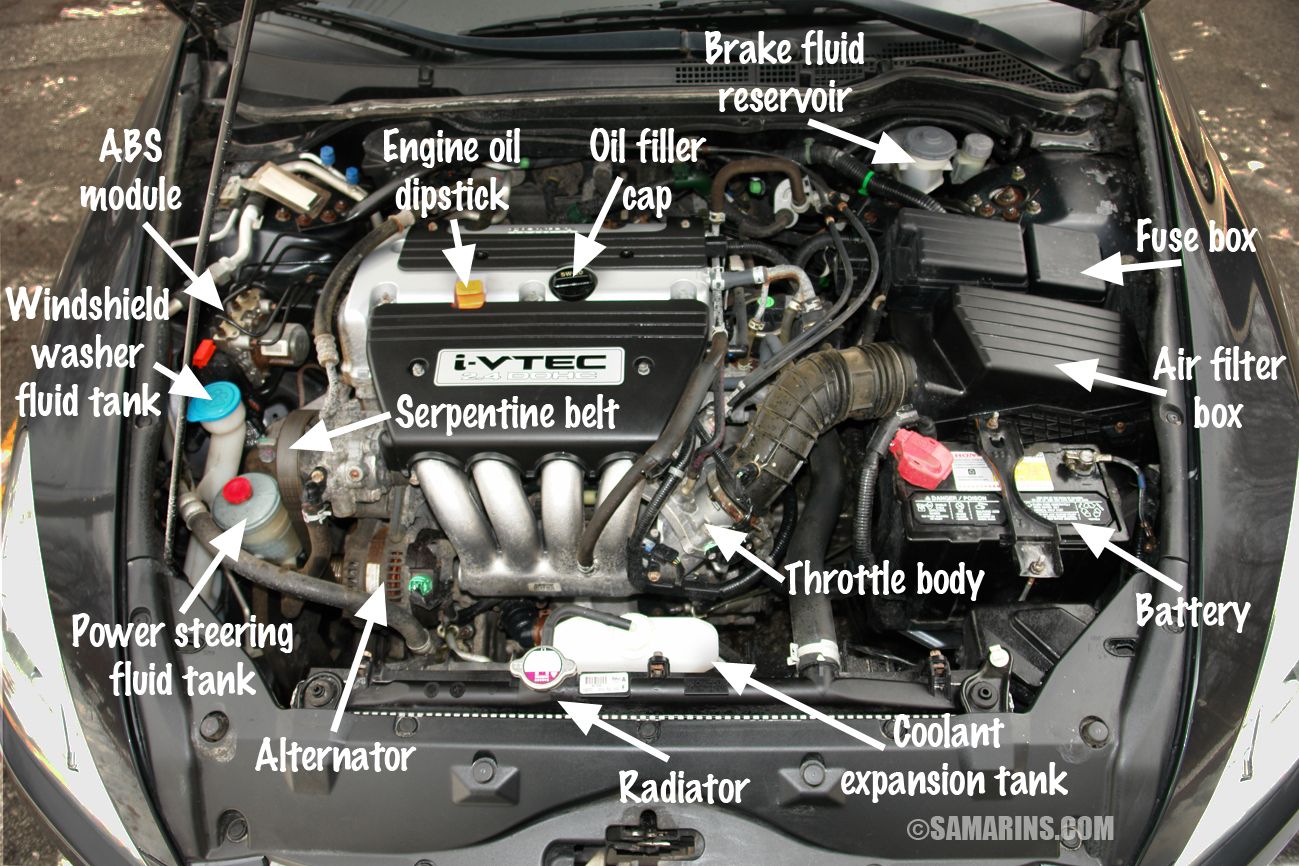
For the seasoned DIYer and the aspiring gearhead, understanding what lies beneath the hood of your car is more than just knowing where to add windshield washer fluid. It's about gaining the power to diagnose problems, perform maintenance, and even tackle modifications with confidence. A comprehensive under-hood diagram is your roadmap to automotive mastery, offering a visual representation of the intricate systems working in harmony. We'll walk you through interpreting these diagrams, identifying key components, understanding their function, and applying that knowledge to real-world troubleshooting.
Purpose of an Under-Hood Diagram
Why bother with a diagram? Several reasons make it an indispensable tool:
- Repair and Maintenance: The most obvious benefit is ease of repair. Quickly locating a specific component – say, the oxygen sensor or the throttle position sensor – saves valuable time and prevents accidental damage to nearby parts.
- Diagnosis: When troubleshooting, a diagram allows you to trace circuits, hoses, and mechanical linkages, helping you pinpoint the source of a problem. For example, tracing a vacuum line from the intake manifold to a malfunctioning actuator.
- Modification and Upgrades: Planning to install an aftermarket intake? A diagram reveals the location of relevant sensors and vacuum lines, simplifying the installation process and minimizing the risk of complications.
- Learning and Understanding: Even if you're not planning on wrenching on your car immediately, studying the diagram deepens your understanding of automotive systems. It connects abstract concepts with concrete components.
Key Specs and Main Parts: Decoding the Under-Hood Landscape
Under-hood diagrams aren't just pretty pictures; they're packed with information. Here's a breakdown of key elements and commonly depicted parts:
Engine Components: The Heart of the Machine
- Engine Block: The foundation of the engine, housing the cylinders, pistons, and crankshaft. Its location is the starting point for understanding the layout.
- Cylinder Head: Sits atop the engine block, containing the valves, camshaft(s), and spark plugs.
- Intake Manifold: Distributes air to the cylinders, often depicted with throttle body and associated sensors (MAF, MAP, TPS).
- Exhaust Manifold: Collects exhaust gases from the cylinders and directs them to the exhaust system.
- Fuel Injectors: Spray fuel into the intake manifold or directly into the cylinders.
- Ignition System: Includes the ignition coil(s), spark plugs, and associated wiring.
Cooling System: Keeping Things from Melting
- Radiator: Dissipates heat from the engine coolant.
- Water Pump: Circulates coolant throughout the engine and radiator.
- Thermostat: Regulates coolant temperature, maintaining optimal engine operating conditions.
- Coolant Reservoir: Holds excess coolant and allows for expansion and contraction.
Electrical System: The Nervous System
- Battery: Provides electrical power to start the engine and operate electrical accessories.
- Alternator: Charges the battery and powers electrical components while the engine is running.
- Fuses and Relays: Protect electrical circuits from overloads.
- Wiring Harness: A network of wires connecting various electrical components.
Other Important Systems
- Brake System: Master cylinder, brake booster (vacuum or hydraulic), brake lines.
- Power Steering System: Power steering pump, reservoir, and lines.
- Air Conditioning System: Compressor, condenser, evaporator, and refrigerant lines.
Symbols: The Language of the Diagram
Under-hood diagrams use a standardized set of symbols to represent components and connections. Understanding these symbols is crucial for accurate interpretation. Here's a guide to common symbols:
- Lines: Represent hoses, wires, or mechanical linkages. Dotted lines often indicate vacuum lines, while solid lines can represent coolant or hydraulic lines. Wire gauge can be indicated near wire lines.
- Colors: Different colors are used to distinguish different types of fluids or signals. For instance, red might represent coolant, while blue represents power steering fluid, and yellow signifies a diagnostic line. Color coding may not be universal, so always refer to the legend on the diagram.
- Icons: Specific icons represent various components. A resistor can have the symbol of a zigzag line. Relays, solenoids and other electrical parts all have their standard symbols. Check the diagram's legend for a full list.
How It Works: Putting the Pieces Together
Beyond identifying components, understanding how they interact is essential. A diagram can illustrate the flow of fluids, air, and electrical signals. For instance:
- Fuel System: The diagram shows the path of fuel from the fuel tank, through the fuel filter, to the fuel injectors.
- Cooling System: The diagram shows how coolant circulates from the engine block, through the radiator, and back to the engine.
- Ignition System: The diagram illustrates how the ignition coil transforms low-voltage electricity into high-voltage electricity to fire the spark plugs.
Real-World Use: Basic Troubleshooting Tips
Armed with an under-hood diagram, you can tackle basic troubleshooting tasks:
- Vacuum Leaks: Use the diagram to trace vacuum lines and check for cracks or loose connections. A common cause of rough idling.
- Coolant Leaks: Identify coolant hoses and connections and inspect for leaks.
- Electrical Problems: Locate fuses and relays related to the malfunctioning component and check for blown fuses or faulty relays. Use a multimeter to check for voltage and continuity.
Example: Your car is overheating. Consult the diagram to locate the thermostat housing. Check if the hoses connected to the thermostat housing are hot. If not, the thermostat may be stuck closed. Proceed with caution because opening a hot cooling system can spray hot fluids. Allow cooling time first.
Safety: Handle with Care
Working under the hood can be dangerous. Be mindful of the following:
- High Voltage: The ignition system carries high voltage. Always disconnect the battery before working on the ignition system.
- Hot Surfaces: The engine and exhaust system can be extremely hot. Allow the engine to cool down before working on these areas.
- Flammable Fluids: Fuel and oil are flammable. Avoid sparks and open flames.
- Moving Parts: Be aware of moving parts, such as the serpentine belt and cooling fan. Keep hands and tools clear of these areas. Disconnect the battery cable to remove power from the starter system.
- Battery Acid: Battery acid is corrosive. Wear eye protection and gloves when working with the battery.
- Pressurized Systems: Never open a pressurized cooling system while the engine is hot.
Warning: The capacitor in the ignition system can store a high-voltage charge even after the battery is disconnected. Refer to your vehicle's service manual for proper discharge procedures before working on the ignition system.
By understanding and utilizing an under-hood diagram, you'll gain a deeper understanding of your car's inner workings, enabling you to perform repairs, upgrades, and diagnostics with increased confidence and skill. You'll no longer be intimidated by the complexity under the hood, but empowered by the knowledge to tackle automotive challenges. With experience, you will be able to diagnose problems and keep your vehicle running safely and efficiently for years to come.
We have a sample under-hood diagram file available for download. It will help you to visualize what we have discussed here and start practicing your diagnostic skills. Contact us to download the under-hood diagram!