
Radiator Transmission Oil Cooler Diagram
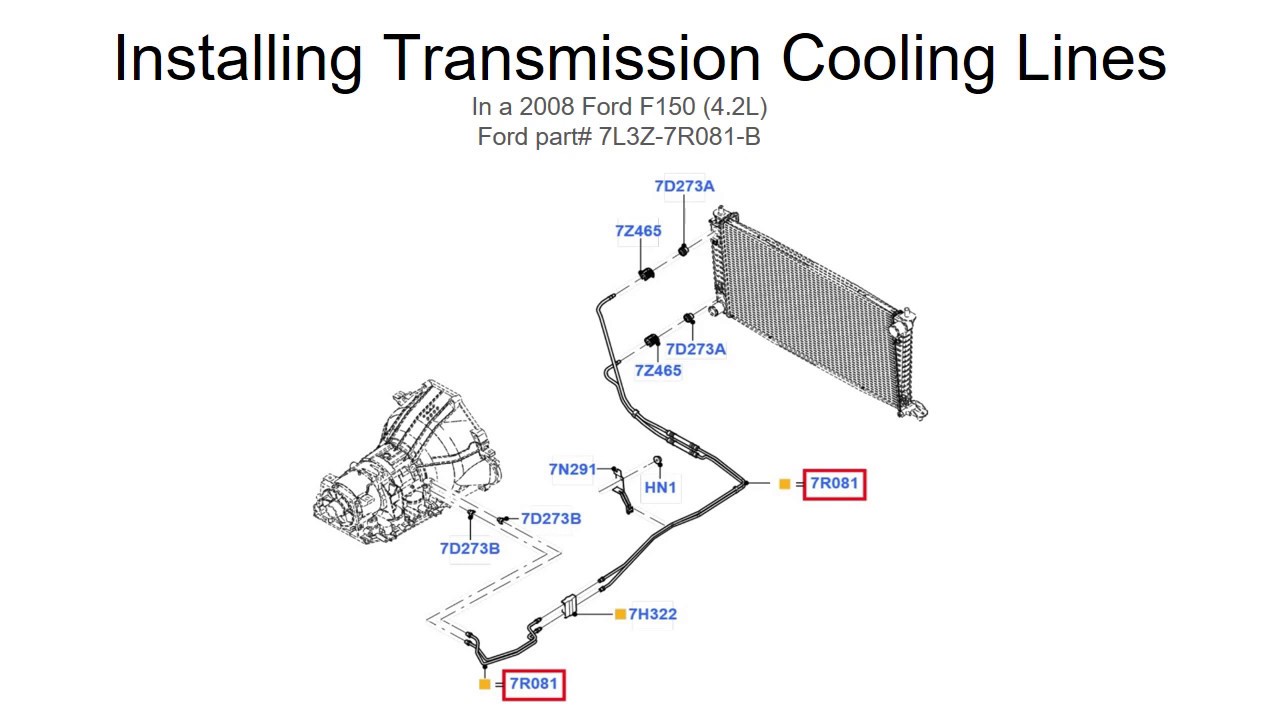
Understanding the radiator transmission oil cooler diagram is crucial for any experienced DIYer or car enthusiast looking to maintain or modify their vehicle's drivetrain. It's your roadmap to understanding how the automatic transmission stays cool and reliable, and it's indispensable for diagnosing problems, planning upgrades, and performing repairs.
Purpose of the Diagram
The radiator transmission oil cooler diagram serves several vital purposes:
- Troubleshooting: When you experience transmission overheating, slipping, or other issues, the diagram helps trace the flow of transmission fluid, identify potential blockages, leaks, or faulty components.
- Repairs: Whether you're replacing a hose, cooler, or even the transmission itself, the diagram shows you exactly how everything connects. This prevents installation errors and ensures proper function.
- Modifications: If you're upgrading your transmission or adding an aftermarket cooler, the diagram provides a reference point for planning the modification and ensuring compatibility. For example, if you're increasing towing capacity, you might need a larger transmission cooler, and the diagram shows you how to integrate it into the existing cooling system.
- Learning: Simply put, understanding the diagram allows you to comprehend how your car works. You'll gain a deeper appreciation for the engineering involved and be better equipped to diagnose future problems.
Key Specs and Main Parts
Before diving into the diagram itself, let's review the main components and some typical specifications. Keep in mind that specifications vary greatly between vehicle makes and models.
Main Components:
- Transmission: The heart of the automatic drivetrain, responsible for transferring power from the engine to the wheels through various gear ratios.
- Transmission Oil Pump: Located within the transmission, this pump circulates the transmission fluid (ATF) through the cooler, valve body, and other internal components. It's typically driven by the engine.
- Transmission Oil Cooler: This is the heat exchanger responsible for lowering the ATF temperature. It's often located within the radiator (integrated cooler) or as a separate unit (auxiliary cooler).
- Radiator (Specifically the Transmission Oil Cooler Section): In most vehicles, the radiator contains a dedicated section for cooling the transmission fluid. This is a compact and efficient design.
- ATF Hoses/Lines: These hoses carry the transmission fluid between the transmission, cooler, and radiator. They are typically made of high-temperature rubber or metal.
- Fittings and Connectors: These connect the hoses to the transmission, cooler, and radiator. They must be compatible with ATF and able to withstand high pressures and temperatures.
- Thermostat (Optional): Some systems may include a thermostat that regulates the flow of ATF to the cooler based on fluid temperature. This helps the transmission reach operating temperature more quickly in cold weather.
Typical Specifications:
- ATF Type: The diagram or accompanying documentation will specify the exact type of automatic transmission fluid required for your vehicle (e.g., Dexron VI, Mercon V, ATF+4). Using the wrong type of ATF can severely damage your transmission.
- Operating Temperature: The ideal operating temperature for ATF typically ranges from 175°F to 225°F (80°C to 107°C). Higher temperatures can lead to fluid degradation and transmission failure.
- Pressure: The ATF pressure within the cooling system typically ranges from 50 to 150 psi, depending on the operating conditions.
- Hose Size: ATF hoses typically have an inner diameter ranging from 3/8" to 1/2", depending on the vehicle and cooling system design.
Diagram Symbols
Understanding the symbols used in the diagram is essential for accurate interpretation:
- Solid Lines: Typically represent lines carrying transmission fluid. The thickness of the line might indicate the size of the hose or pipe.
- Dashed Lines: Can represent vacuum lines, electrical wiring, or other control lines related to the transmission or cooling system.
- Arrows: Indicate the direction of fluid flow. Pay close attention to these arrows to understand how the ATF circulates.
- Rectangles: Often represent components like the radiator, transmission oil cooler, or thermostat.
- Circles: Can represent fittings, sensors, or other small components.
- Color Coding (If Present): Some diagrams use color coding to differentiate between different types of fluid or signals. For example, red might indicate high-pressure ATF, while blue might indicate low-pressure ATF. The legend on the diagram will explain the color codes used.
- Abbreviations: Look for abbreviations like "TOC" (Transmission Oil Cooler), "ATF" (Automatic Transmission Fluid), "IN" (Inlet), and "OUT" (Outlet). A legend should define these.
How It Works
The typical transmission oil cooler system operates as follows:
- The transmission oil pump draws ATF from the transmission sump.
- The pump sends the hot ATF through a hose to the transmission oil cooler, which is located within the radiator or as a separate unit.
- In the radiator, the ATF flows through a dedicated section surrounded by engine coolant. Heat is transferred from the ATF to the engine coolant, cooling the ATF. If it's a separate cooler, air flowing across the fins dissipates the heat.
- The cooled ATF then flows through another hose back to the transmission, lubricating and cooling its internal components.
- This cycle repeats continuously, maintaining the ATF temperature within the optimal range.
Real-World Use – Basic Troubleshooting Tips
Here are a few troubleshooting tips using your understanding of the diagram:
- Overheating: If your transmission is overheating, check the ATF level first. Then, visually inspect the hoses and cooler for leaks or damage. Use the diagram to trace the flow of ATF and identify potential blockages. A blockage in a hose or the cooler itself can restrict flow and cause overheating. You might need to use an infrared thermometer to measure the temperature of the cooler inlet and outlet hoses to see if the cooler is functioning properly.
- Leaks: Leaks are often found at the hose connections, fittings, or the cooler itself. Use the diagram to locate the source of the leak and replace the damaged component. Always use the correct type of sealant or threadlocker when replacing fittings.
- Slipping or Erratic Shifting: While not always directly related to the cooling system, slipping or erratic shifting can be a symptom of low ATF level or degraded ATF. Check the ATF level and condition. If the fluid is dark or smells burnt, it needs to be replaced. Follow the diagram to locate the drain plug and filler tube.
- Cooler Damage: Inspect the cooler for physical damage, especially if you've recently been in an accident. Damaged coolers can leak or become blocked, leading to overheating. The diagram will help you identify the correct replacement part.
Safety
Working on the transmission cooling system can be dangerous if proper precautions are not taken:
- Hot ATF: ATF can be extremely hot. Allow the engine and transmission to cool down completely before working on the cooling system. Wear gloves and eye protection to avoid burns.
- Pressurized System: The ATF system is pressurized. Relieve the pressure by removing the radiator cap (when cool!) and loosening the transmission filler cap before disconnecting any hoses.
- Flammable Fluid: ATF is flammable. Keep sparks and open flames away from the work area. Clean up any spills immediately.
- Lifting the Vehicle: If you need to lift the vehicle to access the transmission or cooler, use jack stands to support it securely. Never work under a vehicle supported only by a jack.
By understanding the radiator transmission oil cooler diagram, you empower yourself to diagnose, repair, and modify your vehicle's transmission cooling system with confidence. Remember to always consult your vehicle's service manual for specific instructions and torque specifications.
We have a detailed, downloadable diagram of a generic radiator transmission oil cooler system available for you. Contact us, and we can provide it.