
Serpentine Belt Diagram 2002 Ford Taurus
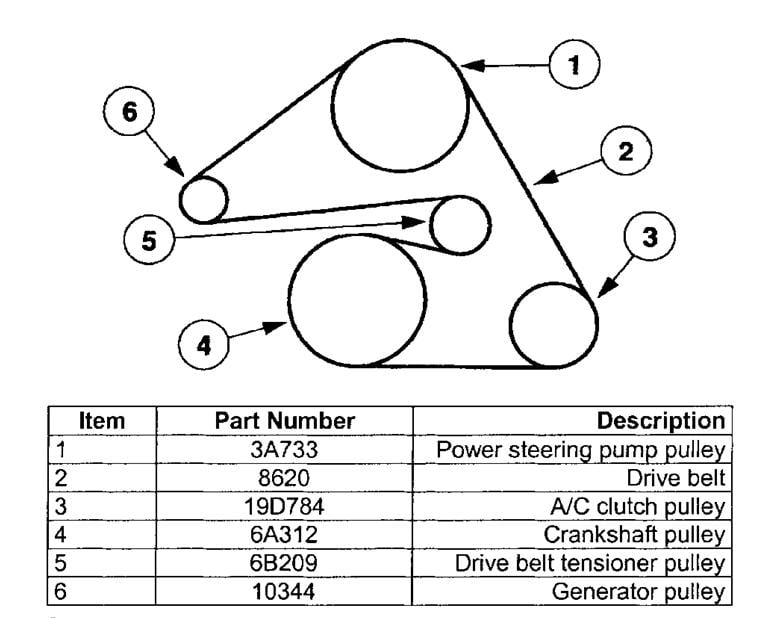
The serpentine belt diagram for your 2002 Ford Taurus is an invaluable resource for several reasons. It's not just a picture; it's a roadmap to understanding how your engine's accessories are driven. Whether you're tackling a simple belt replacement, diagnosing a squealing noise, or simply aiming to deepen your automotive knowledge, understanding this diagram is crucial. We have the diagram readily available for you to download, which we'll mention again at the end of this article.
Purpose of the Serpentine Belt Diagram
The primary purpose of the serpentine belt diagram is to illustrate the routing path of the serpentine belt around various engine accessories. This is essential for:
- Replacement: When replacing a worn or broken belt, the diagram provides the only foolproof way to ensure correct installation. Incorrect routing can lead to accessory malfunction and potentially engine damage.
- Diagnosis: The diagram helps pinpoint the source of noises like squealing or chirping. By understanding which accessory is driven by which section of the belt, you can narrow down potential issues.
- Maintenance: Familiarity with the belt routing allows for easy inspection of the belt's condition, as well as the condition of the pulleys it interacts with.
- Learning: For the aspiring mechanic or car enthusiast, the diagram provides insight into the layout and operation of the engine's accessory drive system.
Key Specs and Main Parts
Let's break down the key components involved in the serpentine belt system of your 2002 Ford Taurus (typically a 3.0L Vulcan or Duratec engine):
- Serpentine Belt: A single, long belt that drives multiple engine accessories. It's typically made of rubber with reinforcing cords for strength and flexibility.
- Crankshaft Pulley (Crank Pulley): Located at the bottom of the engine, this pulley is directly connected to the crankshaft and provides the driving force for the entire system.
- Alternator Pulley: Drives the alternator, which generates electricity to power the car's electrical system and charge the battery.
- Power Steering Pump Pulley: Drives the power steering pump, which provides hydraulic assistance for steering.
- Air Conditioning Compressor Pulley: Drives the AC compressor, which circulates refrigerant to cool the cabin.
- Water Pump Pulley: Drives the water pump, which circulates coolant throughout the engine to prevent overheating.
- Tensioner Pulley: An automatic tensioner that maintains constant tension on the serpentine belt. It usually has a spring-loaded arm and a pulley. A worn tensioner can cause belt slippage and noise.
- Idler Pulley(s): Smooth pulleys that guide the belt around the engine and maintain proper contact with other pulleys.
Important Specs: The specific belt length for your 2002 Taurus depends on whether it has AC and which engine it's equipped with. This information is critical when purchasing a replacement belt. Refer to your owner's manual or a parts catalog for the correct belt part number and specifications. Torque specifications for bolts securing the tensioner and accessories are also essential and should be adhered to when reinstalling components.
Symbols and Diagram Conventions
Understanding the symbols used in the serpentine belt diagram is crucial for accurate interpretation. Here are some common conventions:
- Solid Lines: Represent the path of the belt. The width of the line usually isn't significant.
- Arrows: Indicate the direction of belt rotation around each pulley. Pay close attention to these arrows, as they determine the driven direction of the accessories.
- Pulleys: Represented as circles. The diameter of the circle usually corresponds to the relative size of the pulley.
- Component Labels: Each pulley is labeled with the name of the component it drives (e.g., "ALT" for alternator, "P/S" for power steering).
- Tensioner: Often depicted with a spring symbol to indicate its spring-loaded mechanism.
- Routing: Diagrams often use variations in line thickness or shading to indicate the front and back of the belt, showing how the belt wraps around the pulleys.
How It Works
The serpentine belt system is designed for efficiency and reliability. The crankshaft pulley, directly driven by the engine, provides the rotational force. This force is then transmitted to the various accessories via the serpentine belt. The belt snakes around each pulley, driving the alternator, power steering pump, AC compressor, and water pump. The tensioner pulley plays a crucial role in maintaining the correct belt tension. Too little tension causes slippage and reduced accessory performance. Too much tension can lead to premature belt wear and bearing damage. The automatic tensioner constantly adjusts to compensate for belt stretch and wear, ensuring optimal performance. Idler pulleys provide guidance and maintain proper belt contact, preventing it from derailing.
Real-World Use: Basic Troubleshooting
Here are some common problems and how the serpentine belt diagram can help you troubleshoot them:
- Squealing Noise: A squealing noise, especially when the engine is cold or under load, is often a sign of a slipping serpentine belt. The diagram allows you to inspect the belt's condition and routing. Look for signs of wear, cracks, or glazing. Check the tensioner to ensure it's functioning correctly. A faulty tensioner won't maintain adequate belt tension, leading to slippage.
- Accessory Malfunction: If your alternator, power steering, or AC isn't working correctly, the serpentine belt might be the culprit. Use the diagram to verify that the belt is properly routed around the affected accessory's pulley. Inspect the pulley itself for damage or looseness.
- Belt Wear/Breakage: Regular inspection using the diagram as a guide will allow you to spot signs of wear before the belt fails completely. Look for cracks, fraying, or missing chunks of rubber. Replace the belt proactively to avoid being stranded.
Safety Considerations
Working on the serpentine belt system involves several safety risks:
- Hot Engine: Never work on the engine while it's hot. Allow it to cool down completely before attempting any repairs.
- Moving Parts: The serpentine belt system contains rapidly rotating parts. Ensure the engine is off and the key is removed before working near the belt.
- Tensioner Spring: The tensioner pulley is spring-loaded and can snap back with considerable force. Use appropriate tools to relieve the tension before removing the belt. Always wear safety glasses to protect your eyes.
- Battery Disconnection: It's good practice to disconnect the negative battery terminal before working on any electrical components, including the alternator.
Critical Safety Note: When releasing the tension on the belt tensioner, be extremely careful to control its movement. A runaway tensioner can cause serious injury. Never place your fingers in a position where they could be pinched or crushed.
In conclusion, the serpentine belt diagram is more than just a picture; it’s a key to understanding and maintaining a vital system in your 2002 Ford Taurus. By understanding its purpose, key components, and troubleshooting tips, you can confidently tackle a variety of repairs and maintenance tasks.
As promised, we have the serpentine belt diagram for your 2002 Ford Taurus ready for you. Please reach out and we'll gladly provide you with a download link.