
Serpentine Belt Diagram For 2004 Ford Taurus
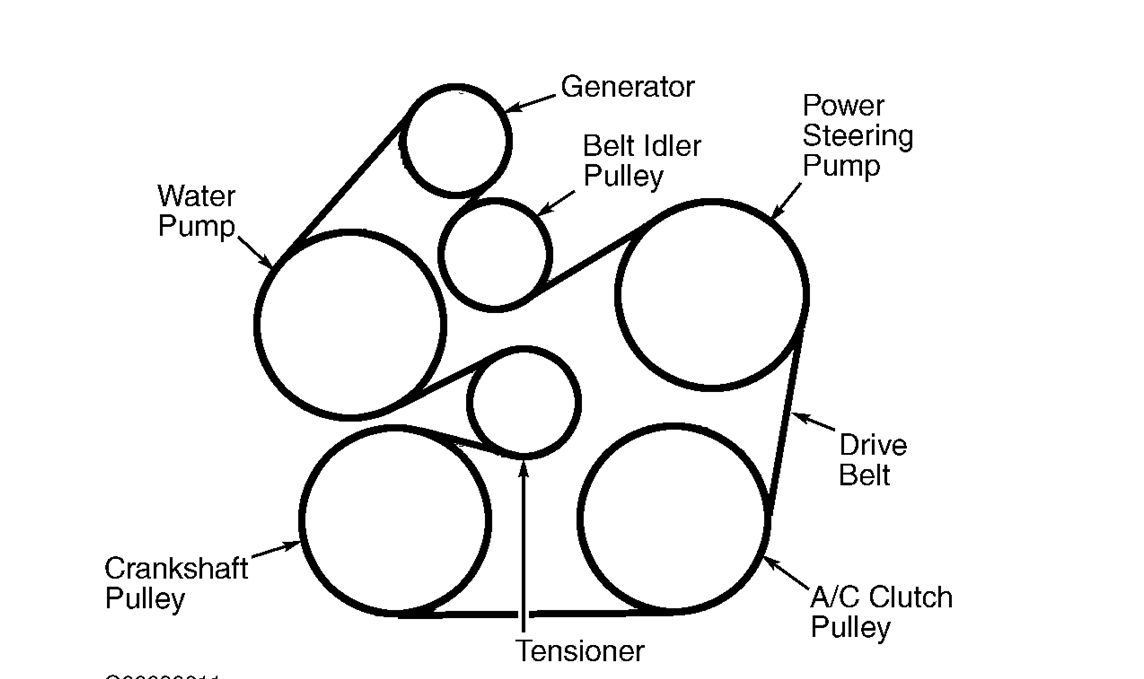
Understanding the serpentine belt routing on your 2004 Ford Taurus is crucial for several reasons. Whether you're performing routine maintenance, replacing a worn belt, diagnosing a squealing noise, or even just deepening your understanding of your car's mechanics, having a reliable serpentine belt diagram is invaluable. This article will provide a detailed explanation of the 2004 Taurus serpentine belt system, equipping you with the knowledge to tackle related tasks with confidence.
Purpose of the Serpentine Belt Diagram
The serpentine belt diagram serves as a visual guide for the proper routing of the serpentine belt around the various engine accessories. Without it, installing a new belt correctly becomes a guessing game. Using the correct belt routing ensures that each accessory receives the necessary rotational force to function properly. The diagram's primary purposes are:
- Correct Belt Installation: The most obvious use is to ensure the belt is routed correctly during replacement. An incorrectly routed belt can cause serious damage to accessories and the engine itself.
- Troubleshooting: The diagram helps diagnose issues related to the belt's tension or slippage, especially if a belt has come off or is exhibiting unusual wear patterns.
- Preventive Maintenance: Familiarizing yourself with the layout allows you to inspect the belt and pulleys for wear and tear more effectively.
- Educational: It provides a clear understanding of how the engine accessories are driven and interconnected.
Key Specs and Main Parts
The 2004 Ford Taurus typically uses a single serpentine belt to drive all the front-mounted engine accessories. There can be some variation depending on engine type (3.0L Vulcan or 3.0L Duratec). Always consult the specific diagram for *your* engine.
Main Components Driven by the Serpentine Belt:
- Crankshaft Pulley: The engine's crankshaft provides the rotational force that drives the entire system. This is where the belt's motion originates.
- Alternator: Generates electricity to power the car's electrical system and charge the battery. Failure here leads to a dead battery.
- Power Steering Pump: Provides hydraulic pressure to assist with steering, making it easier to turn the wheel.
- Air Conditioning Compressor: Compresses refrigerant to cool the car's interior.
- Water Pump: Circulates coolant throughout the engine to regulate temperature and prevent overheating. A critical component.
- Tensioner Pulley: Applies the necessary tension to the serpentine belt, preventing slippage. A faulty tensioner is a common cause of belt squeal.
- Idler Pulley (Optional): Some configurations may include an idler pulley to guide the belt around other components.
Key Specification: The belt length is critical. Consult your owner's manual or a reputable auto parts store for the correct belt length for your specific engine type. A belt that is too long will be loose and prone to slippage, while a belt that is too short will be difficult or impossible to install and can damage the accessories.
Understanding the Diagram's Symbols
Serpentine belt diagrams use a standardized set of symbols to convey information clearly and concisely. Understanding these symbols is vital for interpreting the diagram correctly.
- Solid Lines: Represent the path of the serpentine belt. Follow these lines carefully to ensure proper routing.
- Arrows: Indicate the direction of belt travel around each pulley. This is *essential* for correct installation.
- Circles: Represent pulleys. The diagram may label each pulley (e.g., ALT for alternator, P/S for power steering).
- Text Labels: Provide information about each component, such as its name or function.
- Tensioner Symbol: The tensioner pulley is usually indicated by a spring symbol or a representation of the tensioner arm and pulley. It's often labeled "TENSIONER".
Some diagrams may use color coding, but this is less common. If colors are used, a legend will typically explain their meaning.
How the Serpentine Belt System Works
The serpentine belt system is a relatively simple but vital system. The crankshaft pulley, driven by the engine's rotation, provides the initial power. The serpentine belt wraps around the crankshaft pulley and then snakes its way around all the other accessory pulleys (alternator, power steering pump, AC compressor, water pump). The tensioner pulley maintains the correct tension on the belt, ensuring adequate grip on each pulley.
The amount of torque (rotational force) delivered to each accessory depends on the pulley's diameter. Smaller pulleys will rotate faster but with less torque, while larger pulleys will rotate slower but with more torque. The design of the system ensures that each accessory receives the appropriate amount of power to function correctly.
The tensioner pulley is crucial. It's a spring-loaded or hydraulic device designed to maintain constant tension on the belt. As the belt stretches over time, the tensioner automatically adjusts to compensate. A worn or malfunctioning tensioner can cause the belt to slip, resulting in a squealing noise and reduced accessory performance.
Real-World Use: Basic Troubleshooting Tips
Here are some common problems and how the serpentine belt diagram can help you diagnose them:
- Squealing Noise: A squealing noise, especially when the engine is first started or when accessories are heavily loaded (e.g., turning the steering wheel at low speeds), often indicates a slipping belt. Check the diagram to ensure the belt is routed correctly. Inspect the tensioner pulley to see if it's moving freely and maintaining adequate tension. Also, examine the belt itself for signs of wear, cracking, or glazing.
- Accessory Malfunction: If a specific accessory (e.g., the alternator or power steering pump) is not functioning correctly, verify that the serpentine belt is properly routed around its pulley. A broken belt, of course, will immediately disable all driven accessories. If the belt is intact, the problem likely lies with the accessory itself.
- Belt Wear and Tear: Regularly inspect the serpentine belt for signs of wear, such as cracks, fraying, or missing chunks. The diagram will help you visually inspect the entire length of the belt and identify any areas of concern. Look for unusual wear patterns, which can indicate misalignment or a problem with a specific pulley.
Important Note: If you suspect a pulley is misaligned, use a straight edge or laser alignment tool to check its alignment with the other pulleys. Misalignment can cause premature belt wear and damage to the accessories.
Safety Precautions
Working on the serpentine belt system can be hazardous if proper safety precautions are not followed.
- Disconnect the Battery: Always disconnect the negative battery terminal before working on the engine to prevent accidental electrical shock or damage to the electrical system.
- Hot Engine: Never work on the engine while it is hot. Allow it to cool down completely before starting any repairs.
- Moving Parts: Keep your hands, clothing, and tools away from moving parts, especially the serpentine belt and pulleys, when the engine is running.
- Eye Protection: Wear safety glasses to protect your eyes from debris.
- Belt Tension: Be extremely careful when releasing the tension on the serpentine belt tensioner. The tensioner arm can snap back with considerable force, potentially causing injury. Use the correct tool to safely relieve the tension.
Be especially careful around the alternator pulley. Even with the battery disconnected, there can be residual charge in the alternator, and shorting it out can cause damage.
Conclusion
Having a clear understanding of your 2004 Ford Taurus serpentine belt system, coupled with access to an accurate diagram, will significantly improve your ability to perform maintenance, troubleshoot problems, and ensure the reliable operation of your vehicle. This knowledge empowers you to take control of your car's maintenance and potentially save money on repairs. Remember to prioritize safety and consult the diagram frequently during any work on the serpentine belt system.
For your convenience, we have a printable PDF file of the 2004 Ford Taurus Serpentine Belt Diagram available for download. This diagram covers both the 3.0L Vulcan and 3.0L Duratec engine options. Download the diagram for detailed instructions and visual aid.