
Serpentine Belt Diagram For 2004 Toyota Camry
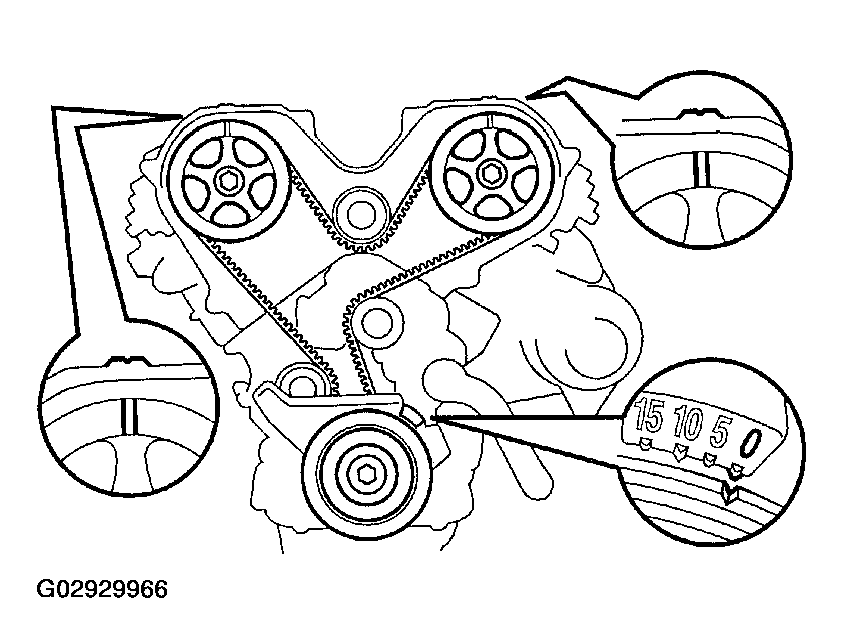
Alright, let's talk serpentine belts on your 2004 Toyota Camry. This might seem like a simple piece of rubber, but it's the unsung hero that keeps many vital systems in your car running. Understanding its layout and function is crucial for DIY maintenance, diagnosing issues, and even just appreciating how your engine works.
Purpose of the Serpentine Belt Diagram
Why do you need a serpentine belt diagram? Several reasons:
- Repairs and Replacement: The most obvious reason. When it's time to replace your belt (and it will eventually be time), you need to know the correct routing. Incorrect routing can lead to component failure and, frankly, a lot of frustration.
- Troubleshooting: A squealing noise from the engine bay? It could be a worn or improperly tensioned serpentine belt. Knowing the belt's path allows you to inspect each component it drives.
- Learning and Understanding: Even if you're not actively working on your car, understanding how the serpentine belt integrates with the engine's auxiliary systems gives you a deeper appreciation for automotive mechanics.
- Preventative Maintenance: Regularly inspecting the belt and pulleys along its path can help you catch potential problems before they leave you stranded.
Key Specs and Main Parts (2004 Toyota Camry - 2.4L and 3.0L)
The 2004 Camry, depending on the engine (2.4L 2AZ-FE I4 or the 3.0L 1MZ-FE V6), will have a slightly different serpentine belt configuration. While the principle is the same, the placement of components varies.
Common Components:
- Crankshaft Pulley (Crank Pulley): This is the driving force. Connected directly to the crankshaft, it provides the rotational power to the belt.
- Alternator Pulley: The alternator generates electrical power for the car. The belt drives the alternator pulley, which in turn spins the alternator's internal components.
- Power Steering Pump Pulley: This pulley drives the power steering pump, which provides hydraulic assistance for steering.
- Air Conditioning Compressor Pulley: This pulley engages (when the A/C is turned on) and drives the A/C compressor, which circulates refrigerant to cool the cabin.
- Idler Pulleys: These pulleys are smooth and serve to guide the belt around the engine and maintain optimal wrap angles on the driven pulleys. They don't drive any components themselves.
- Tensioner Pulley: A spring-loaded arm and pulley assembly. The tensioner maintains the correct tension on the serpentine belt. Crucially, it compensates for belt stretch and thermal expansion.
Belt Specs: While the exact length varies slightly depending on the manufacturer, a new belt for the 2.4L 2AZ-FE engine typically falls in the range of 81-82 inches in length. The 3.0L 1MZ-FE engine uses a slightly shorter belt, generally around 78-79 inches. Always double-check the part number for your specific vehicle using your VIN and a reputable parts retailer.
Symbols: Decoding the Diagram
Understanding the diagram symbols is key to correctly interpreting it. Here’s a breakdown of common conventions:
- Solid Lines: These represent the path of the serpentine belt. The thicker the line, usually, the more prominent the belt segment.
- Arrows: These indicate the direction of rotation of each pulley. Pay close attention! Reversing the belt direction, even on one pulley, will cause issues.
- Component Labels: These will identify each pulley (e.g., ALT for Alternator, P/S for Power Steering, A/C for Air Conditioning Compressor, CRK for Crankshaft).
- Textual Notes: The diagram may include notes indicating belt size, tensioner adjustment procedures, or specific warnings.
- Grooved vs. Smooth Pulleys: Often, diagrams will visually distinguish between pulleys with grooves (which engage the ribbed side of the belt) and smooth idler pulleys (which engage the back side of the belt).
How It Works: The Serpentine Belt's Role
The serpentine belt's function is straightforward but vital. The crankshaft pulley, driven by the engine's rotational energy, turns the serpentine belt. The belt, in turn, transfers this rotational force to the various accessory pulleys. This drives the alternator (to generate electricity), the power steering pump (for steering assistance), and the A/C compressor (for cooling). The tensioner maintains proper belt tension, ensuring adequate grip on all pulleys. Insufficient tension leads to slippage (and that annoying squealing sound!), while excessive tension can prematurely wear out bearings in the driven components.
Real-World Use: Basic Troubleshooting Tips
Here are a few scenarios where your understanding of the serpentine belt layout comes in handy:
- Squealing Noise: Most commonly caused by a loose or worn belt. Check belt tension and inspect for cracks, fraying, or glazing (a shiny, hardened surface). A failing tensioner can also cause squealing.
- Battery Light On: Could indicate a failing alternator or a slipping belt preventing the alternator from spinning at the required speed. Inspect the belt's condition and tension.
- Loss of Power Steering: If the belt is broken or slipping badly, the power steering pump won't function, resulting in difficult steering.
- Overheating: In some vehicles, the water pump is driven by the serpentine belt. A broken belt will stop the water pump, leading to rapid overheating. The 2004 Camry, however, uses a timing belt to drive the water pump; so this is NOT directly related to a serpentine belt failure.
- Visual Inspection: Regularly inspect the belt for signs of wear, cracks, fraying, or missing chunks. Also, check the pulleys for damage or debris.
Safety First!
Working on the serpentine belt system involves potential hazards:
- Rotating Parts: Never work on the belt while the engine is running! Severe injury can result. Always disconnect the negative battery cable before starting any work.
- Hot Engine Components: The engine and exhaust components get extremely hot. Allow the engine to cool completely before working in the engine bay.
- Spring-Loaded Tensioner: The tensioner arm is under significant spring pressure. When releasing the tensioner to remove the belt, use the correct tools and techniques to avoid injury. Wear safety glasses.
- Sharp Edges: Be mindful of sharp edges on pulleys and engine components. Wear gloves to protect your hands.
Disclaimer: While this guide offers a general overview, it is not a substitute for professional mechanical advice. If you are unsure about any aspect of serpentine belt maintenance or replacement, consult a qualified mechanic.
To aid in your work, we have a detailed serpentine belt diagram file specifically for the 2004 Toyota Camry available for download. Having a visual reference can make the job significantly easier and reduce the risk of errors.