
Silverado Dual Battery Wiring Diagram
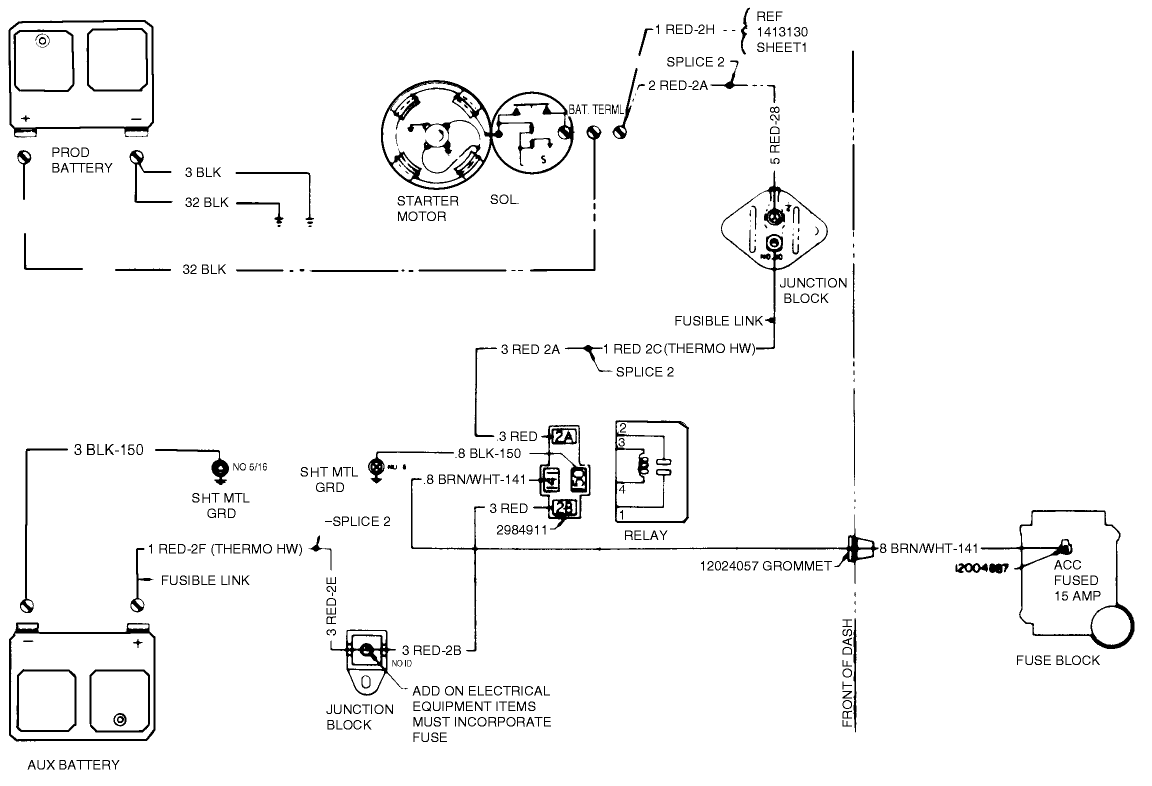
Understanding the Silverado's dual battery system is crucial for a few reasons. Whether you're tackling electrical repairs, adding accessories that demand significant power (like winches, aftermarket lighting, or extensive audio systems), or simply trying to deepen your understanding of your truck's inner workings, a wiring diagram is your best friend. This article provides a detailed explanation of the Silverado dual battery wiring diagram, helping you navigate its components, understand its operation, and even troubleshoot common issues.
Purpose of Understanding the Dual Battery Wiring Diagram
The primary purpose of this diagram is threefold:
- Repair and Maintenance: Electrical issues can be complex. A diagram helps pinpoint the source of the problem, whether it's a faulty connection, a blown fuse, or a failing battery.
- Accessory Installation: When installing power-hungry accessories, you need to tap into the electrical system safely and efficiently. The diagram shows you where to connect and how to avoid overloading circuits.
- System Understanding: Even if you're not actively working on the system, understanding the diagram allows you to comprehend how the dual battery setup functions, increasing your overall knowledge of your vehicle.
Key Specs and Main Parts
The Silverado dual battery system, commonly found in heavy-duty models (2500HD, 3500HD) and some optionally equipped 1500 models, is designed to provide increased starting power and the ability to handle higher electrical loads. Here are the key components:
- Primary Battery: This is the main battery, typically used for starting the engine and powering basic vehicle functions. It's usually a heavy-duty AGM (Absorbed Glass Mat) battery, known for its durability and deep-cycle capabilities.
- Secondary Battery: The auxiliary battery augments the primary battery, providing additional power for accessories or when the primary battery is under heavy load. It's often identical to the primary battery.
- Battery Isolation Manager (BIM): The BIM, also known as the battery isolator or battery management system, is the heart of the dual battery setup. It's an electronic device that controls the charging and discharging of both batteries. Its primary function is to prevent the auxiliary battery from draining the primary battery when the engine is off.
- Fuses and Circuit Breakers: These are essential safety devices that protect the electrical system from overloads and short circuits. They are strategically placed throughout the system, typically near the batteries and the BIM.
- Wiring Harness: The wiring harness is the network of wires that connects all the components of the dual battery system. It consists of various gauges of wire, depending on the current-carrying capacity required.
- Grounding Points: Solid grounding is crucial for proper electrical function. The batteries and BIM are grounded to the vehicle's chassis at specific grounding points.
Symbols – Understanding the Diagram
Wiring diagrams use standardized symbols to represent electrical components. Here's a breakdown of common symbols you'll encounter in a Silverado dual battery diagram:
- Solid Lines: Represent wires connecting different components. The thickness of the line may indicate the wire gauge (thicker lines = larger gauge = higher current capacity).
- Dashed Lines: Often indicate a connection that is optional or only present in specific models or configurations.
- Circles: Can represent various components depending on what's inside the circle. For example, a circle with a "B" inside might represent a battery.
- Rectangles: Usually denote control modules or electronic devices, such as the BIM.
- Zigzag Lines: Represent resistors.
- Ground Symbol (Usually three lines decreasing in length): Indicates a connection to the vehicle's chassis, providing a return path for the current.
- Fuse Symbol (S-shaped line inside a rectangle): Represents a fuse. The diagram should also indicate the amperage rating of the fuse.
- Color Coding: Wires are typically color-coded to help identify their function. For example, a red wire usually indicates a positive (+) connection, while a black wire usually indicates a negative (-) or ground connection. Common color codes include:
- Red: Positive (+) power.
- Black: Ground (-).
- Yellow: Switched power (power only when the ignition is on).
- Orange: Constant power (power even when the ignition is off).
It's important to note that the specific symbols and color codes may vary slightly depending on the year and model of your Silverado. Always refer to the diagram specific to your vehicle.
How It Works
The Silverado dual battery system operates as follows:
- Charging: When the engine is running, the alternator charges both batteries. The BIM monitors the voltage of both batteries and intelligently manages the charging process. It prioritizes charging the primary battery first and then switches to charging the auxiliary battery.
- Isolation: When the engine is off, the BIM isolates the auxiliary battery from the primary battery. This prevents the auxiliary battery from draining the primary battery, ensuring that the primary battery always has enough charge to start the engine.
- Accessory Power: Accessories can be connected to either the primary or auxiliary battery, depending on their power requirements and whether they need to operate when the engine is off. High-power accessories should typically be connected to the auxiliary battery to avoid draining the primary battery.
- Jump Starting: In some configurations, the BIM may allow you to use the auxiliary battery to jump-start the engine if the primary battery is dead.
Real-World Use – Basic Troubleshooting Tips
Here are some basic troubleshooting tips for the Silverado dual battery system:
- Battery Not Charging: If one or both batteries are not charging, check the fuses associated with the charging system. Also, check the alternator output voltage. A faulty alternator or a blown fuse can prevent the batteries from charging. Also, ensure the battery terminals are clean and free of corrosion.
- Primary Battery Draining: If the primary battery is draining even when the engine is off, the BIM may be malfunctioning or there may be a parasitic draw on the primary battery. Use a multimeter to measure the current draw on the primary battery with the engine off.
- Accessory Issues: If accessories connected to the auxiliary battery are not working, check the fuses associated with the auxiliary battery and the accessory itself. Also, ensure that the accessory is properly grounded.
- Warning Lights: Some Silverado models may have a warning light that indicates a problem with the dual battery system. Consult your owner's manual for more information.
Always disconnect the negative battery cable before working on the electrical system. Use a multimeter to check voltages and continuity. A good scan tool can also provide valuable diagnostic information.
Safety – Risky Components
Working with automotive electrical systems can be dangerous. Here are some key safety precautions:
- High Voltage: While the Silverado operates on a 12-volt system, short circuits can generate significant heat and sparks. Always disconnect the negative battery cable before working on the electrical system.
- Battery Acid: Batteries contain corrosive acid. Wear safety glasses and gloves when handling batteries.
- Explosive Gases: Batteries can produce explosive gases. Avoid sparks and open flames near batteries.
- BIM: The BIM is a complex electronic device. Do not attempt to repair it yourself. If you suspect that the BIM is malfunctioning, take your vehicle to a qualified technician.
- High-Current Circuits: Circuits associated with starting and charging carry high currents. Be extremely careful when working on these circuits.
Disclaimer: Automotive electrical systems are complex and require specialized knowledge and tools. If you are not comfortable working on your vehicle's electrical system, it is best to take it to a qualified technician.
We have a detailed Silverado Dual Battery Wiring Diagram file available for download. It's tailored for several Silverado models and years. Contact us for access.