
Subaru Outback Serpentine Belt Diagram
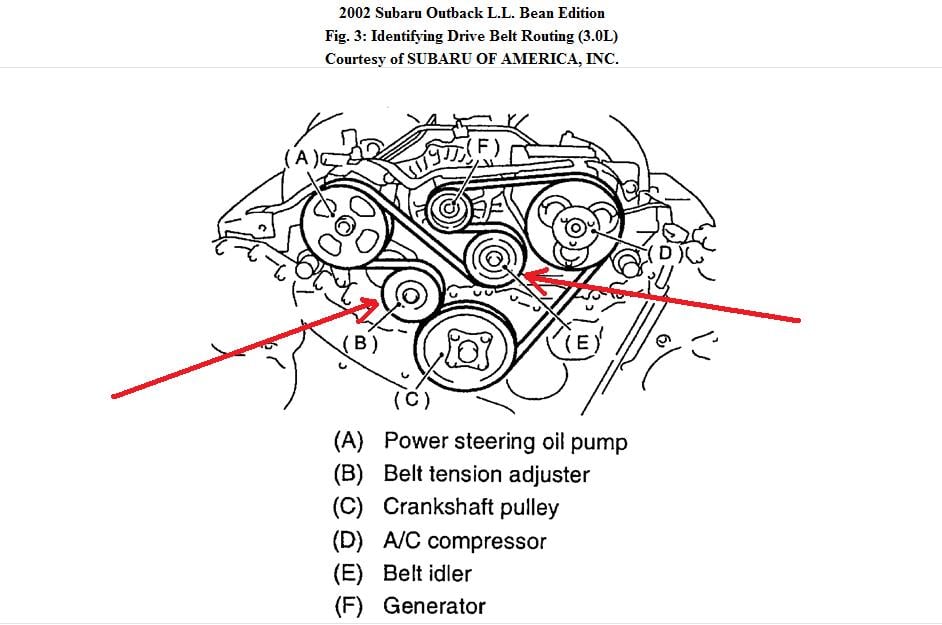
The serpentine belt, also known as an accessory drive belt, is a critical component in your Subaru Outback's engine. It's responsible for powering numerous vital systems, including the alternator, power steering pump, air conditioning compressor, and sometimes even the water pump. Understanding the serpentine belt diagram is paramount for anyone tackling routine maintenance, troubleshooting issues, or performing more complex repairs on their Outback. This guide will provide a comprehensive breakdown of the serpentine belt diagram, enabling you to confidently work on your vehicle.
Purpose of the Serpentine Belt Diagram
The serpentine belt diagram isn't just a pretty picture; it's an essential tool for several reasons:
- Replacement and Installation: The most common use is for replacing a worn or broken serpentine belt. The diagram shows the correct routing of the new belt, ensuring proper operation of all driven components. Incorrect routing can lead to component failure and potential engine damage.
- Troubleshooting: When you experience issues like a squealing belt, dead battery (due to alternator not charging), or loss of power steering, the diagram helps you trace the belt's path and identify potential problems with pulleys or driven components.
- Learning and Understanding: Even if you're not actively working on your car, studying the diagram provides a deeper understanding of your engine's layout and how its various systems are interconnected. This knowledge can be invaluable for diagnosing future problems.
- Modification and Upgrades: If you're planning to modify your engine (e.g., installing an aftermarket supercharger), understanding the belt routing is crucial for ensuring proper fitment and function of the new components.
Key Specs and Main Parts
Before diving into the diagram, it's helpful to understand the key components involved:
- Serpentine Belt: A single, continuous belt made of rubber or synthetic materials that transmits power from the crankshaft to various accessories. Its length and width are critical and must match the specified requirements for your Outback's model year and engine configuration.
- Crankshaft Pulley: Located at the bottom of the engine, connected directly to the crankshaft. This pulley drives the serpentine belt.
- Alternator Pulley: Driven by the serpentine belt, the alternator pulley spins the alternator, generating electricity to charge the battery and power the vehicle's electrical system.
- Power Steering Pump Pulley: Also driven by the serpentine belt, this pulley rotates the power steering pump, providing hydraulic assistance for steering.
- Air Conditioning Compressor Pulley: Driven by the serpentine belt, this pulley engages the air conditioning compressor, which is responsible for cooling the air inside the vehicle.
- Water Pump Pulley (Depending on Engine): In some Outback models, the water pump is driven by the serpentine belt. The water pump circulates coolant throughout the engine to prevent overheating.
- Idler Pulley(s): Smooth, ungrooved pulleys that help guide the belt and maintain proper tension. They don't drive any accessories.
- Tensioner Pulley: A spring-loaded pulley that automatically adjusts belt tension as the belt stretches over time. Proper tension is crucial for optimal performance and belt longevity. The tensioner is a crucial component and requires careful attention during belt replacement.
Symbols in the Serpentine Belt Diagram
Understanding the symbols used in the diagram is key to interpreting it correctly. Here's a breakdown of common symbols:
- Solid Lines: Indicate the path of the serpentine belt itself. The lines represent the belt's outer surface.
- Dotted Lines: May indicate the belt's path behind other components or show the location of the belt tensioner.
- Circles/Ovals: Represent the pulleys. These may be labeled with abbreviations (e.g., ALT for alternator, P/S for power steering).
- Arrows: Indicate the direction of rotation for each pulley. This is important for ensuring correct belt routing.
- Text Labels: Identify each component (e.g., "Crankshaft Pulley," "Idler Pulley").
- Tensioner Icon: A symbol depicting the tensioner pulley, often with an arrow indicating the direction to relieve tension. This is critical for safely removing and installing the belt.
How It Works: The Serpentine Belt System
The serpentine belt system works by transferring rotational power from the crankshaft to various accessories. The crankshaft pulley, driven by the engine, rotates the serpentine belt. This belt, in turn, wraps around and drives the pulleys connected to the alternator, power steering pump, air conditioning compressor, and potentially the water pump. The idler pulleys guide the belt along its path, while the tensioner pulley maintains proper belt tension. The tensioner pulley is spring loaded and applies pressure to the belt, keeping it tight enough to prevent slippage but not so tight that it damages the pulleys or belt. Proper belt tension is vital for the correct operation of all driven components.
Real-World Use: Basic Troubleshooting Tips
Here are some basic troubleshooting tips when working with your Subaru Outback's serpentine belt:
- Squealing Belt: A squealing belt often indicates slippage, which can be caused by a worn belt, loose tensioner, or contaminated pulleys. Inspect the belt for cracks, fraying, or glazing. Check the tensioner's operation; it should move smoothly and apply consistent pressure to the belt. Clean the pulleys with a wire brush to remove any debris.
- Cracked or Frayed Belt: A cracked or frayed belt is a sign of wear and tear and should be replaced immediately. Continued use of a damaged belt can lead to complete failure and potentially strand you.
- Accessory Malfunctions: If you experience issues with your alternator, power steering, or air conditioning, check the serpentine belt and its routing. A broken or improperly routed belt can prevent these components from functioning correctly.
- Tensioner Issues: A failed tensioner can cause the belt to slip or come off completely. Inspect the tensioner for damage or wear. If it's not applying sufficient pressure, replace it.
- Belt Alignment: Misalignment of pulleys can cause premature belt wear and noise. Check that all pulleys are properly aligned using a straightedge.
Safety Considerations
Working on the serpentine belt system involves potential hazards. Always take the following precautions:
- Disconnect the Battery: Before starting any work, disconnect the negative battery terminal to prevent electrical shocks.
- Allow Engine to Cool: Never work on the serpentine belt system when the engine is hot. The exhaust manifold and other components can cause severe burns.
- Use Proper Tools: Use the correct tools for the job, including a belt tensioner tool. Do not attempt to pry or force the belt.
- Keep Hands and Fingers Clear: Be extremely careful when working around the pulleys and belt, especially when the engine is running (for diagnostic purposes only). Loose clothing and jewelry can get caught in the moving parts.
- Beware of the Fan: Be mindful of the engine cooling fan. On some models, it's directly coupled to the engine and can start spinning unexpectedly.
Remember the spring loaded tensioner stores a lot of potential energy. Using the wrong size tool to release it or improperly positioning yourself could result in serious injury.
We have a high-resolution PDF file containing the detailed serpentine belt diagram for various Subaru Outback model years and engine configurations. This diagram provides a clear and accurate visual representation of the belt routing, component locations, and other important details. You can download it for free. [Link to Download Placeholder]. This file will be invaluable for your repair and maintenance tasks. Remember to always consult your vehicle's service manual for the most accurate and up-to-date information.