
Toyota Tacoma Front End Parts Diagram
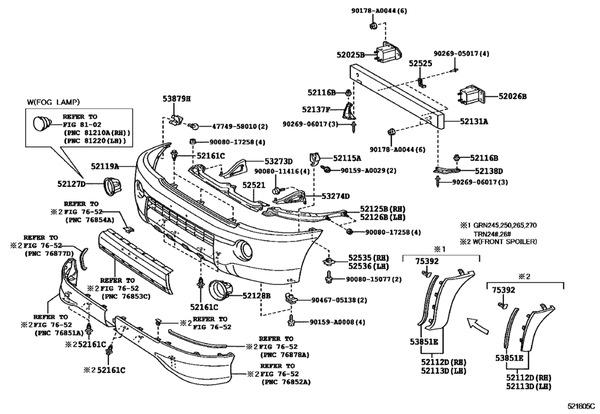
Alright, let's dive into the Toyota Tacoma's front end parts diagram. If you're a DIYer tackling repairs, modifications, or just want to understand your Tacoma better, this diagram is your roadmap. We're talking about the area from the front bumper to the engine bay, encompassing suspension, steering, and cooling systems. Knowing this area inside and out can save you a ton of money and keep your truck running strong.
Purpose of the Diagram
Why bother with a front-end parts diagram? Simple: It's the ultimate reference tool. It serves several key purposes:
- Repair Guide: Identifying damaged or worn-out parts quickly and accurately.
- Troubleshooting Aid: Pinpointing the source of a problem by understanding component relationships.
- Modification Planning: Visualizing how aftermarket parts integrate with the existing system. Thinking of adding a lift kit? You'll want to see how that interacts with the suspension components.
- Educational Resource: Learning the names and locations of the different parts that make up the front end of your Tacoma.
Key Specs and Main Parts
The front end of your Tacoma is a complex assembly. Let's break down the major components you'll typically find in a parts diagram. Keep in mind specific models and years might have slight variations.
Suspension Components
- Upper and Lower Control Arms: These arms connect the wheel hub to the vehicle's frame, allowing for vertical wheel travel. Look for terms like "A-arm" and understand their function in controlling camber and caster.
- Shock Absorbers/Struts: Dampen vibrations and control suspension movement. Some Tacomas use separate shocks and coil springs, while others utilize a strut assembly (coil spring around the shock).
- Coil Springs: Provide the primary support for the vehicle's weight. Different spring rates are available for various load-carrying capacities.
- Sway Bar (Anti-Roll Bar): Connects the left and right sides of the suspension to reduce body roll during cornering.
- Torsion Bars: (Primarily on older models) Act as the spring in the suspension system.
- Ball Joints: Allow the control arms to pivot, enabling steering.
- Tie Rod Ends: Connect the steering rack to the steering knuckle, transmitting steering input to the wheels.
Steering Components
- Steering Rack (Rack and Pinion): Converts rotational motion from the steering wheel into linear motion to steer the wheels.
- Power Steering Pump: Provides hydraulic pressure to assist steering.
- Steering Knuckle (Spindle): Connects the wheel hub to the suspension components.
- Intermediate Shaft: Connects the steering column to the steering rack.
Cooling System Components
- Radiator: Dissipates heat from the engine coolant.
- Radiator Fan: Draws air through the radiator to improve cooling. Could be mechanical (belt-driven) or electric.
- Coolant Hoses: Transport coolant between the engine, radiator, and other components.
- Water Pump: Circulates coolant throughout the engine and cooling system.
- Thermostat: Regulates engine temperature by controlling coolant flow.
- Condenser (A/C): Cools the refrigerant for the air conditioning system, located in front of the radiator.
Other Key Components
- Front Bumper: Provides impact protection.
- Headlights and Turn Signals: Lighting and signaling systems.
- Grille: Allows airflow to the radiator.
- Hood Latch and Hinges: Secures the hood.
Understanding Diagram Symbols
Parts diagrams use standardized symbols to represent different components and connections. Here's a breakdown of common symbols:
- Solid Lines: Typically indicate physical connections, such as hoses, rods, or structural supports.
- Dashed Lines: Often represent vacuum lines, electrical wiring, or hidden components.
- Different Colors: May be used to differentiate between types of fluids (e.g., coolant, power steering fluid) or electrical circuits. Always check the diagram's legend!
- Numbers and Letters: Correspond to part numbers in the parts list, allowing you to easily identify and order the correct components.
- Arrows: Indicate the direction of fluid flow (e.g., coolant flow through a hose).
- Icons: Small pictures representing specific components like sensors, connectors, or valves.
Important: Always refer to the diagram's legend for a complete explanation of the symbols used. Different manufacturers or even different versions of the same diagram might use slightly different conventions.
How It Works
The diagram illustrates the interconnectedness of the front-end components. For instance, tracing the coolant lines reveals how the water pump circulates coolant through the engine block, radiator, and heater core. Understanding this flow is crucial for diagnosing cooling system problems. Similarly, following the steering linkage from the steering wheel to the tie rod ends shows how your steering input is translated into wheel movement.
By studying the diagram, you can visualize how a change in one area can affect other areas. For example, installing larger tires might require adjustments to the suspension and steering components to maintain proper alignment and handling.
Real-World Use: Basic Troubleshooting Tips
Let's say you notice a coolant leak under the front of your Tacoma. The diagram can help you pinpoint the source:
- Locate the radiator and coolant hoses on the diagram.
- Inspect the physical components on your truck, comparing them to the diagram.
- Check for cracks, leaks, or loose connections at the radiator, hoses, water pump, and thermostat housing.
If you're experiencing loose steering, the diagram can guide you to inspect the tie rod ends, ball joints, and steering rack for wear or damage.
Safety Considerations
Working on the front end of your Tacoma can be dangerous if proper precautions aren't taken. Here are some critical safety tips:
- Suspension Components: Springs are under tremendous pressure. Never disassemble a strut assembly without the proper spring compressor tool. A compressed spring can release with explosive force, causing serious injury or death.
- Steering System: If your vehicle is equipped with airbags, disconnect the battery and wait at least 15 minutes before working on the steering system to prevent accidental airbag deployment.
- Cooling System: Never remove the radiator cap when the engine is hot. The cooling system is pressurized, and hot coolant can spray out, causing severe burns.
- Always use jack stands: Never work under a vehicle supported only by a jack.
- Wear safety glasses: Protect your eyes from debris.
Disclaimer: This information is for general guidance only. Consult your Tacoma's service manual or a qualified mechanic for specific repair procedures.
We have a detailed front-end parts diagram available for download. This diagram covers all the components we've discussed and includes detailed part numbers and schematics. Use this resource to confidently approach repairs and modifications on your Toyota Tacoma. Just reach out and we can send it over.