
Wiring Air Compressor Pressure Switch Diagram
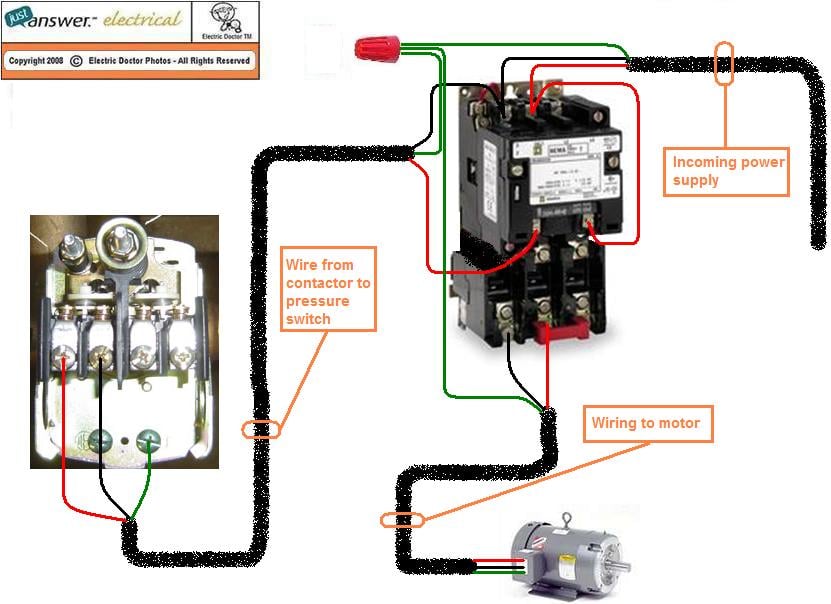
So, you're looking to understand the wiring of your air compressor pressure switch, huh? Good on you! Whether you're tackling a repair, modifying your setup for a higher pressure output, or simply wanting to wrap your head around how it all works, understanding the wiring diagram is crucial. This isn't just about connecting wires; it's about understanding the electrical flow and ensuring everything operates safely and efficiently. We're going to break down a typical air compressor pressure switch wiring diagram, explain the key components, and even give you some troubleshooting tips. Think of this as your comprehensive guide to demystifying the electrical heart of your air compressor.
Why This Diagram Matters
Let's be clear: a pressure switch isn't just a random part; it's the brains of your air compressor. It tells the motor when to kick on to fill the tank and when to shut off once the desired pressure is reached. Without a properly functioning pressure switch, your compressor could either run endlessly (overheating and potentially causing a fire) or fail to provide the air pressure you need. Understanding the wiring diagram allows you to:
- Diagnose Electrical Problems: Pinpoint shorts, open circuits, and faulty connections within the pressure switch circuit.
- Replace a Faulty Switch: Wire in a new pressure switch correctly, ensuring proper operation.
- Upgrade or Modify Your System: Add accessories like an extra pressure gauge or implement a different control scheme.
- General Learning: Grasp the fundamental principles of electrical circuits and how they control pneumatic devices.
Key Specs and Main Parts
Before we dive into the diagram, let's identify the key components and their specifications. This will make interpreting the diagram much easier:
Pressure Switch:
This is the central component. It's a mechanical switch that's activated by the pressure in the air tank. Common specifications include:
- Pressure Range (Cut-in and Cut-out): The pressure at which the compressor starts (cut-in) and stops (cut-out). For example, 90-120 PSI is a typical range.
- Voltage and Amperage Rating: The maximum voltage and current the switch can handle. Never exceed these ratings! A standard home compressor might use a 120V/15A switch, while larger industrial compressors use 240V or even 480V switches with higher amperage ratings.
- Number of Poles and Throws: This refers to the internal switching configuration. Most common air compressor pressure switches are single-pole, single-throw (SPST) or single-pole, double-throw (SPDT). SPST switches simply open or close a circuit. SPDT switches can switch between two different circuits.
Motor Starter (for larger compressors):
Larger compressors with high-horsepower motors require a motor starter. This device uses a low-voltage signal from the pressure switch to control a high-voltage, high-amperage circuit that powers the motor. This protects the pressure switch from being damaged by the motor's heavy current draw. Specifications to check include:
- Voltage and Horsepower Rating: The voltage and maximum horsepower the starter is designed to handle.
- Overload Protection: Built-in overload relays that trip the starter if the motor draws excessive current, preventing damage.
Motor:
The motor drives the compressor pump. Critical specifications include:
- Voltage and Amperage: The voltage and current the motor requires.
- Horsepower (HP): The motor's power output.
- Wiring Diagram on Motor Housing: Always refer to the motor's specific wiring diagram for connecting it to the starter (or directly to the pressure switch in smaller compressors).
Power Source:
Typically, this is a standard wall outlet (120V in many homes) or a dedicated 240V circuit.
Symbols – Understanding the Diagram's Language
Electrical diagrams use standardized symbols to represent components and connections. Here are some common ones you'll encounter in an air compressor pressure switch wiring diagram:
- Straight Lines: Represent wires. Thicker lines might indicate larger gauge wires for higher current.
- Dotted Lines: Often represent control circuits or connections to other parts of the system that aren't directly part of the power flow.
- Circles with Letters: Represent components. For example:
- M: Motor
- PS: Pressure Switch
- OL: Overload Relay (in a motor starter)
- Switch Symbol: A line broken by a curved line or a short diagonal line represents a switch. The orientation of the symbol indicates whether the switch is normally open (NO) or normally closed (NC).
- Ground Symbol: A series of horizontal lines that decrease in length, representing the ground connection.
- Color Coding: While not always present, color-coded wires are extremely helpful. Common color codes include:
- Black: Hot (live) wire
- White: Neutral wire
- Green: Ground wire
Important Note: Always refer to the specific legend provided with your diagram, as symbols can vary slightly.
How It Works: The Electrical Flow
Here's a simplified explanation of how the typical circuit works, broken down into two scenarios:
Scenario 1: Tank Pressure is Below the Cut-in Pressure
- Power (usually 120V or 240V) flows from the power source to one terminal of the pressure switch.
- Because the tank pressure is low, the pressure switch is in the closed position (completing the circuit).
- The power flows through the pressure switch to the motor (or to the motor starter's control circuit).
- The motor starts, driving the compressor pump, and begins to fill the tank with air.
Scenario 2: Tank Pressure Reaches the Cut-out Pressure
- As the tank pressure increases, it eventually reaches the pressure switch's cut-out setting.
- The pressure switch opens, breaking the circuit.
- The flow of power to the motor (or the motor starter) is interrupted.
- The motor stops, and the compressor stops pumping air.
This cycle repeats as the air pressure in the tank decreases with use.
Real-World Use: Basic Troubleshooting
Okay, so you've got the diagram and you understand the theory. Now, let's talk about some common problems and how to troubleshoot them:
- Compressor Doesn't Start:
- Check Power Source: Is the compressor plugged in? Is the circuit breaker tripped?
- Inspect Pressure Switch: Use a multimeter to check for continuity across the pressure switch terminals when the tank pressure is below the cut-in pressure. If there's no continuity, the switch is likely faulty.
- Examine Motor: Check for any signs of damage or burning. If possible, test the motor windings for continuity.
- Test Motor Starter (if applicable): Check the voltage input and output of the starter when the pressure switch is closed.
- Compressor Runs Continuously:
- Check Pressure Switch: The switch may be stuck in the closed position. Replace the switch.
- Check for Leaks: A leak in the tank or air lines will cause the compressor to run continuously to maintain pressure.
Safety First!
Working with electricity can be dangerous. Here are some crucial safety precautions:
- Disconnect Power: Always disconnect the power to the compressor before working on any electrical components. Unplug it from the wall or turn off the circuit breaker.
- Use a Multimeter Safely: Learn how to use a multimeter properly to test for voltage and continuity.
- Be Aware of Capacitors: Some compressors, particularly those with single-phase motors, have large capacitors that can store a dangerous electrical charge even after the power is disconnected. Discharge the capacitor before touching any components near it. A qualified electrician should do this if you are not comfortable.
- Respect High Voltage: Larger compressors operating on 240V or higher are especially dangerous. Be extremely cautious and consider hiring a qualified electrician if you're not comfortable working with high voltage.
- Grounding: Ensure the compressor is properly grounded to prevent electric shock.
By understanding the pressure switch wiring diagram and following these safety guidelines, you'll be well-equipped to diagnose, repair, and maintain your air compressor effectively. Remember, safety always comes first! And don't be afraid to consult a qualified electrician if you're unsure about anything.
We have a generic air compressor pressure switch wiring diagram file available for you to download. This diagram covers the basics and is a good starting point for understanding your specific compressor. Remember that your particular model might have slight variations, so always refer to the manufacturer's documentation if possible.